







 Covivio Hotels Revenue Grows 4.7% as European Markets Split
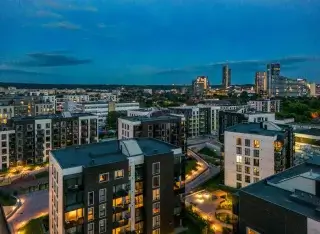 Lithuanian Apartment Prices Accelerate Across Major Cities
 Georgia's Tourism Revenue Hits Record High
 Norway's Sovereign Fund Commits €1.5bn to European Warehouses
 Market Rout of October 2026: Can Branded Hotels Protect Capital?
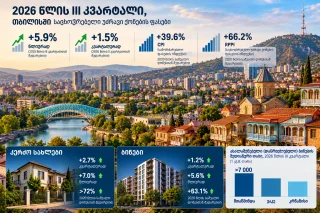 Residential Property Prices in Tbilisi Rise by 5.9% Year-on-Year
Georgia Builds Border Post with US Support
BM.ge
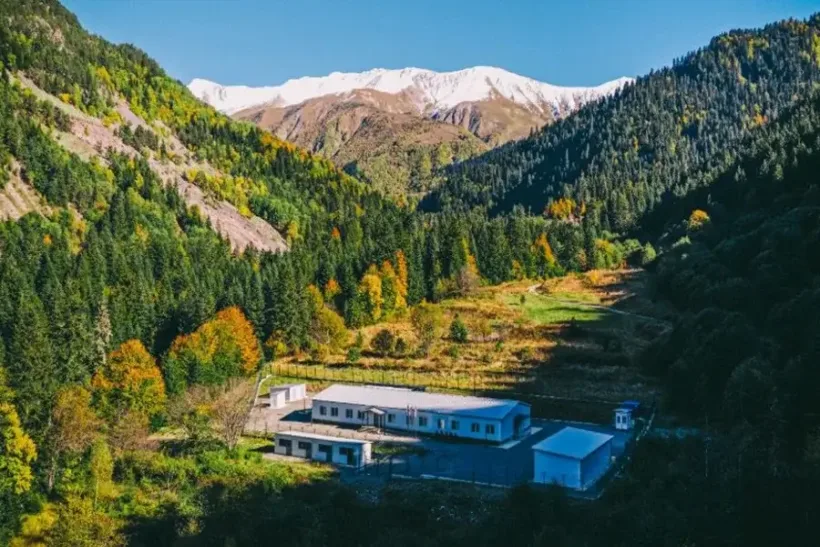
A new building for the Mamisoni border post has been constructed with US support in Georgia's Racha region at an altitude of 1,800 meters. The facility is equipped to operate in harsh high-altitude conditions but is not intended for border crossings, according to Georgia's Ministry of Internal Affairs.
Mamisoni Border Post in Racha
Mamisoni is part of the Java–Oni Directorate of the Ministry of Internal Affairs' Land Border Protection Department. The new post is intended for border personnel serving in Racha's high mountains, not for processing travelers: traffic through the Mamison Pass has not resumed. The building has been equipped with modern technology, and its infrastructure has been adapted to harsh climatic conditions.
The project was supported by United States European Command (EUCOM), the US Drug Enforcement Administration (DEA) at the US Embassy, and the embassy's Regional Security Office (RSO). Georgia's Interior Minister Sulkhan Tamazashvili and US Chargé d'Affaires Courtney Austrian attended the opening ceremony. The minister thanked the American side for its help with construction.
US agencies have been involved in developing Georgia's border security system for years. In 2020–2021, US-supported programs helped upgrade the infrastructure of five land border protection units, installing equipment for incident detection, response and communications. The Border Police also reports US assistance in modernizing surveillance systems in the Black Sea.
Georgia's Border Routes
Land Border Checkpoints and Airports
The Mamison Pass once connected Georgia with North Ossetia. At more than 2,800 meters above sea level, it is almost 1,000 meters higher than the new border post. Traffic along this route stopped after the 2008 war. According to Sakartvelos Ambebi, Russian troops have controlled the area since 2009.
Road traffic between Russia and Georgia uses the Kazbegi/Dariali border checkpoint, which recorded 152,550 visits by foreign nationals in January–March 2026. The busiest land crossing was Sarpi on the Turkish border, with 191,832 visits. A further 136,460 entries were recorded through Sadakhlo on the Armenian border.
Air travel has recently gained importance. Among airport checkpoints in the first quarter of 2026, Tbilisi Airport led with 393,560 passengers, followed by Kutaisi (97,019) and Batumi (48,580).
Georgia's Busiest Border Checkpoints, January–March 2026
|
Border checkpoint |
Type |
Visits |
|
Tbilisi Airport |
Air |
393,560 |
|
Sarpi (Turkey) |
Land |
191,832 |
|
Kazbegi (Russia) |
Land |
152,550 |
|
Sadakhlo (Armenia) |
Land |
136,460 |
|
Kutaisi Airport |
Air |
97,019 |
|
Batumi Airport |
Air |
48,580 |
Travel in the First Half of 2026
In the first six months of 2026, the number of international trips to Georgia exceeded 3 million. Most foreign visitors (55.5%) entered by land, accounting for 1.52 million visits. Sarpi recorded 465,433.
Air travel accounted for a further 1.19 million trips (43.6%). Its share increased by 0.9 percentage points compared with the same period in 2025. Tbilisi handled 68.2% of arrivals by air, Batumi 17.8% and Kutaisi 14%. Sea and rail crossings together accounted for less than 1% of the total.
Traffic Through Georgia's Border Crossings, January–June 2026
|
Mode of entry |
Visits |
Share |
|
Land border checkpoints |
1,517,481 |
55.5% |
|
Airports |
1,191,419 |
43.6% |
|
Seaports and rail crossings |
25,604 |
0.9% |
Tourism in Georgia: Demand and Revenue
Overnight tourist trips reached a record 2.27 million (+0.1%). Revenue from international tourism declined by 2% over the same period, to $1.93 billion.
Travelers from Russia made the largest number of trips (610,825), followed by Turkey (525,380) and Armenia (360,050). At the same time, demand from EU countries and the United Kingdom rose by 23.4%: 249,201 visits were recorded in the first half of the year.
Tourism revenue in Georgia grew by 7.7% in September, reaching $525 million, according to preliminary estimates from Galt & Taggart. Revenue for the first nine months totaled $3.7 billion (+2.5%). Experts forecast a rise to $4.9 billion by the end of December.
Prospects for Tourism, Business and Investment
Georgia is expanding its international ties in several areas, from trade and aviation to tourism projects and security cooperation. International Investment analysts note that a wider network of partners helps reduce reliance on individual markets and routes. This is particularly important for a country affected by disruptions to regional transport.
Georgia's foreign trade continues to grow: turnover rose by 9.2%, to $20.53 billion, in January–September 2026. Expanding trade in goods creates demand for logistics services, warehouse space and business infrastructure. However, companies' prospects depend not only on trade volumes but also on freight transit times, the operation of border checkpoints and predictable business conditions.
For travelers, Georgia combines coastal and mountain destinations with international air routes; for businesses, ties with neighboring markets and the country's transit location are important. Potential investor interest is linked to the hotel sector, logistics and services for visitors.