







 Covivio Hotels Revenue Grows 4.7% as European Markets Split
 Lithuanian Apartment Prices Accelerate Across Major Cities
 Georgia's Tourism Revenue Hits Record High
 Norway's Sovereign Fund Commits €1.5bn to European Warehouses
 Market Rout of October 2026: Can Branded Hotels Protect Capital?
 Residential Property Prices in Tbilisi Rise by 5.9% Year-on-Year
Kazakhstan Introduces Electronic Entry Authorization
Kazinform
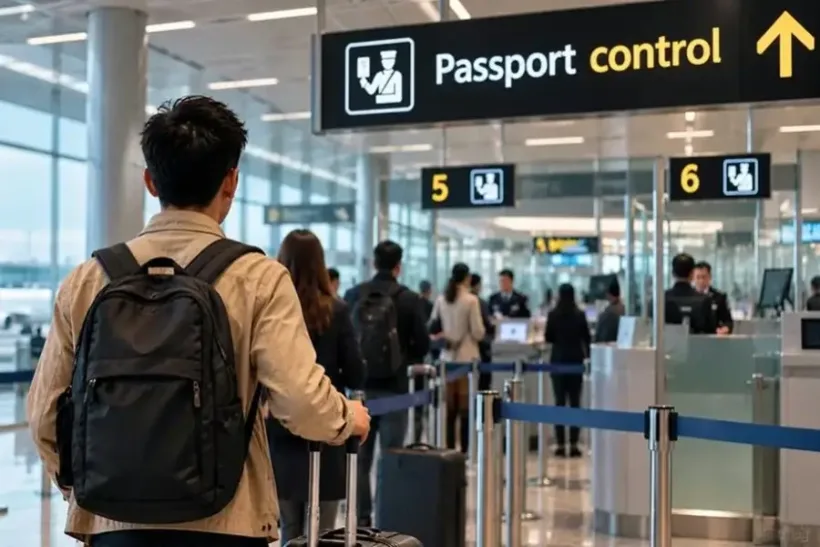
From July 1, 2027, Kazakhstan will require electronic entry authorization for nationals of countries eligible for visa-free travel. The new rules will also affect Russians, Kazinform reports, citing a government resolution. The transition will take eight months, with the system first introduced at selected airports and road border crossings.
Who Will Need an ETA
Electronic entry authorization (ETA) will be required for citizens of Russia, Belarus, Armenia and Kyrgyzstan — the other members of the Eurasian Economic Union (EAEU). The requirement will also apply to visitors from the United States, the United Kingdom, European Union countries, Turkey, India, Iran, Japan and South Korea. The list is not exhaustive: nationals of other countries also qualify for visa-free entry.
Visa-free travel will remain in place, but visitors will undergo advance electronic screening. The requirement will cover tourism, business trips and visits to relatives, regardless of the length of the stay. Permitted durations of stay for different nationalities will remain unchanged.
The new rules also apply to transit through Kazakhstan when the itinerary involves crossing the national border. Air passengers who remain in the international transit area and do not pass through passport control will not need an ETA. This exemption does not apply at road border crossings.
How to Apply for an ETA Through QazETA
Electronic authorization is issued through the government-run QazETA platform. Applications must be submitted at least 72 hours before travel. Applicants must provide personal details, their travel document and the purpose of their visit, then verify their identity. The service is already operating on a pilot basis, and applications are free of charge.
Applications are reviewed by Kazakhstan's Ministry of Internal Affairs in coordination with the national security authority. An approved ETA is valid for 180 days. Travelers must present the same identification document used in the application. Details will be checked through the Berkut system. Even with an approved authorization, the final decision on admission rests with the border service.
Russian citizens can apply for an ETA using either their domestic Russian passport or an international passport.
When the New Entry Rules Will Take Effect
The ETA rollout will begin on November 1, 2026. The first locations will include Aktau Airport and four road border checkpoints, including Urlyutobe on the border with Russia. Checks will subsequently be extended to the country's main international airports and the remaining border crossings. The full transition will be completed in the summer of 2027.
|
Date |
Border crossing points / implementation |
|
November 1, 2026 |
Aktau Airport; Urlyutobe, Aukhatti, Atameken and Nurly Zhol road crossings |
|
January 1, 2027 |
Astana and Almaty international airports |
|
March 1, 2027 |
All remaining border crossings into Kazakhstan |
|
July 1, 2027 |
ETA becomes mandatory; lack of authorization is grounds for refusal of entry |
Until July 1, 2027, travelers will not be refused entry solely for lacking an ETA. Border officials will explain how to obtain the authorization. After the transition ends, applications must be completed in advance, whether entering by land or air. Other grounds for refusal that existed before the ETA system will remain in effect.
Who Can Enter Kazakhstan Without an ETA
The resolution establishes 29 categories of foreign nationals who will not need an ETA. These include children under 16, people aged 65 or older, and holders of a valid Kazakh visa, residence permit or temporary residence permit. Recognized refugees and asylum seekers are also exempt. Supporting documents may be required to establish eligibility.
Separate exemptions apply to diplomats, members of official delegations, aircraft and ship crews, train personnel, and members of humanitarian and emergency-response missions. Drivers engaged in certain international freight and passenger transport operations are also exempt. Tourists and private visitors who do not fall into an exempt category will need authorization under the general rules.
How Long Can You Stay in Kazakhstan Without a Visa
An ETA is valid for six months, but it does not allow its holder to remain in Kazakhstan for all 180 days. Citizens of Russia and the other EAEU countries may stay for no more than 90 days within a six-month period. After using the full allowance, a brief trip abroad does not reset the permitted stay.
Citizens of the United States, the United Kingdom, Germany, France, Japan and South Korea may stay for up to 30 days per visit and a total of 90 days over six months. For Indian and Iranian nationals, the limit is 14 days per trip and 42 days in total over the same period. Turkish citizens may stay for up to 90 days within six months. The rules differ under bilateral agreements and migration regulations.
|
Citizens |
Visa-free stay |
|
Russia, Belarus, Armenia, Kyrgyzstan |
90 days within six months |
|
United States, United Kingdom, Germany, France, Japan, South Korea |
30 days per visit and 90 days within 180 days |
|
India and Iran |
14 days per visit and 42 days in total over six months |
|
Turkey |
90 days within six months |
An ETA does not extend the period of visa-free stay. Foreign nationals planning to work, study or live in Kazakhstan beyond the permitted period must obtain the documents required for their intended purpose.
Who May Be Denied Entry to Kazakhstan
From July 1, 2027, foreign nationals may be denied entry to Kazakhstan if they have not obtained an ETA. Other grounds are set out in Article 48 of the Law on Population Migration. They include threats to national security, false personal information and outstanding administrative penalties for violations committed during previous stays in Kazakhstan.
Foreign nationals previously expelled from Kazakhstan or returned under readmission procedures are barred from entering for five years. The law also sets out financial grounds for refusal, including a failure to demonstrate sufficient funds for the stay and return journey or to file a mandatory tax declaration during an earlier visit. These restrictions apply independently of the ETA requirement.
An authorization may be canceled if the authorities shorten a foreign national's permitted stay, issue an expulsion order or identify irregularities in the ETA application. Applicants will be notified of refusals or cancellations through QazETA.
Outlook for Travel to Kazakhstan
International Investment analysts note that Kazakhstan has been steadily tightening legislation affecting tourists and migrants. The authorities ended the practice of visa runs, preventing foreign nationals from resetting their permitted stay by briefly leaving the country and returning. Obtaining residence permits and citizenship, as well as opening bank accounts, has also become more difficult.
The introduction of ETA will limit spontaneous visits, particularly short weekend road trips. Companies will need to account for authorization processing times when arranging urgent business travel. People planning to relocate will face additional complications.
This policy reflects a global trend toward tighter controls on foreign nationals. Only a few countries have retained relatively flexible entry requirements, with Armenia and Georgia among them. If the trend continues, further legislative changes may affect conditions for entering and staying in Kazakhstan.
FAQ: Electronic Entry Authorization for Kazakhstan
When will electronic entry authorization become mandatory?
On July 1, 2027. Until then, a transition period will apply, and a missing ETA will not, by itself, be grounds for denying entry.
Do Russian citizens need an ETA?
Yes. The requirement applies to Russians traveling without a visa unless they qualify for an exemption.
How do I apply?
Through the QazETA platform. Applications must be submitted at least 72 hours before the planned entry date.
Can I apply for an ETA using a domestic Russian passport?
Yes. Russian citizens can use either a domestic or an international passport. They must present at the border the same document used in the application.
How much does an ETA cost, and how long is it valid?
Applications are free of charge. An ETA is issued for 180 calendar days, but this does not mean its holder may remain in Kazakhstan throughout that period.
How many days can Russians stay in Kazakhstan?
No more than 90 days within any 180-day period. A short trip across the border does not reset this limit.
Who is exempt from the ETA requirement?
Exemptions include children under 16, people aged 65 or older, and holders of a valid Kazakh visa, residence permit or temporary residence permit. Other categories are also exempt.
Do I need an ETA when connecting at a Kazakh airport?
No, provided you remain in the international transit zone and do not go through passport control.
Does an approved ETA guarantee entry?
No. Border officials make the final decision after checking the traveler's documents.