







 Covivio Hotels Revenue Grows 4.7% as European Markets Split
 Lithuanian Apartment Prices Accelerate Across Major Cities
 Georgia's Tourism Revenue Hits Record High
 Norway's Sovereign Fund Commits €1.5bn to European Warehouses
 Market Rout of October 2026: Can Branded Hotels Protect Capital?
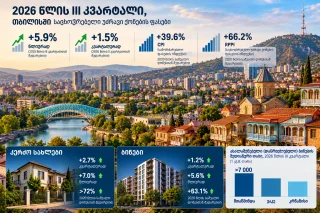 Residential Property Prices in Tbilisi Rise by 5.9% Year-on-Year
New Strategy for Tourism Development in Europe
On November 4, the European Commission will present its first comprehensive EU tourism strategy, TravelDailyNews International reports. The document will cover diversification of destinations, transport connectivity, labor shortages, digitalization and investment. The industry accounts for nearly 10% of EU GDP and more than 20 million jobs.
Priorities of the EU Tourism Strategy
European authorities intend to encourage travel to a wider range of destinations, improve transport links and create a more favorable environment for businesses. European Commissioner Apostolos Tzitzikostas outlined these priorities at the WTTC summit in Malta. Other goals include strengthening the sector's resilience to crises and increasing the economic benefits for local communities.
Work on the new plan began in 2025. In June, the European Commission launched public consultations, inviting businesses, city authorities and travelers to identify problems requiring joint solutions.
In May 2026, guidelines for tourism development in Europe were approved, focusing on protecting natural resources, improving working conditions and cooperation between authorities and businesses. The document complemented the previously adopted agenda through 2030 and a roadmap for the green and digital transition.
Tourism in Europe: Rising Visitor Numbers Put Pressure on Cities
In 2025, EU hotels and other accommodation providers recorded 3.1 billion guest nights, up 4.1% from the previous year, Eurostat reports. In January–June 2026, the figure reached 1.321 billion, an increase of 1.7%. The most visited cities face growing pressure on transport, utilities and real estate markets.
Croatia recorded 24.5 guest nights per resident in 2025, compared with 21.7 in Malta and an EU average of seven. The statistics exclude day visitors but provide a basis for comparing tourism intensity across countries.
Interest in travel to Northern Europe continues to rise. In the first half of 2026, international arrivals increased by 10% and overnight stays by 8.4%. Across the continent, the respective gains were 5% and 4.8%, according to the European Travel Commission.
The influx of visitors also affects the availability of apartments. Since May 20, 2026, platforms offering short-term rentals in the EU have been required to provide booking data to authorities.
According to AirDNA, the number of nights booked in Europe fell by 3.1% in August. Revenue per available night rose by 4.3%.
Transport and Digital Technologies in Europe
For islands, small towns and remote resorts, transport accessibility determines the length of the tourist season. Flight frequency, ticket prices and the ease of connections influence travelers' choices. Better transport links would help distribute visitor flows across more destinations.
Queues at European airports have prompted airlines to appeal to the European Commission. In October, airlines and airport operators reported waits of more than two hours at some external Schengen borders following the introduction of the Entry/Exit System (EES). Industry associations proposed changes to border checks. The system concerns border control rather than the upcoming tourism strategy, but the delays complicate travel.
AI is changing how travelers choose hotels. A study of 659 properties in Barcelona found that independent hotels in AI search were far less visible than hotel chains: independent operators were roughly eight times more likely to be overlooked by these services. For smaller businesses, the quality of information on their websites and booking platforms affects their ability to attract guests.
Labor Shortages and Investment in Tourism
Seasonal employment and high living costs make recruitment difficult in resort areas. Hotels need staff with language and digital skills. The Council of the EU recommends improving working conditions and vocational training; businesses must also account for employee accommodation costs.
Italy has allocated €54 million for housing for tourism workers under its 2025–2027 Staff House program. The funding is intended for the renovation and modernization of buildings. The first approved projects provide for 3,566 places for employees.
Hotel investment in Europe fell by 10% to €9.4 billion in the first half of 2026, according to HVS. The average price per hotel room sold rose as higher-end properties accounted for a larger share of transactions. Buyers need to consider renovation costs, staffing and seasonal fluctuations in revenue.
International Investment analysts note that the impact of the new strategy will depend on financing and coordination mechanisms. Article 195 of the Treaty on the Functioning of the European Union prevents Brussels from harmonizing national tourism legislation. Many practical decisions will remain with national and municipal authorities.
For investors, key considerations include opportunities to reduce infrastructure costs, access to credit and regulatory predictability. Restrictions on holiday rentals in Spain increase legal risks and may make properties intended for short-term letting less attractive investments. These differences between countries need to be taken into account when choosing a market.
After the November 4 presentation, it will be possible to assess whether the strategy includes financing instruments, measurable targets and implementation deadlines. Support for transport projects and hotel upgrades could attract more interest in destinations with underdeveloped infrastructure. If the document is limited to recommendations, its direct impact on property investment will be more modest.
FAQ: EU Tourism Strategy
When will the European Union present its new tourism development strategy?
The presentation is scheduled for November 4, 2026. The main priorities are known, but detailed measures have not yet been published.
What will change for tourists in Europe?
Transport accessibility and digital services are among the priorities. Specific changes for travelers and implementation timelines have not yet been announced.
Will the EU introduce common rules for hotels and rental accommodation?
The strategy itself does not establish common requirements. Article 195 of the Treaty on the Functioning of the European Union rules out harmonization of national laws on tourism.
How will the EU strategy affect investment in European hotels?
The potential impact involves infrastructure financing, property modernization and workforce training. The terms of any support measures should become clearer after the presentation.