







 Thousands of US Flights Canceled After Major Technical Outage
 Best Cities in Europe for Real Estate Investment
 This Year Has Been a Record-Breaker for Tbilisi Hotels — Shalva Alaverdashvili
 Friends, Shopping, and Leisure: Why and at What Age Do Georgian Residents Travel Abroad Most Often?
 Home Purchases by Foreigners in Armenia Rose 47%
 Gandagana: A Journey Through Adjara Without Leaving the City
Tanker Hits Cruise Ship in the US
AP news
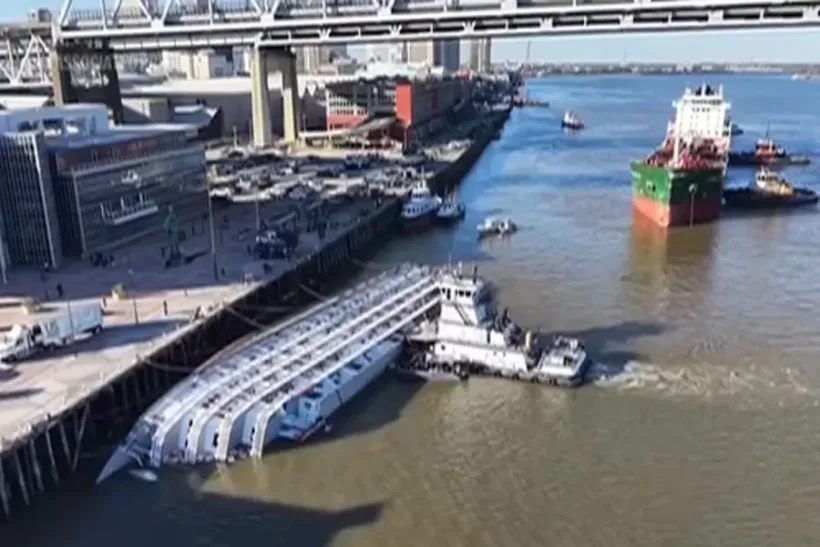
The tanker Atlantic Asphalt struck the cruise ship American Heritage in New Orleans. The impact caused the riverboat to capsize and partially sink in the Mississippi River. The accident occurred on Friday, November 13, prompting a large-scale rescue operation involving emergency services and crews from nearby vessels.
Collision at the Port of New Orleans
On November 13, the American Cruise Lines riverboat American Heritage was completing an eight-day cruise along the Mississippi River. It docked at the Port of New Orleans at 10:30 a.m. local time, and tourists began disembarking. Two hours later, around 129 passengers and members of the crew were still on board.
At the same time, Atlantic Asphalt, a tanker about 160 meters long designed to carry asphalt and bitumen, was traveling along the Mississippi. At 12:30 p.m., it struck the side of American Heritage near the Crescent City Connection bridge.
The impact caused the cruise ship to list sharply, roll onto its side and partially submerge. Emergency services began evacuating people, while traffic on that stretch of the Mississippi River was temporarily restricted.
Crews from nearby tugboats and other vessels joined efforts to rescue passengers. They pulled people out of the river: some were wearing life jackets or holding on to lifebuoys, while others were trying to escape the capsized riverboat. CBS News reported that crews from neighboring vessels rescued more than a dozen people from the water.
The US Coast Guard sent boats and a helicopter to the scene. Firefighters, port police and city police also took part in the operation. The Associated Press reported that dozens of people, including two police officers, were rescued from the river. Other evacuees were taken to the port administration building for medical examinations, while cruise company representatives checked passenger lists.
Injuries and Assistance for Passengers
After the rescue operation, authorities confirmed that all 180 people aboard American Heritage had survived. No one was missing. Thirty-two injured people were taken to hospitals in New Orleans, but doctors found no life-threatening injuries. Two port police officers involved in the evacuation also required medical attention.
For many travelers, the cruise ship accident on the Mississippi River meant losing documents, phones, keys and luggage. Some could not contact their families or arrange transportation home. Finding accommodation also became a problem as the trip ended earlier than planned.
American Cruise Lines worked with local authorities to assist those affected. Hotel rooms were arranged for passengers, while officials helped with transportation and contacting relatives. Louisiana authorities also offered support to travelers who needed additional assistance.
Shipping Restrictions and Causes of the Accident
Following the collision, the US Coast Guard closed a roughly five-kilometer stretch of the Mississippi River to traffic. Ferry services across the river in New Orleans were also suspended, and a planned waterfront festival was canceled. The restrictions affected one of the country's most important waterways for transporting industrial and agricultural goods.
The cause of the accident has not yet been established. The Maritime Executive reported that the tanker Atlantic Asphalt veered sharply to starboard after passing the Crescent City Connection bridge. The crew tried to stop it by dropping the port anchor, but could not prevent the collision. Coast Guard spokesperson Melanie Burnham cited a possible loss of steering control, although a mechanical failure has not been confirmed.
The US Coast Guard is investigating the incident. The National Transportation Safety Board (NTSB) has also joined the investigation.