







 Vietnam Mortgage Surge Pushes Homes Out of Reach
 Lithuanian Apartment Prices Accelerate Across Major Cities
 London Flats Lose Value Ahead of Leasehold Reform
 Construction of the Batumi–Sarpi Highway Begins in Georgia
 Baltic Property Investment Accelerates in 2026
 Hong Kong and Singapore Renew Their Expat Rivalry
Dubai Property Market Faces 2026 Stress Test
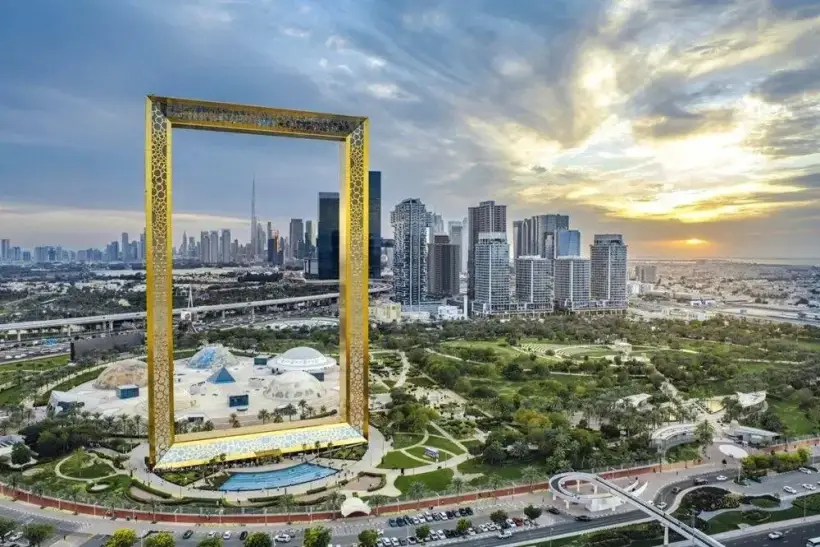
Record 2025 Gives Way to Caution
After three years of rapid expansion, Dubai’s real estate market entered 2026 under new pressure. In 2025, sales reached $187 billion across 215,000 transactions, marking a historic peak. By March 2026, however, investor behaviour shifted noticeably. The era of FOMO-driven buying has given way to a wait-and-watch cycle marked by selective and data-driven decisions.
Supply-Sentiment Divergence Emerges
More than 120,000 units are officially scheduled for delivery in 2026, yet market analysts estimate that only about 48% of that pipeline, roughly 34,740 units, will realistically be handed over this year.
A significant share of new supply is concentrated in communities such as Jumeirah Village Circle, where 16,852 units are expected between 2025 and 2027. This concentration increases localised pricing risk. In mid-market segments, final deal discounts of 2% to 7% are increasingly common, signalling stronger buyer negotiating power and a transition from urgency to selectivity.
Geopolitical Uncertainty Slows Momentum
Regional tensions have not triggered panic but have amplified caution. Brokers report that geopolitical headlines often create a temporary 48–72 hour transaction pause while investors reassess risk exposure. New investors tend to react more strongly, whereas experienced buyers view such slowdowns as tactical entry opportunities.
Capital flows from India and Pakistan are not expected to exit the market entirely, but some investors are delaying negotiations or postponing closings until regional clarity improves.
Investor Behaviour Shifts Toward Fundamentals
Unlike 2025’s momentum-driven purchases, 2026 decisions are grounded in fundamentals. Dubai continues to benefit from its zero income tax regime, residency-linked investment framework and strong infrastructure.
Rental yields remain globally competitive, ranging between 8% and 9.5% for mid-market apartments and between 5% and 8.4% for villas. In January 2026, AED 43 billion, nearly 60% of residential transaction value, came from cash deals, underscoring strong liquidity support within the system.
Segmentation and Resilience Zones
The market is not broadly declining but increasingly segmented. The ultra-luxury segment remains resilient, with 990 homes priced above AED 10 million sold in January 2026 alone.
Dubai’s population surpassing 4 million provides structural demand support, reducing the likelihood of sharp price declines in the short term.
Recalibration, Not Collapse
While US–Israel–Iran tensions have introduced uncertainty, analysts suggest moderation rather than collapse is the more probable scenario. Buyers are negotiating more firmly and extending timelines, which may result in mild price adjustments in selected mid-market clusters. A sustained drop in prices or rents would likely require a prolonged and broader regional escalation.
As reported by experts at International Investment, 2026 represents a resilience test rather than a structural downturn for Dubai’s property market. However, the combination of elevated supply levels and extended geopolitical uncertainty could evolve from recalibration into a deeper correction if liquidity tightens and foreign capital flows remain cautious throughout the second half of the year.