







 Vietnam Mortgage Surge Pushes Homes Out of Reach
 Lithuanian Apartment Prices Accelerate Across Major Cities
 London Flats Lose Value Ahead of Leasehold Reform
 Construction of the Batumi–Sarpi Highway Begins in Georgia
 Baltic Property Investment Accelerates in 2026
 Hong Kong and Singapore Renew Their Expat Rivalry
Travelers Stranded as War Exposes Insurance Gaps
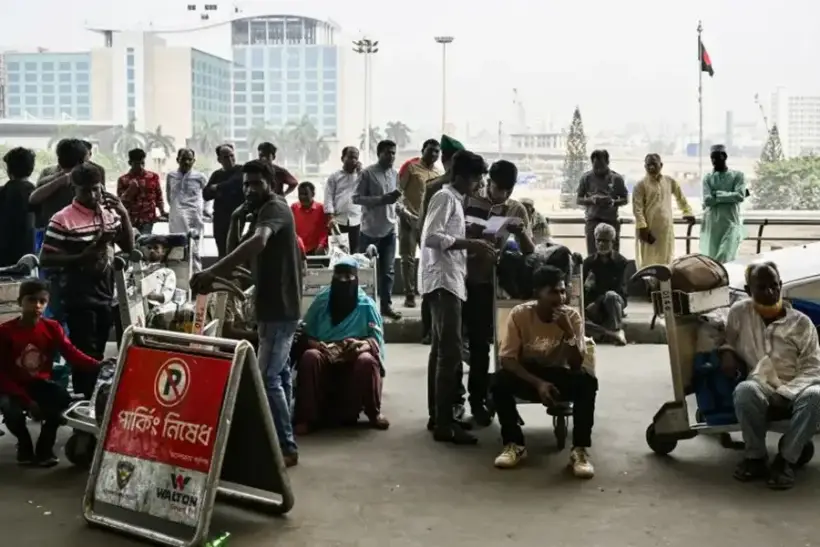
Flight cancellations reveal limits of travel insurance coverage
The escalation of the Middle East conflict has left hundreds of thousands of travelers stranded worldwide, exposing a major limitation in standard travel insurance policies. Many passengers affected by canceled flights and extended travel disruptions have discovered that their insurance policies do not cover expenses caused by war.
Major insurers including Allianz SE and Zurich Insurance Group have confirmed that standard travel insurance policies exclude claims directly linked to armed conflict.
As a result, travelers forced to purchase new tickets or extend hotel stays are often paying thousands of dollars out of pocket.
Gulf airport closures disrupt global travel routes
The conflict has forced the closure of key airports across the Gulf region, including Dubai’s main international airport, one of the world’s most important long-haul transit hubs.
Industry estimates indicate that at least 23,000 flights connected to Middle Eastern hubs have been canceled.
These disruptions have severely affected global travel routes between Europe, Asia and Australia, forcing airlines to reroute flights and suspend operations.
For many passengers, the only available option has been purchasing alternative tickets at significantly higher prices.
Why war-related claims are excluded from policies
The lack of insurance coverage stems from standard policy exclusions applied across the travel insurance industry. Most policies contain explicit clauses excluding losses caused by war, armed conflict or political instability.
Insurance providers argue that war-related risks are extremely difficult to quantify and price within traditional insurance models.
According to industry representatives, including such risks in standard travel policies would dramatically increase premiums for all travelers.
Limited protection even under premium policies
Some insurers offer premium policies that allow travelers to cancel trips for almost any reason. However, even these plans typically provide only partial reimbursements.
Coverage may be limited to a percentage of prepaid travel costs and often includes strict caps on reimbursement amounts.
In many cases, these policies still exclude direct consequences of armed conflicts.
Travelers criticize hidden policy conditions
Many stranded travelers say they were unaware of these limitations until after their trips were disrupted.
On social media platforms and travel forums, passengers have shared stories of unexpectedly high expenses after flights were canceled or rerouted due to the conflict.
Some travelers reported being forced to purchase expensive replacement flights after airlines suspended operations across the Middle East.
When filing insurance claims, they discovered that the disruption was classified as a consequence of military action and therefore excluded from coverage.
Passenger rights vary across jurisdictions
Despite insurance limitations, passengers may still have certain protections depending on the airline and route involved.
In the European Union, regulations require airlines to provide meals and hotel accommodation during long delays or cancellations, even when extraordinary circumstances such as armed conflict are involved.
However, these protections do not typically cover replacement flight costs or other travel expenses.
Legal experts note that global passenger protection remains fragmented, with rules varying widely across jurisdictions.
Crisis could reshape travel risk awareness
The disruption comes at a time when global aviation and tourism were only beginning to recover from the pandemic.
International travel demand had been gradually returning to pre-pandemic levels, with the Gulf region serving as a key transit corridor for long-haul routes.
However, the latest geopolitical shock may change how travelers assess risk and evaluate travel insurance coverage when planning international trips.
Industry analysts suggest that travelers are becoming more attentive to policy details and political risks when purchasing travel insurance.
As experts at International Investment note, the large-scale travel disruption caused by the conflict highlights structural limitations in the global travel insurance market. Most standard policies exclude war-related risks, leaving travelers financially exposed during geopolitical crises. In the long term, such events may push insurers to develop new products and encourage stronger transparency in travel insurance coverage.