










Dubai Tests Its Resilience
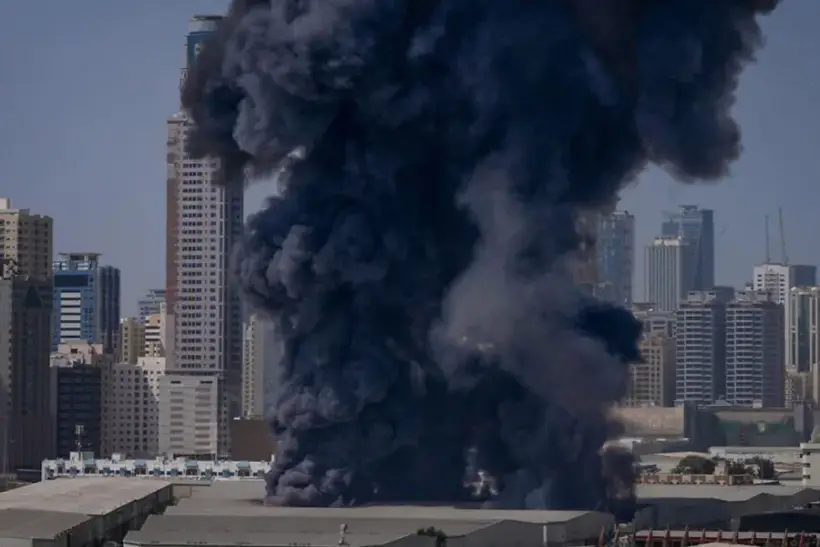
The war around Iran has struck at Dubai’s most valuable intangible asset: its reputation as a safe haven for foreign capital and expatriates, including Britons who had increasingly come to see the emirate as an alternative to London. That vulnerability was at the center of Bloomberg’s March 20 report, which showed how missile and drone threats, flight disruption and rising regional risk are challenging the model that helped attract people, wealth and housing demand to Dubai.
Why Dubai became a magnet for UK expats and wealth
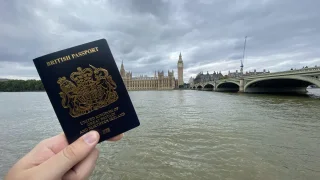
Over recent years, Dubai strengthened its appeal to British professionals, entrepreneurs and wealthy families thanks to lighter taxation, a global lifestyle proposition and a fast-moving property market. The trend gained further momentum after changes in the UK tax regime: from April 6, 2025, the previous non-dom system ended and was replaced by a residence-based framework, including a new four-year foreign income and gains regime for eligible residents.
For Dubai, that migration wave mattered far beyond image. Knight Frank said in Destination Dubai 2025 that the emirate recorded a record 169,000 property transactions worth AED 367 billion in 2024, supported by strong international demand from high-net-worth buyers drawn by safety, infrastructure and quality of life. The same research surveyed 387 HNWIs across the UK, India, Saudi Arabia and East Asia, underlining the role of British demand within a broader cross-border investment flow.
Iran war pressure puts Dubai’s safe-haven model on trial
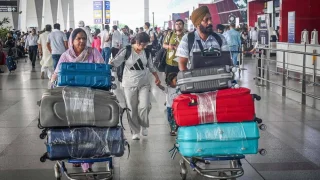
That picture shifted in late February and March 2026. According to AP and other international reporting, the UAE has faced the fallout from the escalation around Iran, including missile and drone interceptions, a temporary airspace closure, attacks across the region and transport disruption. The Financial Times and Bloomberg had already noted that even limited damage in Dubai was enough to weaken the sense of total security that underpinned the emirate’s appeal to international business and mobile wealth.
That matters acutely because Dubai’s economic model depends on foreigners. According to the UAE’s foreign ministry, expatriates outnumber nationals in the country, and more than 200 nationalities live and work there. In such a structure, even a short geopolitical shock can quickly become more than a security issue; it becomes a test of resident retention, capital stability and business continuity.
UK expats are caught between Gulf risk and British tax rules
For Britons, the present crisis has become especially complex because it combines regional insecurity with strict UK tax-residency rules. HMRC states that, in exceptional circumstances, up to 60 days in the UK may be disregarded, but this is neither automatic nor guaranteed and is assessed case by case. At the same time, the UK framework that took effect from April 2025 is less accommodating for globally mobile wealthy taxpayers than the previous non-dom structure.
That is why some UK residents based in the UAE who left during the regional escalation have been reluctant to return to Britain. The Guardian reported that some wealthy Britons sought temporary alternatives in Ireland and France to avoid re-entering UK tax residence before the tax year closes on April 5. The Financial Times separately reported that UAE authorities were considering a more flexible approach to preserving tax status for expatriates whose presence in the country had been disrupted by the conflict.
Dubai property faces a new kind of risk in 2026
It is still too early to call a structural reversal in Dubai real estate, but the nature of the risk has clearly changed. In 2024 and 2025, the market story centered on population growth, transaction momentum and international demand. By March 2026, the dominant issue had become a geopolitical risk premium. Bloomberg separately reported that the Iran war was already prompting some wealthy Asian clients to reassess alternatives to Dubai, including Singapore and Hong Kong. For British buyers and residents, the logic is similar: the decision now depends not only on tax, returns and lifestyle, but also on physical security.
That said, there is no firm evidence yet of a permanent or irreversible exodus. Demand has shown inertia, and large-ticket transactions in the prime segment have continued even during the conflict. Some investors still see the current disruption as a temporary shock rather than the end of Dubai’s role as a global capital hub. Even so, the fact that safety has become a variable under review marks a meaningful shift in market psychology and in the calculations of overseas buyers.
What the geopolitical test means for Dubai’s next phase
The central question is no longer whether Dubai remains attractive today, but how quickly it can restore a sense of predictability. Bloomberg has noted that the speed of recovery in Dubai and Abu Dhabi depends on how long the conflict lasts. If the security shock proves temporary, the emirate is likely to preserve many of its advantages: low tax, international infrastructure, long-term residency pathways including the Golden Visa, and a hub position between Europe, Asia and the Middle East. If the threat persists, the core proposition of Dubai as a safe alternative for British expatriates leaving a heavier UK tax and regulatory environment will come under greater strain.
As International Investment experts note, the current crisis does not erase Dubai’s structural strengths, but it does shift the conversation away from yields and tax efficiency toward geopolitical resilience, meaning that British expats and investors are likely to make decisions more cautiously in 2026 than they did during the post-pandemic boom.
Georgia as an Alternative: Safety and Reputation
Against the backdrop of the war around Iran, some internationally mobile residents and investors are inevitably once again looking at Georgia as a fallback option in the region. The country has an important advantage in terms of risk perception: unlike the Gulf states, Georgia is not located within the current Middle Eastern war zone, while Tbilisi and Batumi remain for many foreigners psychologically more comfortable locations in terms of everyday safety and distance from missile escalation.
From an economic perspective, Georgia is showing greater resilience than might have been expected amid the political noise. In late 2025, the IMF noted that the country’s economy continued to deliver strong results and projected GDP growth of 5.3% in 2026. In Tbilisi’s housing market, demand in the primary segment remained steady at the beginning of 2026, while local analysts at Galt & Taggart reported rising sales by developers. This means that, from both a real estate and relocation perspective, Georgia remains a viable alternative.
Against the backdrop of the conflict around Iran, Georgia has begun to attract additional attention from capital seeking calmer regional jurisdictions. Market signals already point to growing interest in Tbilisi and Batumi as alternatives to the riskier locations of the Middle East. TBC Capital notes that under a short-term conflict scenario, 2026 could prove stronger than previously expected for the Georgian real estate market precisely because of potential migration from the region, which would support demand for both rentals and home purchases. These estimates align with data from Galt & Taggart, according to which 2026 in Tbilisi began with strong demand in the primary market. Official statistics also show that foreign capital continues to maintain a visible presence in Georgia: according to Geostat’s preliminary data, FDI into the country reached $1.69 billion in 2025, while real estate and construction were among the largest investment destinations in the fourth quarter.