







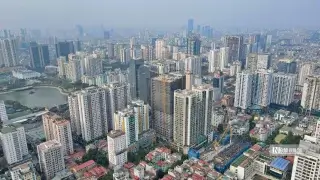
 Vietnam Mortgage Surge Pushes Homes Out of Reach
 Lithuanian Apartment Prices Accelerate Across Major Cities
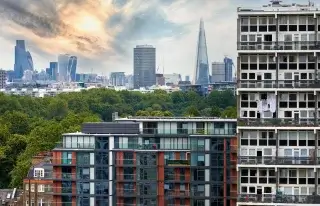 London Flats Lose Value Ahead of Leasehold Reform
 Construction of the Batumi–Sarpi Highway Begins in Georgia
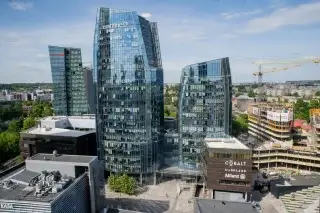 Baltic Property Investment Accelerates in 2026
 Hong Kong and Singapore Renew Their Expat Rivalry
The UAE Shifts to Capital Retention. Dubai’s stimulus package exposed a new policy logic

The UAE is increasingly describing emergency action in the language of resilience, growth and opportunity, yet the measures adopted in Dubai at the end of March look far more like a strategy to retain capital and business under wartime risk. On March 30, authorities approved a AED 1 billion incentives package starting April 1 for a three-to-six-month period. Officially, the package is meant to strengthen resilience and ease financial pressure on businesses and households. In practical terms, the decision suggests that the UAE’s main commercial hub sees the external shock as prolonged and economically meaningful rather than as a short-lived headline event.
In Dubai’s official messaging, the move is framed as support for readiness and future growth. Investors, however, tend to read policy through function rather than branding. When a government says the economy is stable while at the same time rolling out special relief, the market understands that normal operating conditions have already been disrupted. Emergency incentives are not designed for a business environment that is expanding on autopilot. They are designed to preserve liquidity, employment, spending and commercial confidence when war, transport disruptions and geopolitical fear begin to weaken the model.
Military risk has become an economic variable in the UAE
The defining change in 2026 is that security is no longer a distant backdrop to the UAE economy. In March, the U.S. State Department ordered the departure of non-emergency personnel and family members from the UAE and advised Americans to reconsider travel because of the threat of armed conflict and terrorism. For global investors and employers, that is not a symbolic diplomatic move. It is a sign that war risk and strike exposure are now being priced into decisions about staffing, mobility, operations and capital allocation.
Dubai’s tourism and economic authorities have tried to preserve the emirate’s image as a functioning and safe hub. The Dubai Department of Economy and Tourism says the city remains stable, public services are functioning and authorities are closely monitoring developments. Yet the need for dedicated advisories, constant reassurance and tourism-sector contingency messaging points to something else: an economy in crisis-management mode, not a market moving through a standard growth cycle.
Business has not vanished, but it has begun to hedge by leaving
There is not yet a complete official 2026 dataset proving that aggregate investment into the UAE has collapsed. What is already visible, however, may matter more than lagging annual statistics. International firms and financial institutions have started behaving as they do in jurisdictions with elevated war risk. Bloomberg reported that major Wall Street banks including Goldman Sachs, Morgan Stanley and Citigroup allowed staff in the UAE to leave temporarily and work remotely. Reuters separately reported that Bloomberg itself gave employees in the Gulf, including staff at its Dubai regional headquarters, the option to temporarily relocate outside the region.
That does not amount to a full corporate exodus, but it does represent a deeper break in perception. The UAE is no longer being treated by all international players as a place where physical presence is assumed to continue without interruption. A fallback plan has appeared and, in some cases, it has already been activated. Financial News London described a “new normal” in which face-to-face activity has declined, remote work has increased and financial professionals have become more cautious about investor mobility and market access.
Aviation and tourism are registering the shock before annual data do
Transport and travel tend to reveal a confidence crisis faster than annual macroeconomic releases, and that pattern is now visible in the UAE. Emirates says that following the partial reopening of regional airspace it is operating a reduced flight schedule and continues to adjust operations depending on the situation. Visit Dubai separately confirms phased restoration of flights and tells visitors to keep checking airline updates. When the country’s flagship carrier and main tourism platform both move into continuous disruption-management mode, that is no longer background noise. It is direct pressure on one of the central pillars of the non-oil economy.
Dubai’s investment appeal depends not only on taxes, real estate and infrastructure but also on a sense of mobility, accessibility and personal security. Once that layer begins to crack, the cost of entering the market rises sharply for new investors and businesses. Even if capital does not leave all at once, the risk premium goes up, planning horizons shrink and the language of “growth opportunities” begins to sound less like expansion strategy and more like mood management.
Harder domestic measures reinforce the sense of prolonged instability
Another important signal comes from internal policy. Amid the war, the UAE has tightened its approach toward Iranian-linked presence through visa restrictions, entry and transit bans for most Iranian nationals, and the shutdown of longstanding Iranian institutions, according to current reporting. The Wall Street Journal says the UAE is preparing for a harder scenario around the Strait of Hormuz and reassessing coexistence arrangements with the large Iranian community long embedded in Dubai’s economy. This is not cosmetic positioning. It suggests that the state is rewriting parts of its operating environment for wartime conditions and a longer period of tension.
That is why the idea that the UAE is preparing for prolonged instability and war now looks less like rhetoric and more like a factual inference from its own actions. Emergency business relief, official conflict warnings, reduced air operations, temporary staff relocations and tougher internal controls together form the picture of an economy defending itself against war and its spillovers rather than a market simply entering another phase of growth.
Why Georgia looks calmer by comparison
Georgia’s economic backdrop remains strong enough to reinforce that contrast. The World Bank says the economy grew by 9.4% in 2024, and while growth is expected to moderate, it remains high by regional standards. Georgia still presents itself as a fast-growing economy driven by services, construction, trade, IT and tourism. That profile matters at a time when some investors are no longer looking only for scale, but for growth with a lower geopolitical temperature.
Tourism and foreign investment in Georgia continue to support the case
Georgia’s tourism data reinforce that narrative. According to the Georgian National Tourism Administration, the country received 3.2 million international travelers in the first half of 2025, while international travel revenue rose 3.8% year on year to $2 billion. That means Georgia is expanding not just visitor numbers but also hard-currency earnings from tourism. For full-year 2025, revenue from international travel reached a record $4.69 billion, up 6% from 2024, according to National Bank of Georgia figures cited in current reporting.
In foreign direct investment, Georgia is much smaller than the UAE in absolute terms, but it remains resilient for a small economy. Geostat put adjusted 2024 FDI inflows at $1.569 billion, and preliminary fourth-quarter 2025 data point to a full-year total of $1.6887 billion. That suggests foreign capital is still arriving even with political noise and a smaller domestic market. For many investors, the combination of rising tourism revenue, strong GDP growth and continuing FDI may appear more convincing than a richer but militarily stressed investment environment in the Gulf.
Georgia’s risk profile may now feel easier than the UAE’s
In peacetime perception rankings, the UAE has traditionally been regarded as one of the safest countries in the world, and user-generated indices such as Numbeo still place it very high. In 2026, though, investors and travelers care less about abstract everyday safety and more about the probability of military escalation, airspace disruption and emergency relocation. On that measure, Georgia currently looks calmer. Even with the UAE still ranking higher in consumer-style safety indices, Georgia’s practical investment safety may look easier for selected projects right now.
As International Investment experts note, the UAE’s current policy line reads less like a new phase of expansion and more like a transition from capital attraction to capital retention. The more emergency measures are branded as “growth points” and “resilience,” the clearer the underlying reality becomes: the state is insuring its economy against prolonged instability, while businesses and investors have already started incorporating relocation, temporary withdrawal and defensive planning into their operating assumptions. In that environment, Georgia stands not as a substitute in scale, but as a lower-temperature alternative in terms of immediate risk, with tourism growth, GDP momentum and foreign investment still moving in its favor.
FAQ on the UAE investment crisis
Is there already a full collapse in UAE investment right now
There is not yet a complete official 2026 dataset proving an aggregate collapse in nationwide FDI. But current signals are clearly crisis-like: Dubai launched a AED 1 billion emergency support package, the U.S. warned of armed-conflict risk, Emirates moved to reduced scheduling and major international firms allowed temporary staff relocation.
Why is Dubai’s package viewed as crisis management rather than growth policy
Because the package is explicitly designed to ease financial pressure on businesses and households over the coming months. Measures of that kind are introduced when authorities expect stress on turnover, demand, employment and confidence, not when the economy is simply executing a normal expansion plan.
Can it already be said that business is leaving the UAE
The most accurate wording is that part of international business has activated temporary relocation and remote-work contingencies. That is supported by reporting about staff relocation options at banks and multinational employers operating in the UAE.
Why is Georgia being discussed as an alternative
Because some investors now prioritize a balance of growth, safety and predictability over maximum market scale. Georgia offers strong GDP growth, record tourism income and continuing foreign investment, while the UAE in 2026 is operating under direct war-risk pressure.