







 Vietnam Mortgage Surge Pushes Homes Out of Reach
 Lithuanian Apartment Prices Accelerate Across Major Cities
 London Flats Lose Value Ahead of Leasehold Reform
 Construction of the Batumi–Sarpi Highway Begins in Georgia
 Baltic Property Investment Accelerates in 2026
 Hong Kong and Singapore Renew Their Expat Rivalry
US Inflation Slowed Before Iran War Shock
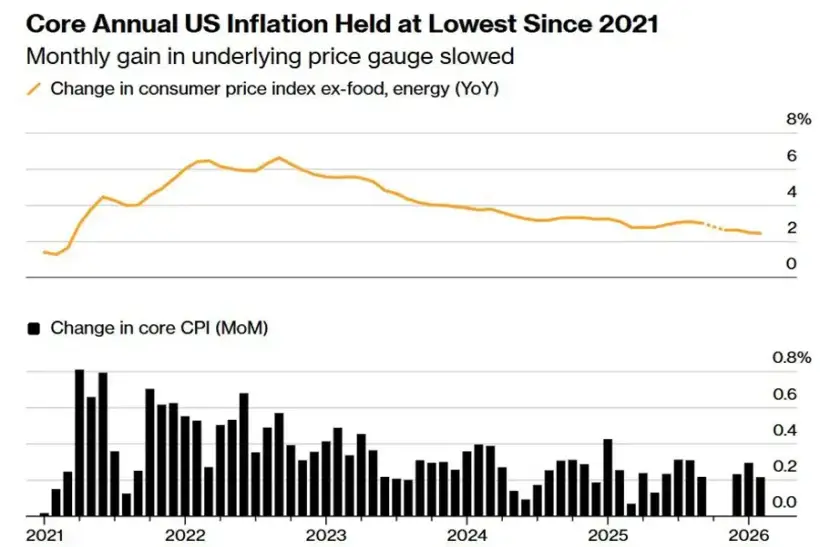
CPI data shows easing price pressures
US consumer inflation slowed in February 2026, broadly matching economists’ expectations and offering one of the last clear signals about price trends before geopolitical tensions intensified in the Middle East. According to the US Bureau of Labor Statistics, the Consumer Price Index increased 0.3% month-on-month and 2.4% compared with a year earlier. Core inflation, which excludes volatile food and energy components, stood at 2.5% year-over-year.
These figures confirmed a gradual cooling of price pressures after several years of elevated inflation. Economists note that the core CPI rose just 0.2% in February, suggesting slower growth in service and goods prices.
Housing-related costs were one of the key factors behind the moderation. Rent increased only 0.1% during the month, the slowest pace since early 2021.
Energy shock threatens to reshape inflation outlook
Despite the relatively stable February figures, economists warn that the inflation trajectory could change rapidly due to the conflict in the Middle East. Military escalation involving the United States, Israel and Iran in late February has already triggered a sharp jump in oil prices and fuel costs.
Crude oil prices briefly approached $120 per barrel before stabilizing around $80–$85, highlighting the sensitivity of global energy markets to geopolitical risks. Higher energy prices typically translate into increased transportation, manufacturing and food costs across the economy.
Analysts warn that if oil remains at elevated levels, US inflation could accelerate again and approach 2.9% in the coming months.
Another key concern is the potential disruption of shipments through the Strait of Hormuz, a critical global oil transit route. Any prolonged interruption could intensify inflationary pressures worldwide.
Federal Reserve remains cautious on policy
The inflation report arrived just days before the Federal Reserve’s upcoming policy meeting. Given the moderate pace of price growth, policymakers are expected to maintain a cautious approach toward interest rates.
The Fed continues to target inflation close to 2%. While current readings are near that threshold, officials remain concerned about potential new pressures stemming from energy markets, tariffs and geopolitical uncertainty.
Financial markets have already adjusted expectations for rate cuts. Investors now anticipate only one or two reductions this year, compared with earlier forecasts of several cuts.
Market reaction and investor sentiment
Financial markets reacted relatively calmly to the inflation data release. The yield on the benchmark 10-year US Treasury note remained near 4.18%, while major stock indexes showed mixed performance.
However, the escalation of the Middle East conflict increased volatility. Oil prices surged and energy stocks gained support from investors, while the Dow Jones Industrial Average temporarily declined amid broader uncertainty.
Global growth outlook and emerging markets
Amid growing geopolitical and macroeconomic uncertainty, investors are increasingly exploring new growth markets. Georgia has emerged as one of the most dynamic economies in the region in recent years.
The country has recorded strong GDP growth, expanding tourism and rising foreign investment. Tbilisi and Batumi are attracting international developers and technology companies, while Georgia’s liberal tax regime and relatively open investment environment continue to draw global capital.
Analysts note that Georgia is gradually positioning itself as a regional hub for investment in real estate, infrastructure and digital industries, benefiting from its strategic location between Europe and Asia.
As experts at International Investment note, the combination of global economic uncertainty and structural reforms is making emerging markets such as Georgia increasingly attractive for long-term investors seeking diversification, growth and stable entry points.