







 Australia’s Spring Auctions Rise but Remain Well Below 2025
 Number of Foreigners Holding Turkish Residence Permits Exceeds 1.27 Million
 Demand from Russian Tourists for Holidays in Georgia Rises by 20–25%
 Montenegro Property Buying Costs in 2026
 Four in Ten Companies Would Not Choose Slovakia
 Gulf Countries Prepare Unified Tourist Visa
US Home Insurance Keeps Rising on Severe Weather
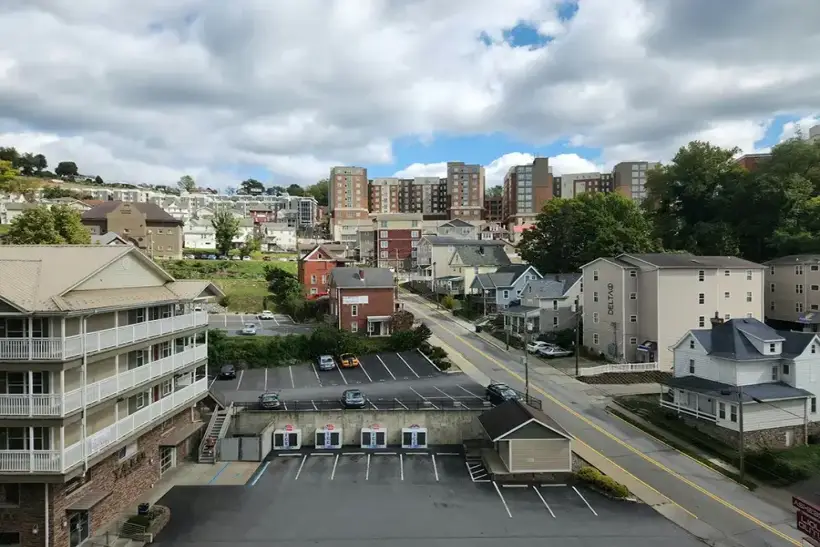
US home insurance costs are set to rise again in 2026, extending a streak of annual increases to a fifth straight year as insurers reprice for extreme-weather losses and higher rebuilding costs. Bloomberg reported, citing Insurify, that the average annual homeowners insurance premium is projected to increase another 4% this year to about $3,057 after a 12% jump in 2025. Since 2021, premiums have risen 46%, or roughly three times the pace of inflation over the same period.
The increase is no longer a narrow issue confined to a handful of coastal disaster zones and is becoming a broader affordability problem across the US housing market. LendingTree found that home insurance rates climbed 40.4% cumulatively nationwide between 2019 and 2024. The sharpest annual increase in that span came in 2024, when rates rose 11.4%. The average annual premium reached $2,801 nationwide, while Oklahoma and Nebraska both posted average rates that were more than double the US average.
Insurance is also becoming a larger part of the broader cost of owning a home. Cotality said non-mortgage housing costs, including insurance, utilities and property taxes, jumped 30% in 2025, with little sign that the pressure will ease quickly. That shift matters because it means affordability is being eroded not only by mortgage rates and home prices, but increasingly by recurring ownership costs that are harder for buyers and lenders to predict.
Federal data show that climate risk is already feeding directly into both pricing and policy availability. In January 2025, the US Treasury said average homeowners insurance premiums increased 8.7% faster than inflation from 2018 through 2022. In ZIP codes with the highest expected climate-related losses, homeowners paid an average of $2,321 in premiums, which was 82% more than in the lowest-risk ZIP codes. Nonrenewal rates in the highest-risk areas were also about 80% higher on average, showing that the market strain is not limited to price increases and increasingly affects access to coverage itself.
Treasury also said the US recorded 84 billion-dollar weather disasters from 2018 to 2022, excluding floods, with losses exceeding $609 billion. That matters for housing because standard homeowners insurance generally does not cover flooding, leaving a growing mismatch between climate exposure, coverage design and the real cost of rebuilding after major events.
Global catastrophe figures suggest the pressure on insurers is unlikely to fade soon. Munich Re said insured losses from so-called non-peak perils, including floods, severe thunderstorms and wildfires, hit a record $98 billion in 2025, while total insured losses from natural disasters reached $108 billion. Swiss Re separately estimated that insured losses from severe convective storms alone reached $50 billion in 2025, making it the third-costliest year on record for that peril category and underscoring the importance of US tornado, hail and wind events in the global loss picture.
State-level data show that premium inflation is spreading well beyond the most familiar hurricane and wildfire markets. LendingTree found that Colorado posted the largest cumulative increase in home insurance rates from 2019 to 2024 at 76.6%, followed by Nebraska at 72.3% and Utah at 70.6%. No US state recorded a decline in home insurance rates in 2024. That widening geography is one of the clearest signs that the repricing of risk is moving inland and broadening across the national housing market.
For housing, the result is a steady increase in the true cost of ownership even where home-price growth or mortgage rates begin to cool. Insurance is becoming a standalone affordability variable, one that cannot easily be locked in for years the way a fixed mortgage can. With severe weather losses mounting, rebuilding costs still elevated and insurers facing tougher underwriting conditions, current projections point to further upward pressure in 2026 rather than relief.
As International Investment experts report, the US housing market is entering a phase in which insurance costs are becoming one of the most important variables in the total cost of owning a home. For buyers, investors and homeowners, that means underwriting decisions increasingly need to account not only for home prices and financing, but also for local climate exposure, policy nonrenewal trends and the likelihood of continued premium increases.