









Trump Hardens Tone Before Iran Talks
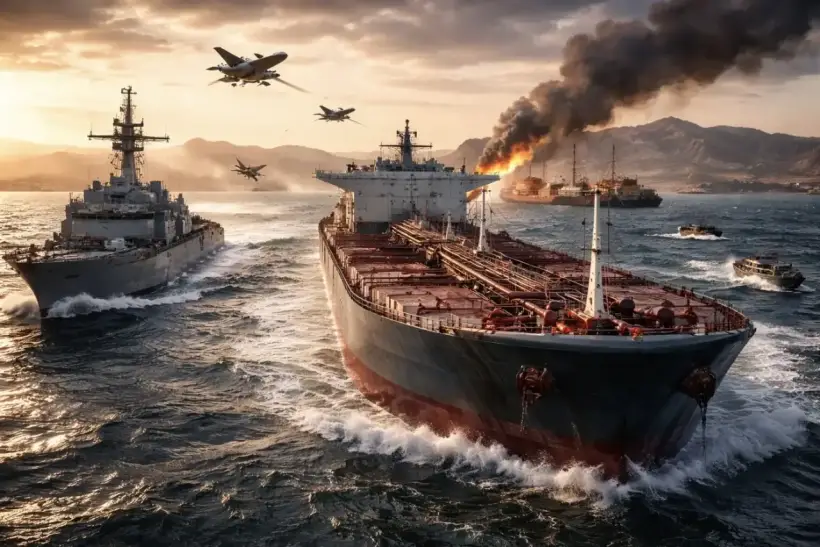
Trump raises pressure over the Strait of Hormuz
Hormuz becomes the key condition before US-Iran talks
President Donald Trump hardened his rhetoric toward Iran on April 10, making clear ahead of peace talks in Islamabad that full restoration of shipping through the Strait of Hormuz remains one of Washington’s core conditions for de-escalation. Bloomberg reported that Trump warned of consequences if Tehran failed to ensure the waterway was effectively reopened before the next round of contacts. At the same time, other major outlets reported that the ceasefire remains fragile and that traffic through the Gulf’s most critical shipping route is still far below normal levels.
Why the Strait of Hormuz matters so much
The Strait of Hormuz is one of the world’s most important energy chokepoints. According to the US Energy Information Administration, roughly one-fifth of global liquid fuels consumption moves through the passage, along with major volumes of liquefied natural gas. Any disruption there quickly feeds into oil prices, shipping insurance costs and inflation expectations across the global economy. That is why the current dispute has moved well beyond a regional security issue and become a worldwide macroeconomic risk.
What Trump said before the talks
According to multiple reports, Trump accused Iran of doing a poor job of allowing oil flows through the strait and separately warned Tehran against charging ships for passage. The message from Washington is that the White House wants to see not only a political promise to reopen Hormuz, but a visible and practical return of maritime traffic before the talks, or at least in parallel with them. In effect, the administration is linking the credibility of the ceasefire to the movement of ships and oil, not merely to the absence of direct fire.
What is happening to shipping in practice
Despite the ceasefire, ship movements remain severely constrained. CBS, citing ship-tracking data, reported that only about a dozen vessels passed through the strait in the first two days of the truce, far below normal levels. The Guardian also quoted ADNOC chief Sultan Al Jaber as saying the strait was effectively not open. The same reporting said hundreds of ships were waiting for passage, while large numbers of tankers and commercial vessels remained stuck near the approaches.
Why reported tanker tolls triggered such a sharp reaction
An additional source of tension has been reporting that Iran may be trying to charge tankers for passage through Hormuz. Axios and MarketWatch described demands framed either as a fee per barrel of oil or a fixed amount per tanker. Legally, this is a highly sensitive issue because the international regime for transit passage through such straits is built on freedom of navigation, not unilateral coercive fees. For Washington and Gulf producers, such a mechanism would mean not only a commercial burden but also de facto recognition of a new Iranian lever over global energy flows.
How oil markets are reacting
Oil markets have already shown how sensitive they are to any change in the status of Hormuz. After the announcement of a two-week ceasefire, oil initially fell sharply. Associated Press reported Brent at about $94.74 a barrel and US crude at $96.83. But by April 9-10, when it became clear that shipping had not genuinely normalised, prices turned higher again. The Guardian and other outlets reported Brent moving back toward $99-$100 a barrel, while US crude approached the $100 level. That pattern suggests markets are pricing not just the existence of a ceasefire, but whether it is actually being implemented.
What is known about the US-Iran talks
As of April 10, US-Iran talks are expected to take place in Islamabad with Pakistan acting as mediator. The Wall Street Journal and other reporting said Iran’s delegation is being led by Foreign Minister Abbas Araghchi, while the US side is expected to be represented by Vice President JD Vance. The National reported that Iran had already accused the US of violating elements of the peace framework even before the main meeting. That means the talks are starting in an atmosphere of deep mistrust, with Hormuz not as background context but as one of the central bargaining points.
Why the ceasefire still looks unstable
The fragility of the arrangement is heightened by the fact that the dispute extends beyond the US and Iran themselves. The Washington Post and AP reported conflicting interpretations of the ceasefire, including whether it covers Lebanon and Iran-linked regional actors. The Guardian and AP also reported that continued Israeli strikes in Lebanon and tensions around Iran’s allies are complicating the diplomatic picture. As a result, even if Washington and Tehran keep the channel open, any new incident in Lebanon, Saudi Arabia or Hormuz itself could rapidly derail the process.
What this means for the world economy
Economically, the Hormuz dispute has already moved beyond the oil market alone. Higher crude prices increase the risk of stickier inflation, complicate prospects for lower interest rates and raise costs across shipping, insurance, aviation fuel and household energy bills. With traffic through the strait still constrained, investors are being forced to price in the possibility of a longer-lasting energy shock even with a formal ceasefire in place. That is why financial markets remain so sensitive to each new headline from the region.
As International Investment experts note, Trump’s April 10 warning shows that for the US, the Strait of Hormuz has become the main reality test for any future agreement with Iran. Until shipping flows return closer to normal, markets and diplomats are likely to treat the ceasefire as incomplete and any progress in talks as conditional and reversible.
FAQ
Why is the Strait of Hormuz so important?
Because roughly one-fifth of global liquid fuels consumption moves through it, so any disruption quickly affects oil prices and global inflation expectations.
What did Trump demand from Iran on April 10, 2026?
He signaled that Iran must stop obstructing free passage through the Strait of Hormuz and should not charge tankers for access.
Is the Strait of Hormuz fully open now?
No. Reporting on April 9-10 indicated that access remained heavily restricted and traffic was still far below normal levels.
Where are the US-Iran talks expected to take place?
They are expected to be held in Islamabad with Pakistan acting as mediator.
How did oil prices react?
Oil initially fell on the ceasefire news, then climbed again once it became clear that normal shipping through Hormuz had not resumed.
Why is the ceasefire considered fragile?
Because the parties disagree on its scope and terms, while regional fighting, especially around Lebanon and Iran-linked actors, continues to threaten the diplomatic process.