







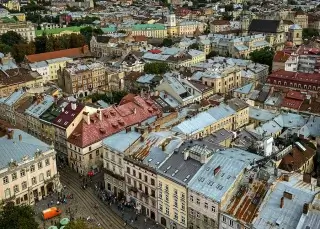
 How Ukraine’s New-Build Housing Market Has Changed Over Four Years
 European Prime Rents Rise as Property Yields Turn Higher
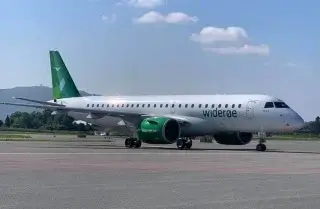 The Most Expensive Airlines in Europe in 2026
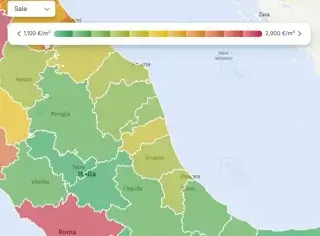 Housing Prices in Italy Reach a Two-Year High
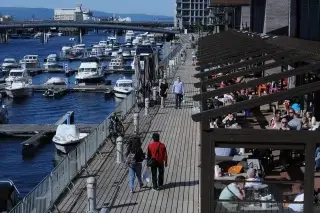 Travellers Increasingly Choose Cooler Scandinavia
 Serbia Property Sales Decline as Transaction Value Rises
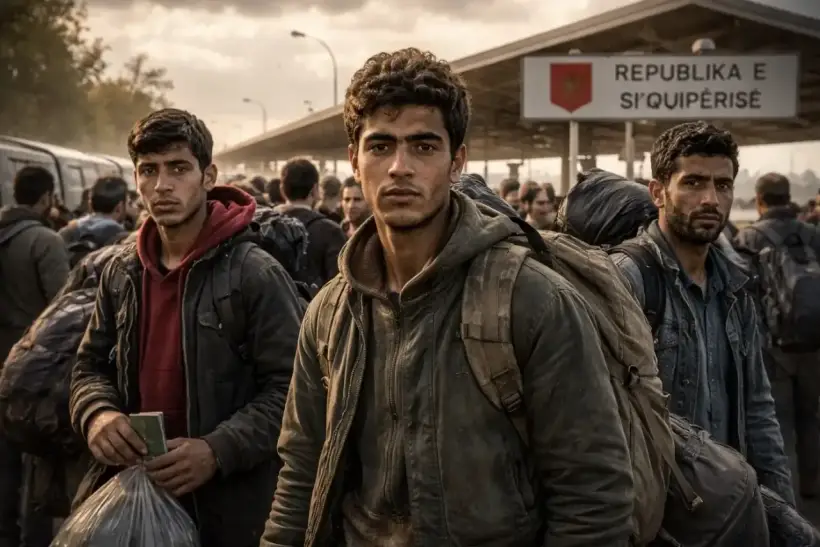
Western Balkans route slowed at the start of 2026
Migration flows along the Western Balkans route declined at the start of 2026, but the composition of movements across the region shifted unevenly. According to the International Organization for Migration, authorities in the region recorded 1,660 irregular entries in January 2026. That was about 37% lower than in December 2025 and roughly 12% below the level seen a year earlier. BalkanWeb, citing the same IOM Western Balkans Mixed Migratory Flows report, said the decline reflected winter seasonality and tighter border controls. The broader picture is consistent with Frontex data, which showed irregular crossings at the EU’s external borders fell by 52% in the first two months of 2026 from a year earlier.
Albania remained a small but active transit segment
Within that regional decline, Albania continued to account for a relatively small share of detections. The country registered 64 irregular entries in January 2026, down by about 29% from the previous month. That was far below Bosnia and Herzegovina’s 732 cases and Serbia’s 349. North Macedonia recorded 250 entries, Montenegro 203 and Kosovo 62. The distribution reinforces a long-standing regional pattern: Bosnia and Herzegovina and Serbia remain the main nodes on the route toward the European Union, while Albania functions as a secondary but persistent segment of the corridor.
Egyptians became the largest nationality among migrants in Albania
The most notable shift in Albania’s data concerned nationality. According to BalkanWeb’s summary of IOM findings, Egyptian nationals made up about 68% of migrants registered in Albania in December 2025. Syrians accounted for about 18%, while Indian nationals represented about 6%. The profile was different elsewhere in the region, where Afghans, Sudanese and Algerians were among the more prominent nationalities mentioned in the reporting. That suggests Albania’s part of the Western Balkans route developed a distinct origin pattern at the end of 2025, even as the wider corridor kept a more mixed composition. IOM’s DTM reporting for January 2026 confirms that the regional monitoring covered Albania, Bosnia and Herzegovina, Montenegro, North Macedonia, Serbia and Kosovo and tracked both arrivals and migrant presence in reception systems.
Reception capacity in Albania remained lightly used
Infrastructure data suggest that, despite continuing movement through the region, pressure on the reception system remained limited. According to figures cited from IOM, the Western Balkans operated 37 reception centres with a combined capacity of around 10,867 places, of which about 1,425 were occupied. Albania accounted for 10 reception centres with capacity for around 765 people, yet actual occupancy remained low. That supports the conclusion that Albania is still functioning primarily as a transit territory rather than a long-term destination. UNHCR and regional migration agencies have repeatedly described the Western Balkans as a corridor of mixed movements, where many arrivals continue onward toward EU member states.
Asylum applications in Albania stayed low
Another indicator of Albania’s transit role is the small number of asylum claims. According to the figures reported from IOM, the Western Balkans region registered 743 asylum applications in 2025, with only 38 of them lodged in Albania. That was markedly lower than in Bosnia and Herzegovina, Kosovo or Serbia. The gap suggests that most migrants entering Albanian territory do not treat the country as their final destination. The wider European context points in the same direction: the EU Agency for Asylum said applications in EU+ countries fell by about 19% in 2025 compared with 2024, indicating softer pressure on the asylum system overall even as routes continued to shift.
Lower numbers do not mean migration pressure has disappeared
Although January’s figures were subdued, international agencies do not treat them as a definitive turning point. IOM’s regular monitoring of the region stresses that the Western Balkans route remains highly sensitive to weather, border policy, smuggling networks and changes in neighbouring countries. Frontex likewise linked the early-2026 decline to severe weather conditions and a broader slowdown across major entry routes into the EU. That means the low January total is better read as a temporary deceleration than as the disappearance of the route itself. For Albania, this matters because even with modest absolute numbers, a sharp change in national composition, such as the rise of Egyptian nationals, can quickly alter operational demands on border management and reception systems.
As International Investment experts report, the drop in irregular entries in January 2026 does not change the fact that the Western Balkans route remains active and vulnerable to sudden shifts. For Albania, the most important signal was not only the lower total flow, but also the clear concentration of arrivals by nationality, especially among Egyptian citizens. Such changes often provide the earliest sign that routes, smuggling logistics and destination strategies are being reconfigured across the region.
FAQ
Why did migration flows on the Western Balkans route decline in January 2026?
IOM-linked reporting attributed the decline mainly to winter seasonality and tighter border controls. Frontex also reported a sharp fall in irregular crossings at the EU’s external borders in early 2026.
How many irregular entries were recorded in the region?
The Western Balkans recorded 1,660 irregular entries in January 2026.
How many were recorded in Albania?
Albania registered 64 irregular entries in January 2026, about 29% fewer than in December 2025.
Why are Egyptians highlighted in the data?
Because, according to the IOM figures cited by BalkanWeb, Egyptian nationals accounted for about 68% of migrants registered in Albania in December 2025, making them the largest nationality group in the country’s flow data.
Is Albania mainly a destination country for migrants?
Current data point more to a transit role. Reception centres are lightly occupied and asylum applications remain low compared with other countries on the route.
How large is Albania’s reception system?
According to the figures cited from IOM, Albania has 10 reception centres with a combined capacity of around 765 places.