







 How Ukraine’s New-Build Housing Market Has Changed Over Four Years
 European Prime Rents Rise as Property Yields Turn Higher
 The Most Expensive Airlines in Europe in 2026
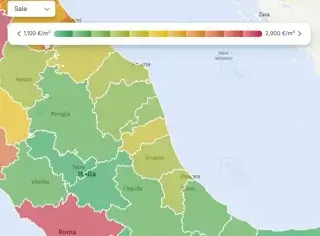 Housing Prices in Italy Reach a Two-Year High
 Travellers Increasingly Choose Cooler Scandinavia
 Serbia Property Sales Decline as Transaction Value Rises
Hungary Moves on Wealth Tax

Hungary’s new government is starting a tax shift that could affect wealthy owners, family wealth structures and investment vehicles: a wealth tax and the removal of trust-related breaks are now on the agenda. For the property market, the move means not only a possible higher fiscal burden on the rich, but also a reassessment of the old model in which assets were protected through complex ownership structures.
The new cabinet opens a tax front
Hungary has entered a new political cycle after a change of power: on May 12, 2026, the country swore in its first government in 16 years not led by Viktor Orbán. Prime Minister Péter Magyar and the Tisza party came in with a strong parliamentary mandate, pledging to revise Fidesz-era institutions, fight corruption and move closer to the European Union. Associated Press reported that the new administration also plans to create a National Asset Recovery and Protection Office and join the European Public Prosecutor’s Office.
Bloomberg Tax says the new Hungarian cabinet is moving toward a wealth tax and the removal of some breaks for trust structures. For a country whose tax system in recent years has been built around a flat personal income tax, family allowances, sector-specific levies and favourable regimes for selected ownership forms, the step looks less like a technical change and more like a political signal about shifting the tax burden.
What a wealth tax could mean
A wealth tax is not a tax on current income, but a levy on assets or their value. In different countries, it can cover real estate, company shares, financial portfolios, luxury goods, yachts, private aircraft, securities or total net worth after debt. Hungary currently does not have a universal tax on all personal wealth, while the burden on property has traditionally come through local taxes, transaction duties, personal income tax and special regimes. Wagner Law previously noted that Hungary has no general wealth tax covering all types of assets.
That is why the new initiative could be a turning point. If the tax is narrow and applies only to very large fortunes, the effect on the mass housing market will be limited. If the base is broader and includes expensive property, company portfolios, investment structures and foreign assets of residents, the impact could reach far beyond a political campaign against oligarchs.
Tisza had already promised a tax on the rich
The current direction did not appear suddenly. Before the election, Tisza’s program included a wealth tax on the richest citizens, lower taxes for low and middle earners, a path toward the euro and a tighter anchor in the EU and NATO. Reuters reported that Magyar’s party included the wealth tax in its 240-page election manifesto, while also promising to restore trust in institutions and fight corruption.
Daily News Hungary previously reported that Tisza’s tax program would reduce personal income tax for minimum-wage workers from 15% to 9% through tax credits and ease the burden on people earning below the median income. In that structure, a wealth tax is not only a punitive measure but a potential funding source for a wider redesign of the tax system.
Trusts and foundations become vulnerable
The most sensitive part of the reform concerns not only direct taxation of assets, but also the removal of benefits for trusts, private foundations and family wealth-management structures. In Hungary, this can involve private investment foundations, asset-management foundations and trust-like vehicles used to transfer wealth, centralise company ownership, manage succession and optimise taxation.
Such structures are not illegal by definition. They are used for family planning, preventing the fragmentation of businesses among heirs, managing shareholdings and professionalising control over assets. In a politically sensitive environment, however, they are also viewed as tools for shielding wealth from taxation, creditors, public scrutiny or future investigations.
Katona & Partners wrote that Act LIV of 2025 had already changed the taxation of wealth transfers and asset-management foundation structures, including new rules for dividend transfers and private foundations. That means pressure on such structures started before the new cabinet took office, but it may now receive a more forceful political continuation.
Why the issue became political
The change of power sharply increased attention on assets linked to the previous elite. The Guardian reported after Fidesz’s election defeat that people close to Viktor Orbán had started moving part of their wealth abroad, while Péter Magyar publicly accused business figures tied to the former government of trying to shield assets before the new administration took office.
In this atmosphere, a wealth tax is not only a budget tool. It is also part of a symbolic break with the old system. For the government, it is a way to show voters that the tax burden will move from workers to the very wealthy. For business, it is a risk because the boundary between anti-corruption policy and an unpredictable fiscal campaign must be drawn very clearly.
Fiscal constraints leave limited room
The reform is taking shape against tight budget constraints. Bruegel noted that the new government’s program combines ambitious spending and tax-cut promises with limited fiscal space. Hungary must strengthen public services, rebuild trust with the EU, unlock frozen funds and preserve fiscal sustainability at the same time.
That makes a wealth tax politically attractive. It can be presented as a fair source of revenue that does not affect most households. Its practical effectiveness, however, will depend on details: thresholds, asset valuation, treatment of real estate, debt deductions, foreign assets, anti-avoidance rules and the administrative capacity of the tax authority.
Real estate will come under closer scrutiny
The new direction matters especially for real estate. Hungary already has rising prices, Budapest is seeing stronger foreign interest, and expensive apartments in central districts are used not only as housing but also as stores of capital. If a wealth tax includes property, owners of expensive homes in Budapest, around Lake Balaton and in prestigious suburbs may face a new annual burden.
The direct effect will depend on the design. The tax may apply only to total wealth above a high threshold and barely affect ordinary apartment owners. It may be structured as a surcharge on luxury property. It may use market or assessed values. It may exempt primary residences or, conversely, target expensive homes as the most visible assets of wealthy families.
For investors, the uncertainty already matters. Until a legal text exists, buyers of expensive real estate should price in the risk of future tax burden, especially if the asset is being acquired not as a home but as a store of family capital or part of an ownership structure.
Foreign investors will focus on residence
Foreign buyers and owners of Hungarian assets will assess the reform through tax residence. Hungary’s tax authority states that Hungarian tax-resident individuals are taxed on worldwide income, meaning income earned both in Hungary and abroad. That rule makes it crucial to distinguish between owning Hungarian property and actually moving tax residence to the country.
If a new wealth tax is tied to tax residence, a foreign owner who is not Hungarian tax resident may remain outside the broad base while still paying local property taxes. If the tax is tied to assets located in Hungary, non-residents may also be covered. For wealthy families considering Budapest as a Central European base, this will become a central tax-planning question.
Family offices may feel the impact
The reform is particularly sensitive for family offices and entrepreneurs who used Hungarian structures to hold businesses and assets. In recent years, private foundations and management structures became part of international tax planning involving succession, corporate control and property ownership. If benefits are removed or income inside such structures is taxed earlier and more heavily, some capital may move to other jurisdictions.
A full capital flight is not inevitable. If the government keeps clear transitional rules, targets avoidance schemes and preserves legitimate tools for succession and corporate planning, Hungary can increase transparency without damaging the investment environment. If rules are broad and retroactive, the risk to trust could exceed any short-term fiscal gain.
What wealthy owners should do
For Hungarian and foreign asset owners, 2026 becomes a year for reviewing structures. They need to examine not only property values and rental yields, but also ownership form, financing sources, tax residence, family foundations, trust agreements, company stakes and source-of-funds documentation. Structures built on the assumption of Orbán-era stability can no longer be treated as automatic protection.
The most vulnerable assets are those where the legal structure is more complex than the economic logic: property held through several companies, family foundations used mainly for tax deferral, dividends moved through intermediate vehicles, or unclear beneficial ownership. In the new political environment, such arrangements will carry not only tax risk but reputational risk.
What it means for investment markets
A wealth tax does not necessarily mean a property-market collapse. A selective effect is more likely: expensive assets, complex ownership structures and politically exposed capital will receive a risk discount. Liquid property with clear title, transparent ownership and real rental demand will remain attractive, especially if Hungary repairs relations with the EU and unlocks part of its funding.
But the opacity premium may disappear. Buyers will demand more documents, banks will ask for more source-of-funds evidence, and tax advisers will recommend more conservative structures. For developers and agents, this means a new market phase: they will need to sell not only location and yield, but also legal cleanliness.
As reported by experts at International Investment, Hungary’s tax initiative could mark a shift from a low-tax model for capital toward greater fiscal fairness, but its success will depend on legislative precision. The critical risk is that a campaign against trust privileges and the ultra-rich could either improve trust in the system or scare good-faith capital if rules are vague, retroactive and politically selective. For investors, the main conclusion is already clear: in Hungary, the tax structure of ownership is becoming as important as the real estate asset itself.
What is Hungary’s new government proposing?
The new government is moving toward a wealth tax and the removal of some tax breaks for trusts, private foundations and family wealth-management structures.
Does Hungary currently have a general wealth tax?
No. Hungary has not had a universal tax on all personal wealth. The existing burden comes through income tax, local taxes, transaction duties and specific levies.
Who could be affected by the wealth tax?
The final scope depends on the legal text. Potentially affected groups include very wealthy residents, owners of expensive property, large company portfolios, investment structures and family foundations.
How could this affect Budapest property?
If real estate is included in the tax base, owners of expensive properties in Budapest and prime districts could face a new burden. The mass market will depend on thresholds and valuation rules.
Why are trusts and private foundations under scrutiny?
They can be legitimate tools for family and corporate planning, but authorities increasingly view them as possible mechanisms for tax deferral, hiding beneficiaries or shielding capital from scrutiny.
What should foreign investors watch?
Foreign investors need to know whether the tax will be tied to tax residence or to Hungarian-based assets. That will determine whether non-residents holding Hungarian property are affected.
What should asset owners do in 2026?
They should review ownership structures, tax residence, source-of-funds documentation, trust and foundation agreements, and the potential burden on high-value property.