







read also
 China Nears a Decision on Fresh Stimulus
 Fines for Illegal Rentals in Spain Reach €800,000
 Australia’s Spring Auctions Rise but Remain Well Below 2025
 Number of Foreigners Holding Turkish Residence Permits Exceeds 1.27 Million
 Demand from Russian Tourists for Holidays in Georgia Rises by 20–25%
 Montenegro Property Buying Costs in 2026
Bank of Russia Lifts Currency Transfer Limits for Individuals: What Will Change
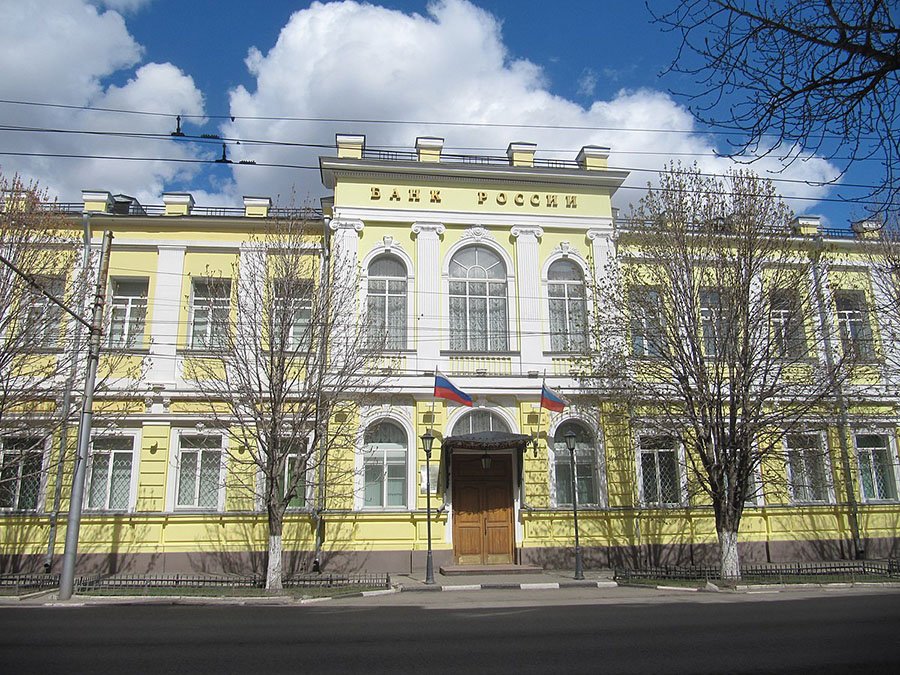
Photo: Wikipedia
The Bank of Russia has lifted currency transfer restrictions for individuals. Starting 8 December, Russian residents and non-residents from “friendly” countries can send money abroad without the previous limits. For non-residents from “unfriendly” states, part of the restrictions will remain in place until June 2026. The decision applies exclusively to private individuals and does not affect companies.
What is now allowed
The regulator explained that the relaxed regime has become possible due to the stable situation in the FX market and lower risks for the financial system. Current supply–demand balance removes the need for limits introduced during a period of high volatility. Transfers made by individuals are no longer viewed as a factor capable of putting pressure on the exchange rate or accelerating capital outflows.
For individuals from “unfriendly” countries, the previous approach still applies. Transfers are allowed only for foreigners working in Russia — and only in relation to their salaries. Other individuals from this category, as well as all legal entities of such states, remain prohibited from sending money abroad. The only exception applies to companies controlled by Russian individuals or organizations.
Separate rules remain in place for foreign investors using “I-type” accounts. Transfers from these special accounts to foreign bank details follow the previous procedure, and the removal of limits for private transfers does not affect this mechanism. The Bank of Russia emphasizes that the “I-account” regime functions as an independent system that does not require adjustments.
[quote]World Bank warns of stagnation in the Russian economy[/quote>
Background
As Forbes reminds, the initial restrictions on international currency transfers for individuals were introduced in March 2022, shortly after the escalation of hostilities in Ukraine and EU sanctions. At that time, the Bank of Russia limited overseas transfers to 5,000 USD per month, citing the need to reduce capital outflows and stabilize the financial market.
In April, the limit was raised to 10,000 USD, and by mid-May — to 50,000 USD, as RBC reported. Starting 1 July, Russian residents were allowed to transfer up to 1 million USD per month to their own foreign accounts or to third parties abroad. Equivalent rules applied to transfers from “friendly” jurisdictions — previously capped at 150,000 USD.
In September 2025, the regulator extended the limits for another six months, until 31 March. For transfers via money transfer systems, a separate ceiling of 10,000 USD per month remained in force.
[quote]Russia’s
family mortgage rates may soar to 12%[/quote]
Expert opinions
Alexander Bakhtin, investment strategist at Garda Capital, [leech=https://www.gazeta.ru/business/news/2025/12/05/27341275.shtml]believes[/leech
] that the Central Bank’s decision is logical because the ruble has significantly strengthened and “feels confident.” According to him, easing restrictions reflects reduced market risks and the absence of factors that could cause a sharp weakening of the national currency. He does not expect a surge in overseas transfers: the remaining technical and infrastructural barriers, together with compliance requirements and costs, will keep activity subdued.
Sergey Suverov, investment strategist at Aricapital, [leech=https://rg.ru/2025/12/05/ekonomist-fedorov-vyvesti-valiutu-za-rubezh-dazhe-posle-resheniia-cb-budet-neprosto.html]explains[/leech
] the decision as an attempt to soften an excessively strong ruble. A high exchange rate reduces exporters’ revenues and poses fiscal risks; therefore, partial easing of currency controls may be viewed as a stabilizing tool.
Ilya Fedorov, Chief Economist at BCS Investment World, argues that even with lifted limits, transferring money abroad will remain difficult. Many banks still lack full capabilities for cross-border payments, while commissions and compliance checks reduce the economic feasibility of such operations. As a result, actual demand for transfers may remain well below potential, and the impact on the exchange rate will be limited.
[quote]Debt burden of Russian developers hits yearly high[/quote]
Analysts at International Investment note that the removal of limits is largely symbolic and intended to create a perception of improving economic conditions. The measure will have minimal real impact on the financial system: under EU and US sanctions, the mechanisms for restoring full capital mobility remain constrained.
The World Bank warns of further deterioration of economic conditions, and similar signals appear in the regulator’s own commentary. For investors, the Russian market remains unattractive due to ruble volatility: nominal ruble incomes may grow, but dollar-denominated returns continue to decline. Geopolitical uncertainty only exacerbates risks and does not contribute to an upward revaluation of the country’s investment appeal.