







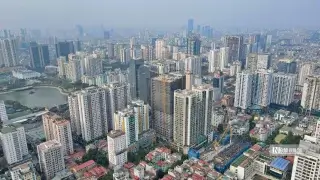
 Vietnam Mortgage Surge Pushes Homes Out of Reach
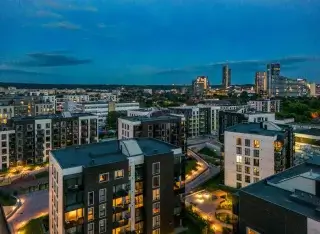 Lithuanian Apartment Prices Accelerate Across Major Cities
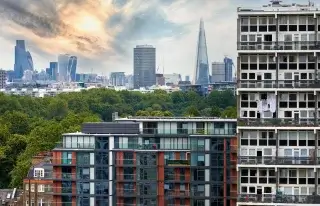 London Flats Lose Value Ahead of Leasehold Reform
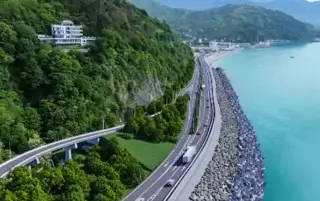 Construction of the Batumi–Sarpi Highway Begins in Georgia
 Baltic Property Investment Accelerates in 2026
 Hong Kong and Singapore Renew Their Expat Rivalry
Paradise Underwater: 17 Global Tourist Gems That Could Disappear by the End of the Century

Rising sea levels threaten to destroy some of the world’s most famous resort destinations. Humanity has roughly 80 years left to change course, according to Daily Mail.
Melting glaciers in Greenland and Antarctica, warming oceans, and record-low Arctic sea ice are no longer abstract climate projections – they are measurable reality. According to forecasts by the Intergovernmental Panel on Climate Change (IPCC), average global sea levels could rise by between 32 and 84 cm by 2100.
Some scenarios are far more alarming. Scientists from the U.S. National Oceanic and Atmospheric Administration (NOAA) warn that if global emissions are not reduced, sea levels could rise by as much as 2.5 meters over the next 80 years. By 2100, up to 250 million people across all continents could be directly affected. For many famous tourist destinations, the threat is no longer occasional flooding, but total disappearance from the map.
1. Maldives – the lowest paradise on Earth
The average elevation of this archipelago of 1,100 islands is just 1.5 meters above sea level, making the Maldives one of the first and most vulnerable victims of the climate crisis. Around 80% of the country lies only one meter above the ocean. Scientists warn that up to 80% of the islands could become uninhabitable by 2050. Authorities are already setting aside tourism revenue “for disaster scenarios” and considering solutions ranging from purchasing land abroad to building artificial land and underwater structures.
2. Tuvalu – a country sinking twice as fast
This tiny Pacific nation has become a living symbol of climate catastrophe. Over the past 30 years, sea levels here have risen by about 21 cm – nearly twice the global average. Tuvalu’s government is negotiating with Australia and New Zealand on the possible relocation of its citizens. According to UN estimates, up to 95% of the country could be underwater by 2100.
3. Kiribati – three meters above the abyss
This island nation in the central Pacific sits only around three meters above sea level. Local sea levels are rising significantly faster than the global average. The government has already purchased land in Fiji as a contingency plan for a possible evacuation of the population.
4. Marshall Islands – disappearing in real time
Here, rising seas are no distant prediction but an everyday reality. In the capital, Majuro, areas that once stood above water are now permanently flooded. During storms, seawater completely washes across the narrow strips of land where homes and roads stand.
5. Solomon Islands already lost
Scientists say the threat here is no longer theoretical. Rising sea levels have already caused severe coastal erosion, and several small uninhabited islands have disappeared beneath the ocean in recent decades. A study published in Environmental Research Letters found that sea levels around the archipelago have risen by up to 10 mm annually over the past two decades.
6. Vanuatu – the world’s most dangerous hotspot
This Pacific archipelago is considered one of the most vulnerable places on Earth. Rising seas combine here with intense seismic activity, tsunami risks, and increasingly destructive tropical cyclones. Vanuatu consistently ranks among the world’s most disaster-prone countries in climate risk indexes.
7. Fiji – a tropical paradise under double pressure
Fiji’s white beaches and volcanic landscapes are suffering not only from rising seas but also from the destruction of coral reefs, which serve as the islands’ main natural coastal defense. Extreme weather events, including deadly floods, are becoming more frequent. Villages from low-lying coastal areas are already being officially relocated inland – the first planned climate relocations in Fiji’s history.
8. Samoa – paradise on the edge
Samoa is another Pacific archipelago heavily affected by climate change. The islands face growing coastal erosion, coral reef destruction, and increasingly severe weather events. Rising seas threaten not only beaches and tourism infrastructure but also freshwater supplies essential for local communities.
9. Palau – an underwater paradise at risk
Palau is famous for having some of the world’s richest coral reefs and is considered an international diving mecca. Before the pandemic, tourism generated up to half of the country’s income. But climate change is hitting Palau on multiple fronts. During the 1997-1998 marine heat event, mass coral bleaching killed roughly one-third of all coral cover, with mortality reaching 90% in some areas. About a quarter of the country lies below ten meters above sea level, leaving coastal zones vulnerable to flooding and saltwater intrusion. Palau also became the first country in the world to require all incoming tourists to sign an environmental pledge promising to protect reefs, wildlife, and local culture.
10. Seychelles – a threat to an entire way of life
The famous granite islands of the Indian Ocean face a unique vulnerability. Rising seas threaten not only land but the entire way of life, as most residents and key infrastructure are concentrated along the coastline. Coastal destruction means simultaneous loss of homes, roads, ports, and tourism facilities.
11. Venice – the floating city is sinking
The “City of Water” continues to sink slowly but steadily. Modern estimates suggest Venice is subsiding by 2 to 4 mm annually. Over the past two decades, the city has experienced 18 major floods. The MOSE flood barrier system provides partial protection, but engineers admit that if sea levels rise by more than 1.25 meters, the system will no longer function effectively. By 2100, extreme flooding could occur every five months.
12. Netherlands – a country living below sea level
The Dutch have spent centuries building dikes and reclaiming land from the sea, yet the country remains extremely vulnerable. More than a quarter of the Netherlands lies below sea level, and about 60% of the population lives in flood-risk areas. Amsterdam is already spending billions on protective infrastructure, but accelerating sea-level rise is raising doubts about the long-term viability of even the most advanced engineering solutions.
13. Miami – flooding from below
The Florida metropolis faces a threat that seawalls cannot stop. The city is built on porous limestone that allows seawater to seep through from underneath. During high tides, water already bubbles up through storm drains and cracks in the pavement in coastal neighborhoods. Miami is spending billions on temporary defenses, but its geology makes complete protection nearly impossible.
14. Bahamas – limestone as a death sentence
The Bahamas face the same geological vulnerability as Miami. The islands are made of porous limestone, allowing seawater to infiltrate from below as well as from the coast. Scientists predict that large parts of New Providence Island, home to the capital Nassau, could be flooded within the next 75 years, creating new inland lagoons where neighborhoods stand today.
15. Bangladesh – 32 million climate refugees
Behind this entry lies not a tourism crisis, but a humanitarian catastrophe. Bangladesh is one of the world’s most densely populated and economically vulnerable countries. By the end of the century, it could lose up to 17% of its territory. Researchers estimate that 32 million people could be endangered by rising waters by 2100. Unlike the Netherlands or the United States, Bangladesh lacks the resources for massive coastal engineering projects.
16. Torres Strait Islands – losses already happening
The islands between Australia and Papua New Guinea are on the frontline of the climate crisis. Flooding has already damaged homes and coastal defenses, while saltwater intrusion is destroying freshwater supplies and traditional ecosystems relied upon by Indigenous communities.
17. Nauru – a double catastrophe
This tiny Micronesian nation has suffered two disasters: first from destructive phosphate mining that devastated 80% of the island, and now from rising seas. The remaining habitable coastal strip continues to shrink. At current warming rates, the long-term survival of Nauru as a sovereign state is increasingly uncertain.
The “last chance” trap
Paradoxically, awareness of the threat may actually worsen it. Experts from International Investment warn tourists against rushing to visit disappearing destinations “before it’s too late.” More flights mean higher carbon emissions, which further accelerate climate change and environmental degradation. Specialists are calling for more responsible tourism and long-term climate action. Time is running out.