







 How Ukraine’s New-Build Housing Market Has Changed Over Four Years
 European Prime Rents Rise as Property Yields Turn Higher
 The Most Expensive Airlines in Europe in 2026
 Housing Prices in Italy Reach a Two-Year High
 Travellers Increasingly Choose Cooler Scandinavia
 Serbia Property Sales Decline as Transaction Value Rises
Argentina Property Market Leaves Its Slump
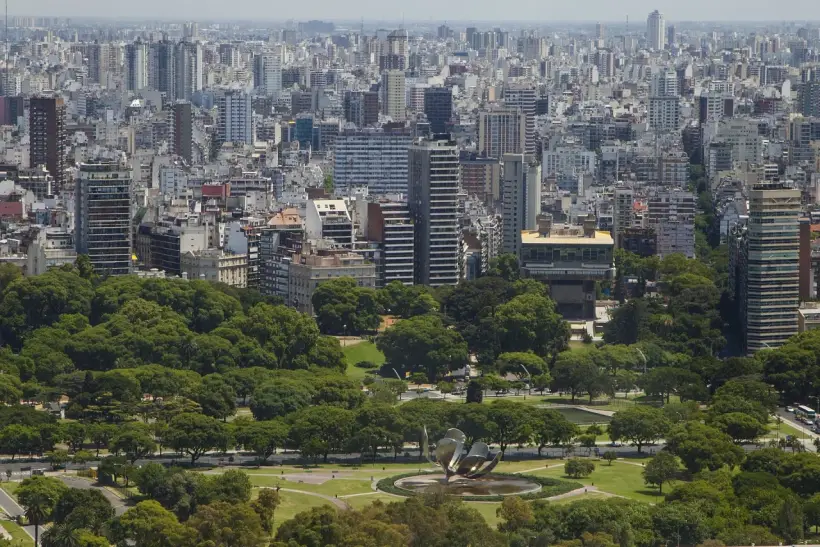
Argentina’s real estate market again looks like a buyer’s market, but no longer like a market of distressed sellers. After years of falling prices, currency controls, high inflation and an almost absent mortgage market, housing in Buenos Aires and key regional markets is showing signs of recovery. The main question for investors is no longer whether to buy at the bottom, but how much time remains before the window of low dollar prices begins to close.
The Market Moves From Collapse to Recovery
Argentina’s property market spent several years in a deep-discount phase. Buyers with cash dollars dictated terms, sellers accepted negotiations, and the mortgage market was too small to support mass demand. That is now changing: transactions are recovering, prices are stabilizing, and investor interest is returning as the macroeconomic environment begins to normalize.
Gateway to South America describes the current moment as an opportunity for buyers, not a signal to sell assets. The logic is straightforward: the market has stopped falling, but it has not yet returned to the prices of the previous cycle. That creates an intermediate phase in which assets no longer look cheap because of panic, but still trade below historical peaks.
In real estate, this phase is often the most interesting for long-term investors. During a collapse, the market is too risky: it is unclear where the bottom is, how long the crisis will last and whether the seller can complete the transaction. During a boom, prices already include optimism. Argentina is now between those two states.
Buenos Aires Remains the Main Indicator
The capital market remains the main barometer for the country. In May 2026, the average apartment price in the city of Buenos Aires was about $2,462 per square meter. The indicator rose only 0.1% for the month, 0.5% since the start of the year and 1.9% over the past 12 months. This does not look like an overheated market, but it shows that prices have stopped falling.
The price per square meter in Buenos Aires remains about 12% below the historical peak of the series. For buyers, that matters: the market has recovered liquidity, but not yet fully recovered price. This combination often attracts capital looking not for quick speculation, but for entry into an asset before a fuller repricing.
Buenos Aires is also highly dollarized in transactions. Homes are usually priced and sold in US dollars, making the market understandable for foreign buyers and Argentines with dollar savings. But the same feature separates property from the peso economy: wages, expenses and credit remain linked to domestic income, while the asset price is expressed in hard currency.
Transactions Show Demand Returning
In April 2026, 5,590 property purchase deeds were signed in the city of Buenos Aires. For a market that suffered from weak liquidity for years, this is an important indicator. Transaction volume often moves ahead of prices: first buyers return, then discounts shrink, then quality assets begin to rise, and only after that does the movement become broad-based.
A property sale in Argentina is recorded through a notarized deed. That makes Colegio de Escribanos statistics more important than listing portals: they show completed operations, not seller expectations. In a country where the gap between asking and actual prices can be significant, closed transactions provide a more reliable signal.
Activity is also supported by mortgages. BBVA Research notes that the market recovered in 2025 thanks to the return of mortgage credit and wage growth. Mortgages in Argentina were almost inaccessible for a long period because of inflation, currency instability and distrust of long-term financial instruments. Even a partial return of credit changes the market because it expands the buyer base beyond those arriving with the full amount in dollars.
Mortgages Bring Back the Middle Class
The return of mortgage credit is one of the key factors in the new phase. Without mortgages, the property market remains narrow: buyers are mainly investors, families with dollar savings, heirs, emigrants and foreigners. With mortgages, the local middle class re-enters the market, even if affordability remains limited.
A mortgage is a long-term loan secured by real estate. In stable economies, it is the foundation of the mass housing market. In Argentina, however, high inflation and currency crises repeatedly destroyed confidence in long-term credit. The very fact that mortgage products are returning therefore matters not only financially, but psychologically.
For now, mortgages are not turning the market into a mass boom. Rates, bank requirements, real incomes and inflation expectations remain constraints. But even a small increase in credit-backed transactions improves liquidity, especially in the owner-occupier apartment segment rather than only investment purchases.
Prices Do Not Yet Reflect Full Optimism
The current market does not look cheap for a local buyer earning in pesos. But in dollar terms, it remains below past levels. This creates a perception gap: for Argentine families, housing remains expensive, while for investors with hard currency, Buenos Aires appears undervalued compared with other Latin American and European capitals.
An average price of about $2,400–2,500 per square meter in a capital with a developed cultural scene, universities, private healthcare, gastronomy, architecture and international appeal remains moderate by global standards. In premium areas such as Palermo Chico, Recoleta, Belgrano, Núñez and Puerto Madero, prices are higher, but even there some buyers see a discount to global peers.
Selectivity is essential, however. Not all Argentine real estate is an opportunity. Old apartments without renovation, properties with weak documentation, homes in poor locations and overpriced listings can remain illiquid for a long time. A market recovery does not erase the difference between quality and problematic assets.
New Projects Face Expensive Construction
Construction remains the weak link in the recovery. BBVA Research says the real estate market recovered in 2025, while construction activity remained sluggish. This is understandable: developers face high costs for materials, labor, financing and uncertainty over demand.
Weak construction creates a future shortage of quality supply. If demand recovers faster than developers launch new projects, prices for completed apartments in good areas may receive additional support. This is especially true for homes with modern layouts, energy efficiency, parking, security and infrastructure.
For developers, however, the situation is more complex than for buyers of completed homes. They need to forecast costs, sales, the exchange rate, inflation, land availability and bank behavior. If macroeconomic stabilization proves incomplete, new projects may again face delays.
Inflation Is Falling, but Risk Remains
The macroeconomic background is better than during the years of chronic price acceleration. In May 2026, monthly inflation slowed to 2.1%, the lowest in eight months, while annual inflation stood at 33.2%. That is sharply below the extreme levels Argentina experienced in previous years, but still too high for a normal mortgage economy.
Inflation is the main enemy of long-term housing credit. If prices and incomes are unstable, banks cannot confidently price risk, borrowers do not understand the real cost of debt, and sellers doubt future purchasing power. Lower inflation therefore matters not in isolation, but as a condition for restoring trust.
President Javier Milei’s policies have reduced some of the macroeconomic chaos, but they have come with harsh fiscal austerity, weaker activity in some sectors and social tension. For real estate, this means the market receives a positive impulse from stabilization but remains dependent on the political durability of the reforms.
Dollar Buyers Have the Advantage
The main advantage now belongs to buyers with ready hard currency. They can close transactions quickly, negotiate with sellers and choose assets without depending on bank approval. In Argentina, where real estate is traditionally bought in dollars, such buyers remain the strongest participants in the market.
For foreigners, Argentina’s legal regime for buying property is relatively open. Foreign nationals can buy urban real estate, although separate restrictions may apply to agricultural and borderland assets. In practice, the key risks are less about property rights and more about document checks, money transfers, taxes, currency rules and the quality of legal support.
Buyers should understand that in Argentina a good price is often reached not through listing portals but through negotiation. Asking prices may remain inflated, especially if the seller is not in a hurry. But liquid buyers with cash dollars can secure discounts if the property has been on the market for a long time or the seller needs a quick deal.
Rentals Support Investment Interest
The rental market remains an important part of the investment logic. After the repeal of strict rental restrictions and changes in regulation, supply became more flexible and owners had more incentive to place apartments on the market. That reduced some shortages, but did not eliminate demand from students, young professionals, expats and tourists.
For investors, the purchase price is not the only issue; rental yield matters. In Buenos Aires, yield depends on the neighborhood, apartment condition, rental type, maintenance costs, taxes and the possibility of short-term letting. Tourist districts can generate high gross income but require management, repairs and awareness of regulatory risks.
Long-term rentals are more stable but often less profitable. Short-term rentals can be more lucrative, especially in Palermo, Recoleta, San Telmo, Belgrano and central areas, but they are more sensitive to tourism, platform regulation and seasonality.
Neighborhoods Are Moving at Different Speeds
The Buenos Aires market cannot be judged only by the average price. Palermo, Recoleta, Belgrano, Núñez, Caballito, Villa Urquiza, Colegiales, Chacarita, Villa Crespo, Barracas and Parque Patricios are at different stages of the cycle. Some areas have already recovered demand, others remain undervalued, and others depend on infrastructure expectations.
Premium neighborhoods offer liquidity and capital protection but less potential for sharp growth. Palermo-adjacent areas such as Chacarita, Colegiales and Villa Crespo are interesting because they capture demand from buyers who already see Palermo as expensive. Zones with infrastructure projects may benefit more if the urban environment truly improves.
For investors, this means a bet on Argentina must be specific. Buying “in Buenos Aires” is a weak strategy. One needs to choose a particular neighborhood, asset type, target tenant, building condition and exit scenario.
Regional Markets Recover Unevenly
Outside the capital, the picture is more complex. Mendoza, Córdoba, Rosario, Patagonia, rural property and vineyard assets attract different types of buyers. Some markets are supported by local incomes and universities, others by tourism, lifestyle investors and foreigners, and others by agriculture and land.
Argentine land and rural assets have always been a separate market. They depend on commodity prices, exports, taxes, logistics, water resources, political restrictions and currency policy. For a foreign investor, such assets may look cheap, but they require far more complex due diligence than a city apartment.
Urban property is easier to manage and more liquid. Land, farms, vineyards and Patagonia assets may offer a strong long-term story, but they carry legal, operational and political risks. They should not be assessed with the same criteria as an apartment in Palermo or Belgrano.
Buying Does Not Mean Ignoring Risk
The “buy, not sell” thesis does not mean the market is safe. Argentina remains a country with high macroeconomic volatility, political conflict, a currency history, tax uncertainty and weak regulatory predictability. These risks are precisely what create the discount.
The main risk for buyers is choosing the wrong asset. Property in Argentina can remain illiquid for years if it is poorly located, requires expensive renovation, has legal complications or was bought at too high a price. A market recovery does not rescue a bad purchase.
The second risk is overestimating the speed of growth. Even if the market has passed the bottom, that does not guarantee an immediate price surge. Prices may rise slowly, returns may depend on rent, and exiting the investment can take time. Argentine real estate is therefore not for everyone: it requires horizon, patience and professional due diligence.
Why the Window May Close
The opportunity exists because three factors have aligned: prices are still below historical peaks, transactions have already recovered, and macroeconomic stabilization is gradually bringing credit back. If inflation continues to decline, mortgages expand, wages grow in real terms and confidence in reforms holds, the best assets will reprice first.
In real estate, repricing often begins not with a sharp rise in the average price but with the disappearance of good deals. First, buyers absorb liquid apartments in the right neighborhoods. Then sellers reduce discounts. Then new listings arrive at higher prices. Only later does the data show the market rising.
For dollar buyers, 2026 may therefore be a period when the market still allows selection, negotiation and limited competition from a broad mortgage wave. But that window is not guaranteed. If reforms derail, inflation accelerates again or political instability worsens, the market may return to caution.
Argentina Is Again a Market for Careful Investors
Argentine real estate is not suitable for a passive buyer who wants a simple and predictable European-style transaction. Lawyers, title checks, currency procedures, negotiations, tax planning, building condition and actual neighborhood liquidity all matter. But it is precisely the complexity of the market that creates the discount.
For investors willing to work with local specifics, Argentina again looks interesting. Buenos Aires remains one of the largest and most culturally rich cities in the region, prices have not returned to peaks, transactions are happening, mortgages are reviving, and foreign interest is rising. But buyers should not buy “Argentina”; they should buy a specific asset with a clear income and exit logic.
Argentina’s property market no longer looks like a falling market, but it also does not look overheated. As experts at International Investment report, the critical conclusion is that the current cycle gives an advantage to buyers with hard-currency liquidity and a long horizon, but the main risk lies in selection: good assets in Buenos Aires and strong regional locations may quickly exit the discount zone, while weak assets will remain cheap not because the market has mispriced them, but because they are genuinely illiquid.
FAQ
Why is Argentina’s real estate market again being called a buying opportunity?
Because prices have stopped falling, transactions are recovering, mortgages are gradually returning and Buenos Aires property values remain below historical peaks.
How much does a square meter cost in Buenos Aires in 2026?
In May 2026, the average apartment price in Buenos Aires City was about $2,462 per square meter. It rose 1.9% year on year but remained about 12% below the historical peak.
Why are mortgages important for Argentina’s market?
Mortgages expand the buyer base beyond investors with cash dollars. Even a partial recovery in credit improves liquidity and supports housing demand.
Can foreigners buy property in Argentina?
Yes. Foreigners can buy urban real estate in Argentina. However, they need legal due diligence, tax planning, understanding of currency procedures and awareness of restrictions that may apply to certain types of land.
Which Buenos Aires neighborhoods are most interesting for investors?
Investors often look at Palermo, Recoleta, Belgrano, Núñez, Colegiales, Chacarita, Villa Crespo, Caballito and areas with infrastructure potential. The choice depends on budget, investment goal and rental strategy.
What risks remain in Argentina’s property market?
The main risks are macroeconomic instability, inflation, political changes, currency restrictions, weak liquidity in some assets and legal mistakes during purchase.