







 How Ukraine’s New-Build Housing Market Has Changed Over Four Years
 European Prime Rents Rise as Property Yields Turn Higher
 The Most Expensive Airlines in Europe in 2026
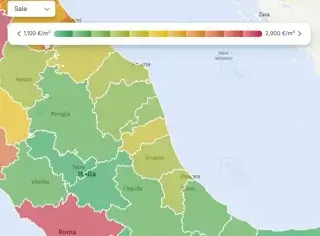 Housing Prices in Italy Reach a Two-Year High
 Travellers Increasingly Choose Cooler Scandinavia
 Serbia Property Sales Decline as Transaction Value Rises
UK More Than Doubles Illegal-Working Raids

UK immigration authorities carried out 24,793 illegal-working enforcement visits and made 17,114 arrests between July 2024 and June 2026, increases of 111% and 122% respectively from the preceding two-year period. Enforcement has risen particularly sharply in warehousing, distribution and delivery services and in construction. The crackdown comes ahead of a major legal change on October 1, 2026, when Britain's illegal-working framework will expand beyond conventional employment contracts to additional working arrangements.
UK illegal-working enforcement more than doubles
Figures published on August 7 show a substantial expansion in workplace immigration enforcement.
Between July 1, 2024 and June 30, 2026, Immigration Enforcement conducted 24,793 illegal-working visits, compared with 11,724 in the preceding two-year period. The increase was 111%.
Arrests rose from 7,713 to 17,114, or 122%. The Home Office stresses that the figures are provisional and were extracted from live operational systems on July 7, meaning they may subsequently be revised.
The terminology is significant. Illegal-working visits are enforcement operations carried out by the authorities. They are different from right-to-work checks that businesses perform on workers themselves.
Enforcement visits reach 7,270 in six months
Authorities conducted 7,270 illegal-working visits between January and June 2026, compared with 5,554 during the first half of 2025.
That was a 31% increase.
Arrests increased by a smaller 20%, from 3,969 to 4,756.
The divergence matters because an increase in enforcement activity is not the same thing as an equivalent increase in the underlying incidence of illegal working.
An arrest also represents an enforcement action, not a final conviction or immigration determination.
Delivery and logistics record some of the sharpest increases
Warehousing, distribution and delivery services have become a major enforcement focus.
There were 635 visits to the sector in the first half of 2026, compared with 257 a year earlier, an increase of 147%.
Arrests increased from 373 to 635, or 70%.
Across July 2024 to June 2026, authorities conducted 1,557 visits in this category, compared with 285 during the previous two-year period. That amounts to a 446% increase.
Arrests rose from 458 to 1,946, or 325%.
Those figures explain the focus on delivery work in the August 7 Bloomberg report, but they measure the intensity of enforcement rather than demonstrating an equivalent increase in the number of people working illegally.
Construction visits rise 150%
Construction has recorded another exceptionally large increase.
Authorities carried out 268 visits during January through June 2026, compared with 107 a year earlier, representing growth of 150%.
Arrests increased much more slowly, from 256 to 331, or 29%.
Official policy analysis identifies subcontracting and self-employment as important features of the sector. Under the traditional framework, some businesses could engage individuals outside conventional employment contracts without carrying the same prescribed right-to-work checking responsibilities.
The October reform is intended to narrow that gap.
Restaurants remain the largest enforcement category
Restaurants, takeaways and cafés remain the largest category in absolute terms despite faster percentage growth elsewhere.
There were 2,195 visits and 1,589 arrests in the first six months of 2026, compared with 1,675 visits and 1,210 arrests a year earlier.
Food, drink and tobacco retail recorded 1,409 visits and 389 arrests. Beauty businesses including nail bars, tanning salons and barbers recorded 1,041 visits and 648 arrests.
Car washes recorded 404 visits and 277 arrests.
The figures show that enforcement extends well beyond app-based delivery work.
London leads by enforcement volume
London recorded 1,814 visits in the first half of 2026, up 44% from 1,260 a year earlier. Arrests increased 32% to 1,256.
The South West recorded the largest percentage increase in visits among English regions, rising 61% to 895. Arrests increased 44% to 693.
The West Midlands recorded 884 visits, up 49%, and 701 arrests, up 22%. In the East of England, visits increased 46% and arrests 62%.
Enforcement did not rise everywhere. Visits fell 6% in the North West and 2% in the North East, underlining the uneven regional pattern.
Civil penalties total £74.6 million
Employer enforcement has also intensified.
There were 561 civil penalties issued in the first quarter of 2026 with a stated value of £32.6 million, followed by 677 penalties worth £42 million in the second quarter.
That gives a six-month total of 1,238 penalties with a headline value of £74.6 million. Authorities also recorded 55 alcohol or late-night refreshment licence reviews and 10 closure notices.
A key correction to the earlier version is that 1,238 is the number of penalties, not necessarily 1,238 unique employers.
The stated value also represents penalties as issued. Recoverable amounts can change after objections, appeals or other adjustments.
The figures cannot be directly matched with enforcement visits during the same quarter because cases can take months to process and some penalties arise from intelligence referrals or routine data sharing rather than a workplace visit.
Maximum civil penalty reaches £60,000 per worker
Businesses can face a civil penalty of up to £60,000 for each person employed without the required right to work.
A person found guilty of knowingly employing someone without permission to work, or having reasonable cause to believe that they lacked that right, can face up to five years in prison and an unlimited criminal fine.
The current penalty framework starts at £45,000 per worker for a first breach, while £60,000 is the maximum level and applies to repeat breaches where mitigating factors do not reduce the amount.
Correctly completing the prescribed right-to-work process can establish a statutory defence against civil liability in qualifying circumstances.
New rules take effect on October 1
The most significant compliance change is still ahead.
Section 48 of the Border Security, Asylum and Immigration Act 2025 comes into force on October 1, 2026. The commencement date was formally set in regulations made on June 24.
The provision extends the illegal-working regime beyond conventional employment contracts to additional working arrangements.
Government material identifies gig-economy work, zero-hours arrangements, construction, food delivery, beauty services, courier work and warehousing among the areas affected.
The change makes the legal structure of a working relationship less decisive in determining whether a business must address immigration-status compliance.
Delivery platforms already strengthened controls
Major food-delivery platforms began increasing checks before the statutory change.
Deliveroo, Just Eat and Uber Eats have worked with the government on stronger identity verification and measures against unauthorised account sharing. They have used right-to-work checks and more frequent biometric verification, with the government saying strengthened controls have resulted in thousands of accounts being removed.
Account substitution is a particular issue because the registered holder can have lawful work status while another person actually performs deliveries.
A 2025 delivery operation resulted in 280 arrests
A nationwide operation in July 2025 illustrates the scale of enforcement in the sector.
Between July 20 and July 27, officers stopped and spoke with 1,780 people and made 280 arrests linked to illegal-working activity.
Authorities began reviewing asylum support for 53 individuals. Police also seized 71 vehicles, including 58 e-bikes, around £8,000 in cash and illicit cigarettes valued at approximately £460,000.
The operation preceded the broader statutory expansion that takes effect this October.
The 2,357 figure does not mean 2,357 raid-triggered deportations
The returns data require particularly careful treatment.
Across July 2024 through June 2026, the official half-year tables add up to 2,357 returns involving people who had previously been arrested during an illegal-working visit. The measure includes both enforced and voluntary returns.
It is therefore inaccurate to describe the figure simply as 2,357 people deported because of workplace raids.
The authorities explicitly caution that a person's eventual departure cannot be directly attributed to the original arrest, because many additional legal or administrative events may occur between the workplace encounter and final departure.
Arrest growth does not prove equivalent growth in illegal working
The core statistical distinction is between enforcement intensity and prevalence.
A 122% increase in arrests does not establish that illegal working itself increased by 122%.
Likewise, a 150% rise in construction visits does not prove that illegal employment in construction increased two-and-a-half-fold.
What the data establish is a major expansion in enforcement and a shift of resources toward sectors characterised by subcontracting, flexible arrangements and platform work.
As International Investment experts report, the doubling of enforcement visits is primarily evidence of a much more intensive immigration-compliance regime rather than proof of a comparable increase in illegal employment. The more consequential structural change comes on October 1, when liability expands across additional working arrangements. Delivery platforms, construction businesses, warehouse operators and companies with long subcontracting chains will face higher compliance risks because the absence of a conventional employment contract will no longer provide the same boundary around right-to-work responsibilities.
FAQ: UK illegal-working enforcement
How many illegal-working raids has the UK carried out?
There were 24,793 enforcement visits between July 2024 and June 2026, 111% more than in the preceding two years.
How many arrests were recorded?
Authorities recorded 17,114 arrests, an increase of 122%. An arrest does not itself constitute a final finding that an immigration offence occurred.
Which sectors recorded the sharpest increases?
Warehousing, distribution and delivery services and construction were among the fastest-growing categories. First-half 2026 visits increased 147% and 150% respectively.
How much did employer penalties total?
Authorities issued 1,238 civil penalties with a stated value of £74.6 million in the first half of 2026. The figure counts penalties, not necessarily unique businesses.
What is the maximum fine?
A civil penalty can reach £60,000 per illegal worker. Knowingly employing someone without the right to work can also lead to criminal prosecution.
When do the new rules take effect?
Section 48 comes into force on October 1, 2026.
Were 2,357 people deported after workplace raids?
That wording is inaccurate. The figure covers enforced and voluntary returns involving people previously arrested during illegal-working enforcement. The authorities state that the eventual departure cannot necessarily be attributed directly to the original arrest.
Will the reform affect delivery and gig-economy work?
Yes. The expanded framework covers additional working arrangements, with official material specifically identifying areas including food delivery, courier work, construction, warehousing and other flexible working models.