







 How Ukraine’s New-Build Housing Market Has Changed Over Four Years
 European Prime Rents Rise as Property Yields Turn Higher
 The Most Expensive Airlines in Europe in 2026
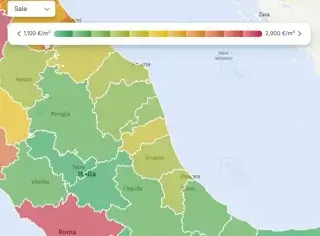 Housing Prices in Italy Reach a Two-Year High
 Travellers Increasingly Choose Cooler Scandinavia
 Serbia Property Sales Decline as Transaction Value Rises
Who Can Buy Property in Slovenia in 2026

Foreign ownership of Slovenian real estate depends primarily on citizenship or the country in which a legal entity is registered. Citizens and companies from EU, OECD and European Economic Area states do not need a separate reciprocity decision. Nationals and companies from eight EU candidate countries listed by Slovenia's Ministry of Justice require a positive reciprocity determination. Buyers from other countries, including Russia and China, generally cannot acquire Slovenian real estate through an ordinary direct purchase. Eligibility based on nationality does not, however, override special rules for agricultural land, taxation, registration or immigration status.
Slovenia's rules extend beyond EU citizenship
Article 68 of Slovenia's Constitution allows foreigners to acquire ownership rights to real estate under conditions established by law or an international treaty.
The current system places buyers into several legal categories. Citizens and legal entities from EU member states, OECD countries and European Economic Area states do not require a separate administrative decision establishing reciprocity.
This is one of the most important corrections to the August 3, 2026 DATA.SI article.
The commercial article separately states that Swiss nationals can purchase only if they possess a Permit C permanent settlement permit. Slovenia's current Ministry of Justice classification, however, exempts citizens and companies from OECD member states from the reciprocity-decision requirement. Switzerland is an OECD member.
The same framework is relevant to US and UK buyers because both countries are OECD members.
It is nevertheless better to avoid saying that such nationals may buy "without restrictions." They do not need a reciprocity decision because of their nationality, but property-specific restrictions and general Slovenian law still apply.
Eight listed candidate countries require reciprocity
A different framework applies to citizens and legal entities from the EU candidate countries specifically listed by the Ministry of Justice.
The current list consists of North Macedonia, Serbia, Montenegro, Albania, Ukraine, Moldova, Bosnia and Herzegovina and Georgia. Buyers from these states need a positive reciprocity determination before acquiring ownership.
Reciprocity means that a Slovenian citizen or Slovenia-based legal entity must be able to acquire comparable property in the foreign buyer's country under the same or similar conditions without substantially more burdensome requirements.
Candidate status alone therefore does not produce an automatic right to register ownership.
Ukrainians can buy subject to reciprocity
Ukraine's legal position changed after the country received EU candidate status in June 2022.
Slovenia subsequently confirmed that Ukrainian citizens and Ukraine-based companies could initiate the reciprocity procedure and, following a positive determination, acquire ownership rights under the applicable legal routes. Moldova and Bosnia and Herzegovina received comparable treatment after obtaining candidate status.
It is therefore no longer accurate to claim that Ukrainian nationals are categorically unable to own Slovenian property.
They are not, however, in the same position as EU or OECD nationals because a positive reciprocity decision is still required.
Russian and Chinese buyers face stricter rules
Foreigners falling outside the listed categories are subject to a substantially more restrictive regime.
The Ministry of Justice explicitly cites Russia and China as examples of countries whose citizens and foreign legal entities cannot generally acquire Slovenian real estate through an ordinary transaction. Separate provisions apply to inheritance.
A Slovenian bank account, tax number or residence permit does not in itself change the nationality category governing direct ownership.
Buyers should therefore establish their legal eligibility before signing a binding purchase agreement or paying a substantial deposit.
Buying through a company requires careful distinction
The DATA.SI article recommends establishing a Slovenian company as a route for third-country nationals who cannot acquire property directly. That statement needs qualification.
Slovenia's official business portal confirms that non-residents can establish companies and that non-residents must obtain a Slovenian tax number before starting the registration process. Slovenia's foreign-property rules, meanwhile, define foreign legal entities as entities headquartered outside Slovenia.
The distinction is important.
If a Slovenian legal entity acquires real estate, title belongs to the company. The foreign shareholder does not personally own the flat, house or commercial property.
This creates a corporate ownership structure with its own accounting, tax and legal consequences.
Official sources also do not support presenting company registration as a universal workaround for every restriction affecting foreign property ownership. The suitability of a corporate structure must be considered in relation to the particular transaction and asset.
Property ownership does not automatically grant residence
Real estate ownership and immigration status are separate legal issues.
Third-country nationals who intend to reside and work in Slovenia are generally subject to residence and employment-permit rules. A single residence and work permit is used for qualifying third-country nationals working in Slovenia.
Starting a company does not by itself automatically provide such permission. Additional immigration requirements apply where the foreign owner plans to work for or manage the business in Slovenia.
Ordinary property acquisition should therefore not be described as an automatic Slovenian residence programme.
EU nationals follow a different free-movement regime, although a stay exceeding three months is subject to residence-registration requirements.
How the reciprocity procedure works
A buyer who requires a reciprocity decision applies to Slovenia's Ministry of Justice.
The application includes documentation proving identity and the applicant's entitlement to request the determination. The current administrative fee is €22.60. Additional residence evidence may be required for dual nationals, stateless applicants or people from jurisdictions with non-uniform legal systems.
Applicants also need a document containing information about the specific property from the Surveying and Mapping Authority.
That document is a mandatory annex to the reciprocity application. The authority can refuse to issue it where the real estate is not registered in the Land Register.
The reciprocity process is therefore connected not only with nationality but also with the property involved.
Foreign owners may need a Slovenian tax number
A foreign natural person without permanent or temporary residence in Slovenia must apply for entry in the tax register when a Slovenian tax number is required because that person receives taxable Slovenian income or owns taxable movable or immovable assets.
Obtaining a tax number does not by itself make the individual a Slovenian tax resident.
Property owners may also face property-related taxes or charges depending on the type and use of the asset.
Real estate transfer tax is 2%
Slovenia levies a 2% real estate transfer tax where the transaction is not subject to VAT.
The seller is normally the taxpayer, although the purchase agreement may provide that the buyer assumes the tax payment obligation.
The relevant return must generally be filed within 15 days after conclusion of the agreement.
Once the tax has been assessed and paid, the tax authority certifies the transaction. Without proof that the transfer tax has been dealt with, signatures cannot be notarised for the relevant purpose and ownership cannot be registered in the Land Register.
It is therefore misleading to state simply that "the buyer pays a 2% purchase tax." The seller is the statutory taxpayer by default, although contractual allocation to the buyer is possible.
Capital gains tax can apply on disposal
A natural person who later sells Slovenian property may face personal income tax on the capital gain.
The initial rate is 25%, falling to 20% after five years of ownership and 15% after ten years. No capital-gains tax is assessed after 15 years under the current rules.
An exemption is available in qualifying circumstances for a flat or residential house used as the seller's principal residence. The owner must satisfy requirements including ownership, permanent residence registration and actual residence for at least three years before disposal. The 2% transfer tax can still apply.
Agricultural land follows a special process
Nationality eligibility does not mean that any type of Slovenian land can be purchased through an ordinary residential-property transaction.
Agricultural land, farms and forests are subject to a regulated process. The offer is generally published through the relevant administrative unit and the government portal, and a potential buyer must accept it within the statutory period.
The resulting transaction is then submitted to the competent administrative unit for approval.
Approval can be refused if the transaction did not follow the Agricultural Land Act procedure or if statutory pre-emption priority was not respected.
The statement that an eligible EU or OECD national can buy "any Slovenian property without restrictions" is therefore too broad.
Slovenian housing prices rose 9.3%
The legal framework is operating against a rapidly appreciating housing market.
Slovenia's Statistical Office reported that dwelling prices in the first quarter of 2026 were 3% higher than in the previous quarter and 9.3% higher than one year earlier. The first-quarter 2026 figures remain provisional.
New family houses recorded the strongest annual increase at 11.9%. Existing flats rose 10.7%, existing family houses 9.1% and newly built flats 6.2%.
Existing flats in Ljubljana were 6.3% more expensive than a year earlier. Prices outside Ljubljana increased 12%, while Maribor recorded annual growth of 17.5%.
The total value of residential transactions in the first quarter reached €499.4 million. A total of 2,512 existing dwellings were sold for €474.7 million.
As International Investment experts report, the most important correction is that Slovenia's property regime should not be reduced to a simple division between EU nationals and everyone else. The current Ministry of Justice framework also exempts OECD and EEA citizens and companies from the reciprocity-decision requirement, while buyers from eight listed candidate countries use a separate reciprocity procedure. Corporate ownership also needs to be distinguished from personal ownership and does not automatically create residence rights. Citizenship, the legal classification of the asset, Land Register status, tax treatment and immigration consequences should therefore be checked separately before a transaction is completed.
FAQ: foreign buyers in Slovenia
Can foreigners buy property in Slovenia?
Yes, but eligibility depends on nationality. Citizens and companies from EU, OECD and EEA states do not require a separate reciprocity decision, while the listed candidate-country category does.
Can a US citizen buy Slovenian property?
Yes. The United States is an OECD member, and citizens and companies from OECD states do not require a reciprocity decision under the current Slovenian classification.
Can UK nationals still buy after Brexit?
Yes. The United Kingdom remains an OECD member, so British citizens fall within the category that does not require a separate reciprocity determination.
Do Swiss buyers need Permit C to own property?
The current Ministry of Justice classification does not impose that as a general ownership condition. Switzerland is an OECD member, and OECD nationals do not require a reciprocity decision.
Can Ukrainian citizens buy property?
Potentially yes, but they need a positive reciprocity determination. Ukraine is included in the relevant candidate-country category.
Can Russian citizens buy directly?
Under the current official classification, Russian citizens and Russia-based legal entities generally cannot acquire Slovenian real estate through an ordinary purchase transaction. Separate inheritance rules apply.
Can a foreigner use a Slovenian company?
Foreigners can establish companies in Slovenia, but property purchased by the company belongs to the legal entity rather than personally to its shareholder. The legal and tax implications should be assessed separately.
Does property ownership grant a residence permit?
Not automatically. Residence and employment rights are governed by separate immigration rules.
What is Slovenia's real estate transfer tax?
The rate is 2% where the transaction is not subject to VAT. The seller is normally liable, although the contract can allocate payment to the buyer.
Can foreigners buy agricultural land?
Nationality eligibility alone is insufficient. Agricultural land, forests and farms are subject to a separate sale, approval and pre-emption regime.
Are Slovenian property prices rising?
Yes. Residential property prices increased 9.3% year on year in the first quarter of 2026, while existing flats rose 10.7%. The figures are provisional.