







 How Ukraine’s New-Build Housing Market Has Changed Over Four Years
 European Prime Rents Rise as Property Yields Turn Higher
 The Most Expensive Airlines in Europe in 2026
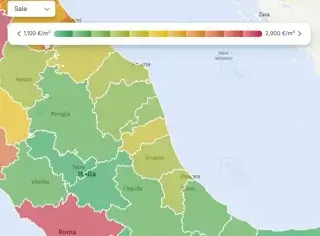 Housing Prices in Italy Reach a Two-Year High
 Travellers Increasingly Choose Cooler Scandinavia
 Serbia Property Sales Decline as Transaction Value Rises
Swedish Apartment Prices Retreat After Spring Gains

Swedish apartment prices fell 1.5% in the July reading, matching the largest monthly decline recorded over the past year. Greater Stockholm posted the steepest weakness, but the longer-term picture remains positive: apartment prices are 4.6% higher than a year ago and detached houses are up 3.4%. At the same time, housing transactions in May through July increased 12% from the previous year, making the market picture considerably stronger than the headline monthly decline alone suggests.
Swedish apartment prices fall 1.5%
Sweden's housing market showed diverging trends in July 2026. Svensk Mäklarstatistik reported a 1.5% decline in tenant-owner apartment prices, while detached-house prices increased 0.9%. Over three months, apartments were also down 1.5%, whereas houses rose 3.5%. Over the past 12 months, apartment prices gained 4.6% and house prices increased 3.4%.
The apartment decline matched the 1.5% fall recorded in July 2025. The difference is that annual apartment-price growth is now stronger than it was a year ago, leaving the market on a higher year-on-year trajectory despite the latest seasonal weakness.
Stockholm records the largest decline
Greater Stockholm apartment prices fell 2.5%. Greater Gothenburg declined 0.6%, while Greater Malmö increased 0.4%.
Central Stockholm fell 0.6%, central Gothenburg 1.1% and central Malmö 1.7%. Year-on-year readings remained positive but varied sharply between regions.
Central Stockholm was 8.5% higher than a year earlier, while Greater Stockholm gained 6%. Central Gothenburg also rose 6%, compared with 1.6% in Greater Gothenburg. Central Malmö increased just 0.5% and Greater Malmö 0.6%.
Sweden's real-estate brokerage industry association attributed much of the July pattern to a seasonal change in the composition of sales, as fewer transactions occur in the most expensive districts during the summer. The underlying release also noted that Greater Stockholm's relatively large decline coincided with both a low number of transactions and falling prices in central Stockholm.
That should be treated as an industry explanation rather than proof that seasonality alone caused the entire decline.
Central Stockholm remains Sweden's most expensive market
The nationwide average apartment price was SEK 39,248 per square metre in July. Central Stockholm averaged SEK 116,087, while Greater Stockholm stood at SEK 61,794.
Central Gothenburg averaged SEK 68,089 per square metre and Greater Gothenburg SEK 47,622. Central Malmö stood at SEK 38,320 and Greater Malmö at SEK 37,118.
Central Stockholm's average was therefore almost three times the national level, making changes in the geographical composition of transactions important when interpreting aggregate price statistics.
The 1.5% reading is not a simple July-versus-June comparison
A key methodological point is that the reported one-month price change does not compare only the average prices of homes sold in July with those sold in June.
Swedish housing-price statistics use three-month moving periods. The July one-month figure compares May through July with April through June. The three-month reading compares May through July with February through April. Average price-per-square-metre figures, by contrast, use only sales from the latest month.
The headline statement that apartments “fell 1.5% in July” is therefore a convenient description of the July release, but technically it refers to a measure based on overlapping three-month periods.
Swedish housing transactions rise 12%
The decline in the apartment-price indicator was not accompanied by weaker transaction volumes. Around 46,500 apartments and detached houses were sold in May, June and July, compared with 41,600 during the same period a year earlier, an increase of 12%.
Apartment transactions increased 13% to approximately 28,500, while detached-house sales rose 10% to about 18,000. The industry association also said January-through-July transaction volumes were the highest for that period since the pandemic years.
The latest price correction therefore coincided with a more active housing market than a year earlier.
Detached houses continue to appreciate
Swedish detached-house prices increased 0.9% in the latest monthly reading, 3.5% over three months and 3.4% over 12 months. The national average price was SEK 3.579 million.
Greater Stockholm increased 0.1% in the monthly measure and 4.1% over the year, with an average price of SEK 6.025 million. Greater Gothenburg rose 0.3% monthly and 1.4% annually to SEK 5.548 million.
Greater Malmö gained 0.6% and 3.2%, respectively, with an average price of SEK 5.467 million. Outside the three largest metropolitan regions, which account for around 70% of detached-house transactions, prices increased by slightly more than 1%.
Holiday-home prices were broadly stable. The average price stood at SEK 2.414 million over the latest 12-month period, up 0.2%, based on 5,217 transactions between August 2025 and July 2026.
Mortgage reform lowers the minimum down payment
Sweden introduced new mortgage rules on April 1, 2026. Parliament raised the maximum mortgage cap for a new home purchase from 85% to 90% of the property's market value. At maximum permitted leverage, that reduces the buyer-funded portion from 15% to 10%.
The stricter additional amortisation rule was also abolished. It had required borrowers whose total housing loans exceeded 4.5 times their gross annual income to amortise at least an additional 1% each year. The original loan-to-value-based amortisation requirements remain in place. Supplementary borrowing against an existing property is limited to 80% of market value. The Riksdag states that the changes entered into force on April 1.
For a SEK 4 million property, the minimum equity contribution at the maximum permitted mortgage falls from SEK 600,000 to SEK 400,000.
The reform clearly lowers the formal down-payment barrier, although the available data are not yet sufficient to isolate its effect on Swedish housing prices.
Floating mortgage rates decline to 2.75%
Mortgage financing costs continued to ease in June. The average floating rate on new housing-loan agreements fell to 2.75% from 2.78% in May. The average rate across all new mortgage agreements declined from 2.83% to 2.80%.
Statistics Sweden reported SEK 4.321 trillion of outstanding household housing loans in June. Housing lending grew 3.3% year on year, while total lending to households increased 3.2%.
Around 77% of outstanding housing loans, equivalent to SEK 3.307 trillion, carried floating rates.
That structure means changes in borrowing costs can pass relatively quickly into mortgage payments for a large proportion of Swedish borrowers.
Riksbank keeps policy rate at 1.75%
Sweden's policy rate stands at 1.75% as of August 7, 2026. The June decision left it unchanged, with the rate applying from June 24.
The Riksbank said inflation was low but that the risk of excessively high inflation going forward had increased. It also said the probability of a rate increase later in 2026 had risen compared with its previous assessment.
The next monetary-policy meeting is scheduled for August 19, with the decision due on August 20.
Swedish inflation slows sharply
Preliminary July figures showed headline CPI inflation slowing to 0.2% year on year from 0.7% in June. Consumer prices declined 0.3% from the previous month.
CPIF, the consumer-price measure calculated with mortgage rates held constant and used by the central bank as its monetary-policy target variable, slowed from 1.3% to 0.7%.
CPIF excluding energy moved in the opposite direction, increasing from 0.4% to 0.6%. Statistics Sweden said significantly lower energy prices contributed to the decline in headline CPI and CPIF inflation. Final July figures are due on August 13.
Swedish GDP rises in the second quarter
Sweden's preliminary GDP indicator showed economic output increasing 1.4% in the second quarter from the previous quarter on a seasonally adjusted basis.
Calendar-adjusted GDP was 2.8% higher than in the second quarter of 2025. June alone, however, recorded a 0.2% month-on-month decline.
The figures remain preliminary. Full national accounts for the second quarter are scheduled for release on August 28.
Homebuyers become more cautious
Buyer expectations also softened in August. Hemnet's survey found that 33.9% of prospective buyers expected home prices to rise during the following six months, down from 36% in the previous survey.
The proportion expecting falling prices increased from 11.8% to 13.5%, while 52.6% expected prices to remain unchanged. The net balance between respondents expecting increases and decreases fell to 20 percentage points and has now declined for six consecutive months. The survey included 3,152 respondents planning to buy a home.
The largest group therefore expects broadly stable prices rather than either a rise or a decline.
Sweden's housing market remains highly uneven
The most important feature of the July data is the difference between short-term and annual movements. The national apartment indicator fell 1.5%, but remained 4.6% above its year-earlier level. Central Stockholm was up 8.5% annually, compared with only 0.5% in central Malmö.
Transaction volumes also increased, detached houses appreciated, mortgage rates declined and the April reform reduced the minimum equity contribution required at maximum mortgage leverage. Taken together, those figures do not support treating a single July reading as evidence of a renewed nationwide housing downturn.
As International Investment experts report, the July apartment-price decline should be interpreted cautiously because it coincides with positive annual price growth and higher transaction volumes. At the same time, the large share of floating-rate mortgages and the possibility of purchasing a home with only 10% equity leave some new borrowers more exposed to future changes in financing costs. Investors should also examine the finances and debt of the individual housing association, recurring charges and the liquidity of the specific local market rather than relying only on national price indicators.