









Bosnia’s Forests Sold as Villas
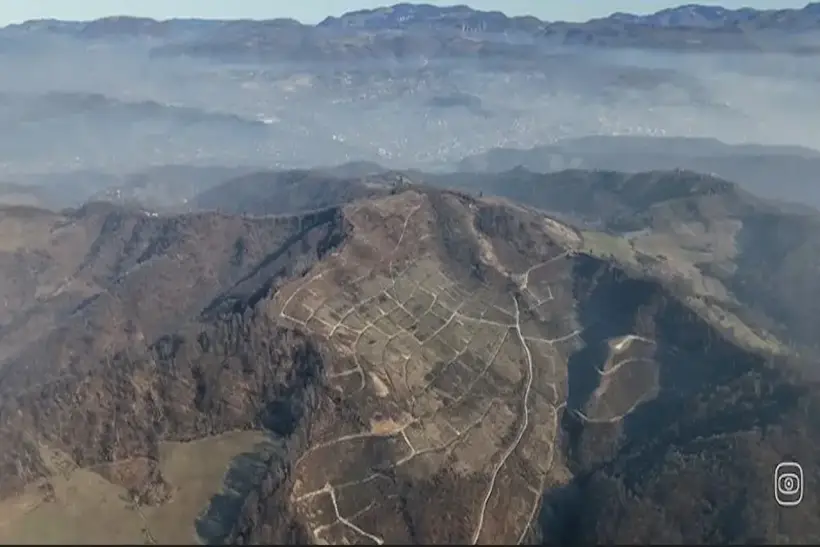
An investigation into land deals in Bosnia and Herzegovina shows how weak regulation, foreign demand and an opaque property market can turn natural land into a commercial product. Kuwaiti-backed companies sold plots to buyers from Gulf countries as future home sites, but some of the land proved unsuitable for construction and forests were cleared before any real planning outcome was secured.
Bosnia becomes a showcase for Gulf buyers
Bosnia and Herzegovina has attracted buyers from Gulf countries for more than a decade. For investors from Kuwait, Saudi Arabia, Qatar and other states, the country looks familiar and emotionally appealing: green mountains, a mild climate, a Muslim cultural environment, relatively low prices and proximity to Europe.
Against this backdrop, a specific niche emerged: the sale of rural and forest plots for future houses, villas and family residences. In marketing materials, such assets are often presented as an opportunity to buy a “home in nature” or a plot in a European country before prices rise.
VoxEurop, citing an investigation by Detektor, BIRN and the Arab Reporters for Investigative Journalism, reports that Kuwaiti-backed companies bought land in Bosnia and Herzegovina, divided it into plots and sold it to buyers from Gulf countries. Prosecutors, however, allege that some forests were illegally cleared, while some plots are not suitable for construction.
Dobro becomes a symbol of disputed deals
One of the key cases is linked to the village of Dobro near Visoko, about 25 miles northeast of Sarajevo. According to Detektor, excavators cleared 18 hectares of forest there three years ago. That is roughly the size of 25 football pitches. The land was then divided into plots that appeared ready for sale.
The problem is that much of the area is not designated for construction under local planning rules. It lies in a protected water-source zone and is classified as agricultural or forest land. In other words, the marketing image of future homes collided with legal reality: building houses there is either prohibited or extremely difficult.
This makes the story important not only as an environmental conflict, but also as an investment-risk case. A buyer may see beautiful photos of forests, hills and plots, but fail to understand that the legal status of the land matters more than the view or the price.
Prosecutors investigate forest clearing
The Zenica-Doboj Canton Prosecutor’s Office filed two indictments in July 2025 and February 2026 for the criminal offence of forest devastation against Injazat Future and individuals linked to the company. One case concerns clearing near Dobro, where damage to the forest and local biodiversity was estimated at about 150,000 convertible marks, or roughly $90,000.
Another case concerns forest cutting in the municipality of Visoko, where an area of barren land about the size of five and a half football pitches was left behind, with damage estimated at around 31,000 marks, or about $19,000. The proceedings are ongoing.
For the property market, such cases are especially sensitive. They show that the problem is not only a private dispute between buyers and sellers. It may involve breaches of environmental rules, damage to public resources and weak oversight of how forest and agricultural land is turned into commercial plots.
Buyers were sold a dream, not always a right to build
Injazat Future and related companies marketed rural plots to buyers from Gulf countries, mainly targeting middle-income buyers. According to the investigation, prices started at about 18,000 convertible marks, or around $10,500, for plots of 500–1,000 square meters.
For a buyer from Kuwait or Saudi Arabia, that price could look affordable. Land in a green European country, the possibility of building a house and the prospect of price appreciation if Bosnia moves closer to the European Union created an attractive investment story.
But in real estate, a sale contract is not enough. Urban-planning status, road access, water and electricity connections, landslide risk, municipal approval and building permits are all needed. Without them, a plot may remain beautiful but become an illiquid asset.
The law limits direct foreign land ownership
Bosnia and Herzegovina restricts direct land ownership by foreigners. This means buyers from Gulf countries cannot always simply register a plot in their own names as individuals.
According to the investigation, the company offered potential buyers two options: registering the land in the name of Injazat Future with a separate waiver agreement granting usage rights, or establishing a Bosnian company owned by the buyer. The second route is more complex, more expensive and requires more formalities.
Such structures increase legal risk. A buyer may believe they effectively own the land, but their rights depend on the contract structure, the intermediary company, local law and the ability to defend their interests in court. For foreign investors, this is particularly dangerous because they often do not know the language, local procedures or the real status of the plot.
Social media became the sales channel
Sales of such plots were heavily promoted through social media. Attractive images of Bosnian nature, mountains, snow, forest roads and future projects created the image of a peaceful European life. For buyers from hot-climate countries, green Bosnia looked especially appealing.
But social media also became a source of complaints. In comments on company accounts, buyers wrote that they had received no response after payment, regretted their purchases and warned others not to trust the sellers. Some directly said the problem was not the price of the land, but the inability to build.
This is an important market lesson. Visual marketing can create demand faster than legal due diligence can identify restrictions. When an investment is sold through videos and scenic landscapes, buyers risk making an emotional decision without checking documents.
Old problems resurface
The Kuwaiti land-deal story did not emerge in a vacuum. Earlier journalistic investigations in Bosnia had shown that companies backed by Middle Eastern capital were actively buying property and land. According to the Center for Investigative Journalism, around 1,600 such companies existed in the country by 2019.
The problem is not foreign capital itself. Foreign investment can bring jobs, taxes, tourism and infrastructure. The problem arises when a weak oversight system allows construction without permits, ignores prohibitions, clears forests and sells unsuitable plots to poorly informed buyers.
In that case, all sides suffer. Local residents lose forests and natural resources. Gulf buyers receive legally questionable assets. Honest developers suffer reputational damage. The state exposes institutional weakness.
Forests are not empty land
For Bosnia and Herzegovina, forests are especially important. They cover roughly half the country and are one of its key natural resources. A forest is not only timber, but also soil protection, water sources, biodiversity, climate balance, tourism and quality of life for local communities.
Illegal or poorly controlled logging increases the risk of erosion, landslides and floods. In a mountainous country, this is especially dangerous. When forest is removed from a plot for future sale, the commercial gain may go to a small group of people while the environmental consequences remain with the public.
Investigations into Bosnia’s forestry sector have already shown that illegal logging is linked to corruption, weak oversight and fragmented governance. The sale of plots to Gulf buyers adds another layer: forests are destroyed not only for timber, but also to convert nature into real estate.
Fragmented authority increases risk
Bosnia and Herzegovina has a complex administrative system: the state level, two entities, cantons, municipalities and overlapping competences. In such conditions, land, forests, construction and investment regulation is often fragmented.
For investors, this creates complexity. Permission or support at one level does not always resolve issues at another. Land may have one status in the cadastre, another in spatial plans and a third under environmental restrictions. Local officials may meet investors and create a sense of official support, but not always have the authority to change the legal status of the land.
For bad actors, such fragmentation creates opportunity. They can sell expectations of future permits, refer to connections, show meetings with authorities and shift legal risk onto buyers.
Gulf buyers also became victims
It is important not to treat Gulf buyers only as a source of pressure on land. Many may have become victims of marketing. The investigation suggests that some people bought plots believing they could build a family home or villa.
Kuwaiti lawyers and public figures have warned citizens about the risks of real estate deals in Bosnia and Herzegovina. In one case, a Kuwaiti court ordered an unnamed company to pay a fine after selling land that later proved unsuitable for construction.
This shows the transnational nature of the problem. The land is in Bosnia, the buyer may be in Kuwait or Saudi Arabia, the marketing happens through social media, money moves through intermediaries and a dispute may arise in another jurisdiction. Such a structure makes buyer protection difficult and costly.
Bosnia’s investment reputation is at risk
Bosnia and Herzegovina needs foreign capital. The country needs investment in tourism, energy, infrastructure, hotels, agribusiness and quality real estate. But scandals involving plots, deforestation and non-buildable land can undermine confidence in the market.
For Gulf buyers, such stories are a warning: a low price and beautiful nature are no substitute for legal due diligence. For Bosnian authorities, they are a signal that the land market must become more transparent, or foreign demand will be associated not with development, but with conflict and environmental damage.
Reputational risk is especially important for a country that wants to develop tourism and move closer to the European Union. European integration requires not only formal legislation, but real enforcement of rules, nature protection and property rights.
Real estate becomes an environmental issue
Property markets are usually discussed through prices, demand, yields and construction. In Bosnia, this story shows another side: real estate can become a direct environmental factor. If development begins with forest clearing on land where construction is prohibited, the market becomes a mechanism of destruction.
This is especially dangerous in rural and mountain areas. Oversight is weaker, public attention is lower and consequences can be long-term. A cleared slope, damaged water regime or destroyed forest does not recover quickly. Even if no project is ever built, the environmental damage has already occurred.
For investors, this means that environmental due diligence must become as essential as legal due diligence. Buyers need to know whether a plot lies in a water-protection zone, forest area, landslide-risk zone, protected area or under restrictions in a spatial plan.
Local residents are left with the consequences
Foreign companies and foreign buyers often stand at the center of such deals. But the consequences are borne first by local communities. They are the ones losing forest roads, water sources, slope protection, familiar landscapes and control over the land around their villages.
If a project is not realized, the area may remain barren. The forest has been cut, houses have not been built, jobs have not been created, tax impact is minimal and ecological restoration requires time and money. This is the worst scenario: commercial gain is privatized, while damage becomes public.
Such conflicts can deepen distrust toward foreign investors in general. Even honest projects then face suspicion because society remembers cases where investment was associated with deforestation and legal uncertainty.
What buyers must check
Buyers of land in Bosnia and Herzegovina need to check not only the price and view. The first priorities are cadastral status, title, encumbrances, spatial plan, land use designation, road access, utilities, water-protection restrictions, forest status, landslide risk and the possibility of obtaining a building permit.
It is also important to understand who the seller is, how the buyer’s rights are registered, whether direct ownership is possible, what obligations an intermediary company assumes and in which jurisdiction a dispute would be resolved.
If a seller promises that a building permit can be obtained “in about a month,” that should trigger further checks. In reality, such procedures depend on land status, municipal planning, geological conditions and infrastructure. Fast promises in a complex legal environment are often a red flag.
The state needs a transparent land market
For Bosnia and Herzegovina, the answer to such cases is not a ban on foreign demand, but transparent regulation. The country needs open cadastral data, clear spatial plans, effective forestry inspections, real penalties for illegal logging, scrutiny of investment-project advertising and buyer protection.
Municipal responsibility is especially important. Local authorities often are the first to meet investors, attend meetings and create an impression of official support. If a project is legally impossible, the municipality should say so clearly before plots are sold, not after forests are cleared.
For prosecutors, such cases are also a test. If charges end with minimal fines, the business model does not change. If illegal clearing and misleading buyers become expensive and risky, the market begins to clean itself up.
Land deals test Bosnia’s European future
Bosnia and Herzegovina seeks closer ties with the European Union. But the European perspective requires not only political declarations, but functioning institutions. Land, forests, water, cadastre and construction are practical areas where the quality of the state becomes visible.
The Kuwaiti land-deal case exposes weak points: fragmented governance, insufficient oversight, weak enforcement, dependence on local connections and inadequate buyer protection. As long as these problems remain, the property market will remain attractive to speculative schemes.
Bosnia can be an interesting destination for tourism and investment, but only if natural assets are not destroyed to sell legally questionable plots. Foreign capital should enter where a project is legal, environmentally checked and useful to the local economy.
As reported by International Investment experts, the sale of Bosnian land to Gulf buyers shows the main risk of emerging real estate markets: investors buy not only a plot, but also the quality of the institutions around it. If cadastre, forestry regulation, municipal planning and courts function weakly, even cheap land in a beautiful location can become an illiquid asset. For Bosnia, the story is doubly dangerous: it destroys forests while also undermining trust in the country as an investment destination.
FAQ: land in Bosnia and Gulf buyers
What happened with Kuwaiti land deals in Bosnia?
Kuwaiti-backed companies bought land, divided it into plots and sold it to buyers from Gulf countries. The investigation found that some plots are not suitable for construction, while forests on some areas had already been cleared.
Why can buyers not build houses on some plots?
Some land is classified as agricultural or forest land, water-protection zones or areas with geological restrictions. Construction requires the right planning status, permits and technical conditions.
Can foreigners directly own land in Bosnia and Herzegovina?
Direct land ownership by foreigners is restricted. In practice, intermediary companies, local legal entities or usage-right agreements are used, which increases legal risk for buyers.
Why did deforestation become part of the problem?
Forests were cleared to prepare land for sale and visually divide plots. But if construction is impossible, the area can remain barren while environmental damage has already been done.
What risks do Gulf buyers face?
The main risks are inability to build, weak rights protection, indirect ownership, misleading advertising, lack of infrastructure, land-use restrictions and high litigation costs.
What should be checked before buying land in Bosnia?
Buyers should check title, cadastre, land use designation, spatial plans, permits, water and forest restrictions, road access, utilities, geological risk and the legal structure of the transaction.