







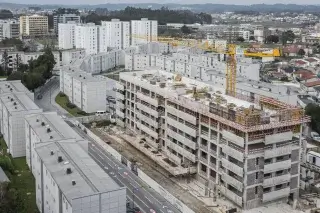





Burnham puts council housing at the center of economic policy
A Bloomberg Opinion column published on Aug. 12, 2026, raises a broader question than whether Britain needs more homes for lower-income households: whether mass social housebuilding could also strengthen the wider property market. The answer largely depends on additionality — whether public investment creates homes that would not otherwise have been built rather than simply shifting land, finance and construction capacity away from private development.
Andy Burnham became UK prime minister on July 20, 2026. In his first Downing Street speech, he made ending long-term rough sleeping an immediate government priority. An additional £340 million is intended to launch a wider five-year programme, with the initial funding expected to provide 1,200 homes and intensive support for at least 3,000 people. The government linked the policy to a broader commitment to increase council housing supply.
Before entering Downing Street, Burnham had already promised the biggest council housebuilding programme since the postwar period. His proposals emphasized delivery through councils and devolved regional authorities, use of vacant public land and higher-density development in urban centers. A detailed national funding mechanism had not been announced when the pledge was made.
The £39 billion programme predates Burnham
A crucial distinction is that Britain’s main long-term affordable-housing funding package was already in place before the change of prime minister. The Social and Affordable Homes Programme for 2026–2036 carries £39 billion of funding and is intended to deliver around 300,000 homes. At least 60% are targeted for Social Rent, the lowest-cost regulated rental tenure. Bidding opened in February 2026.
Burnham is therefore inheriting a substantial programme rather than creating the whole housing budget from scratch. His government could redirect more of the funding toward local authorities, increase the use of public land or provide additional capital, but the final design of a larger national council-housing programme has yet to be published.
For the property market, the distinction matters. Subsidising the construction of an additional home increases physical supply. Stimulating purchasing power without increasing supply can instead lift transaction volumes while also feeding into prices.
Social Rent is not the same as Affordable Rent
Britain’s terminology can obscure the scale of the affordability problem. Social Rent is a regulated tenure with rents calculated under a government framework. Affordable Rent is a separate category and can be set at up to 80% of the local market rate. The 2026–2036 programme therefore gives particular priority to Social Rent because it is designed for households least able to absorb market housing costs.
That distinction also matters for investors. A larger Social Rent stock can reduce demand pressure at the cheapest end of the private rental sector, but it does not necessarily compete directly with professionally managed mid-market or premium rental developments whose tenants, locations and amenities can be very different.
England is still building below its recent peak
England recorded 208,600 net additional dwellings in the 2024/25 financial year, 6% fewer than a year earlier. New construction accounted for 190,600 homes, while conversions, changes of use and other additions supplied the remainder. Total net additions were 16% below the recent peak recorded in 2019/20.
The figures illustrate the scale of the challenge. Maintaining annual supply at roughly 200,000 homes would not by itself eliminate the accumulated shortage, particularly when demand varies sharply by region and tenure.
London, Manchester and other large cities do not simply face a numerical lack of housing. They also lack enough properties at prices that lower- and middle-income households can afford. A high-priced new apartment increases headline supply but does little to shorten a council waiting list.
Homes England delivered more affordable completions
Programmes managed by Homes England recorded 42,433 housing starts and 40,332 completions in 2025/26. Affordable housing accounted for 32,243 completions, up 14% from the previous year. Social Rent completions jumped 65% to 9,381.
The forward pipeline was less strong. Social Rent starts fell 24% to 4,280. That suggests part of the latest rise in completions reflects schemes financed and launched earlier and does not yet guarantee accelerating delivery in coming years.
Starts will therefore be one of the clearest early tests of Burnham’s housing policy. A large budget only changes supply once land is prepared, planning consent is secured, construction contracts are signed and projects reach completion.
More than 1.3 million households are waiting
The gap between social housing supply and demand remains vast. Shelter England says more than 1.3 million households are on social housing waiting lists. Across councils, housing associations and private developers, only 12,198 Social Rent homes were delivered or acquired in 2024/25.
Using the average delivery rate of the past two years, the charity calculated that clearing the existing waiting list would take 119 years. Shelter argues that England needs around 90,000 Social Rent homes annually for a decade. That is an advocacy estimate rather than an official government target, but it demonstrates the scale of the difference between recent supply and assessed need.
Even if the £39 billion programme delivers all 300,000 planned homes and 60% are Social Rent, that would imply roughly 180,000 Social Rent properties over 10 years, or about 18,000 annually on average. That would represent a material expansion but would remain far below the 90,000-a-year level cited by housing campaigners.
Manchester shows why rents matter as much as prices
Greater Manchester remains the most important practical reference point for Burnham, who led the region before entering national government. Current conditions in Manchester help explain why housing policy has become politically urgent even without rapid house-price inflation.
The average Manchester home cost about £247,000 in May 2026, broadly unchanged from a year earlier. Average private rent, by contrast, increased 3.5% to £1,358 a month in June. Average monthly rents were £993 for a one-bedroom property, £1,221 for two bedrooms and £1,417 for three. First-time buyers paid an average £232,000.
The divergence shows why stable sale prices do not necessarily make housing affordable. Households unable to assemble a deposit or qualify for a mortgage remain exposed to rising private rents.
A larger Social Rent stock could remove some households from competition for the cheapest private properties. For landlords, the greatest impact would therefore be expected at the lower end of the rental market rather than across all rental categories.
Interest rates remain a constraint on development
Financing conditions continue to limit both demand and new construction. The Bank of England kept Bank Rate at 3.75% at its meeting ending July 29. Six Monetary Policy Committee members voted to hold, while three preferred an increase to 4%.
Higher rates raise monthly mortgage costs for buyers and borrowing costs for developers. Projects that looked viable under cheaper financing can therefore be delayed even when underlying housing demand remains strong.
A stable public construction pipeline could partly offset that weakness by supporting contractors and suppliers when private development slows.
The risk is that a public building surge enters a sector already constrained by skilled labour, materials and viable land. If supply capacity does not expand at the same time, public and private projects could bid against each other for the same inputs and raise construction costs.
Councils need skills as well as money
Funding is only one part of the problem. Many councils have spent decades outside large-scale direct development and will need to rebuild teams capable of assembling land, designing schemes, managing procurement, supervising construction and operating completed housing.
Centre for Cities argues that housing associations will remain essential because they currently account for much of social housebuilding and many councils lack their own stock or development capacity. It also identifies planning reform, cheaper development and better use of public land as necessary conditions for expanding both public and private supply.
That makes a rapid replacement of housing associations by councils unlikely. A larger programme would more plausibly require both sectors to expand simultaneously.
Cheap public land cannot remove every bottleneck
Burnham has argued that vacant land owned by the Treasury and other public bodies should be made available for council housebuilding, potentially at discounted prices.
Housing Executive notes two other major constraints: shortages of skilled construction workers and rising material costs. Some councils also lack recent experience in managing social housing and may need partnerships with housing associations and other registered providers.
Land cost is only one element of project economics. Large housing developments also require roads, public transport, electricity, water, schools and other infrastructure. A low-cost site without those connections does not automatically become rapidly deliverable housing.
Right to Buy reform is intended to preserve new supply
Another part of the housing strategy concerns Right to Buy, the system that allows eligible council tenants to purchase their homes. The Social Housing Bill restricts the scheme and is intended to slow the loss of properties from the public and non-profit housing stock.
The underlying issue is straightforward: if councils build new homes while simultaneously selling a large share of their existing stock, net social housing growth remains weak. The legislation is designed to keep more newly created homes in the regulated sector for longer.
Over time, that could change the ownership structure of the market by increasing the size of the public rental stock while reducing the flow of former council properties into private ownership.
More social housing does not automatically mean lower house prices
A council housebuilding boom would not automatically cause UK property values to fall. Sale prices respond to mortgage rates, incomes, employment, migration, land availability and private development as well as public construction.
The more immediate effect is likely to be felt in rents. If tens of thousands of households move from private renting into lower-cost social housing, competitive pressure on cheaper private properties may ease.
Developers could also benefit indirectly. Public investment can support construction activity during a private-market slowdown, finance infrastructure and prepare regeneration sites that later accommodate market housing.
The decisive issue remains whether the homes are genuinely additional. If public development expands total capacity, supply rises. If it mainly uses the same land, finance, contractors and materials that private projects would otherwise have used, the net market effect will be much smaller.
FAQ: UK social housing and the property market
How much is Britain spending on social and affordable housing?
The current Social and Affordable Homes Programme for 2026–2036 carries £39 billion of government funding. It was created before Andy Burnham became prime minister. His government may alter priorities or add funding, but the final structure of the promised larger council-building programme has not yet been published.
How many homes could the £39 billion programme deliver?
The stated ambition is around 300,000 social and affordable homes over 10 years, with at least 60% intended for Social Rent. That would imply roughly 180,000 Social Rent homes if the programme is delivered in the planned mix.
What is council housing?
Council housing is owned by local authorities and rented on regulated terms. Social housing can also be provided by housing associations, which are registered providers specialising in below-market housing.
What is the difference between Social Rent and Affordable Rent?
Social Rent is generally the lower-cost tenure and is governed by a regulated rent formula. Affordable Rent can be set at up to 80% of local market rent, meaning it can still be beyond the reach of some lower-income households.
Could new social housing reduce private rents?
At sufficient scale, it could reduce pressure at the lower end of the rental market because households moving into Social Rent homes no longer compete for some privately rented properties. The effect would vary significantly by city and neighbourhood.
Will Burnham’s programme reduce UK house prices?
Not necessarily. Greater supply can moderate price pressure, but property values are also driven by interest rates, incomes, credit conditions, employment and local demand. Rental markets are likely to feel the effects of social supply sooner than sale prices.
Why can Britain not immediately return to postwar council-building levels?
Councils face shortages of development staff, construction labour, serviced land and infrastructure as well as financial constraints. Many local authorities have not developed housing at scale for decades and would need to rebuild institutional capacity.
What does the policy mean for property investors?
The lower-priced private rental segment faces the most direct competitive effect. Mid-market and premium rental developments overlap less with Social Rent. Investors may also benefit from public infrastructure and regeneration spending around larger housing schemes.
Which figures will show whether Burnham’s policy is working?
The key measures will be Social Rent starts and completions, the net growth of council housing stock, the amount of public land moved into actual construction and whether total housebuilding rises rather than merely shifting between public and private developers.
As International Investment experts note, using large-scale council building to strengthen the broader property market is economically credible only if the housing is genuinely additional. The main risk is that the government announces the largest programme in generations while much of the £39 billion is already committed to the existing framework, councils cannot scale delivery quickly enough and public schemes compete with private developers for the same land, labour and materials. In that scenario, fiscal commitments would rise faster than Britain’s physical housing stock. The meaningful test for Burnham will therefore be a sustained increase of tens of thousands of additional social homes above the existing delivery trajectory without a corresponding collapse in private housebuilding.