







 Vietnam Mortgage Surge Pushes Homes Out of Reach
 Lithuanian Apartment Prices Accelerate Across Major Cities
 London Flats Lose Value Ahead of Leasehold Reform
 Construction of the Batumi–Sarpi Highway Begins in Georgia
 Baltic Property Investment Accelerates in 2026
 Hong Kong and Singapore Renew Their Expat Rivalry
UK House Prices Rise Again in February

British housing market shows early signs of recovery
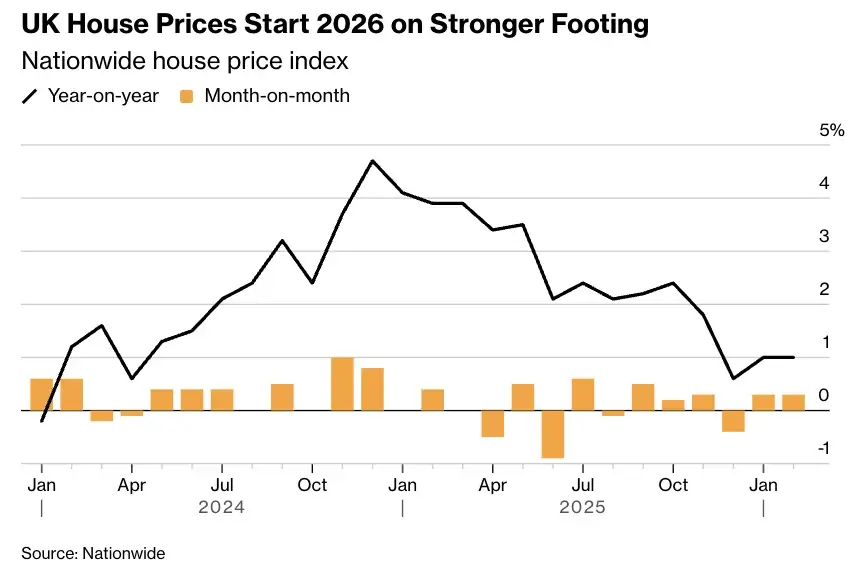
House prices in the United Kingdom continued to rise at the start of 2026, according to new data from one of the country’s largest mortgage lenders, Nationwide. The average property value increased by 0.3% in February to around £273,176.
The rise matched the 0.3% increase recorded in January and slightly exceeded economists’ expectations. The figures add to evidence that the UK housing market may be entering a period of gradual recovery after a challenging 2025.
On an annual basis, house prices were about 1% higher compared with the same month last year.
Lower interest rates support housing demand
A key factor supporting the property market has been the Bank of England’s decision to reduce interest rates. The central bank lowered its base rate to 3.75%, improving mortgage affordability for borrowers.
Economists expect two additional rate cuts by the end of the year if inflation pressures continue to ease.
Lower borrowing costs typically encourage property purchases by reducing mortgage repayments and making housing more accessible for households.
Tax uncertainty weighed on the market in 2025
During much of 2025, the housing market faced pressure due to uncertainty surrounding potential tax changes.
Prospective buyers held back while awaiting details of fiscal policy measures. In her November budget, Chancellor of the Exchequer Rachel Reeves decided against introducing broad new property taxes while announcing policies aimed at easing the cost of living.
These decisions helped restore some confidence among buyers and supported housing demand at the start of the year.
Mortgage activity remains cautious
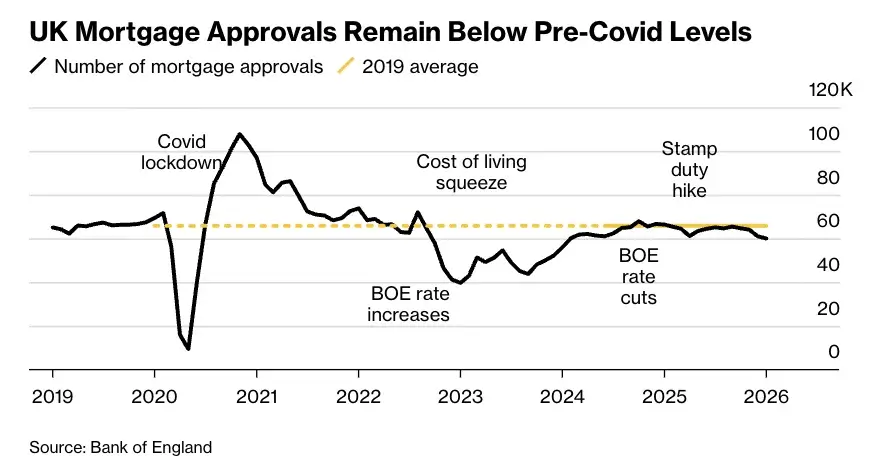
Despite rising house prices, Bank of England data indicates that mortgage activity remains relatively cautious.
Approximately 60,000 mortgage approvals were recorded in January, down slightly from 61,000 in December and below the six-month average.
At the same time, unsecured consumer borrowing rose by £1.8 billion, only marginally higher than the previous month.
Global risks could affect the housing recovery
Economists warn that global developments could influence the outlook for the UK housing market.
A potential surge in oil prices linked to the conflict in the Middle East could fuel inflation. If inflation accelerates again, the Bank of England may be forced to keep borrowing costs higher for longer.
Paul Dales, chief UK economist at Capital Economics, said that while house prices may continue rising this year, higher inflation could limit the pace of gains.
Housing demand remains relatively resilient
Despite the risks, demand for housing in the UK remains relatively resilient. According to Nationwide’s chief economist Robert Gardner, the latest data suggests a modest recovery after a dip in property prices at the end of 2025.
The earlier weakness likely reflected uncertainty surrounding potential property tax changes ahead of the government’s budget announcement.
As those concerns fade, the housing market appears to be regaining stability.
As experts at International Investment note, the UK housing market is gradually stabilizing after a period of uncertainty. Lower interest rates are supporting demand, but the pace of price growth will depend on inflation trends, central bank policy and global energy market developments.