












London Moves Closer to an Accommodation Levy
The UK is shifting toward multiple visitor-charge models
As of March 2026, the UK is clearly moving toward broader use of accommodation-based visitor charges, but not through a single system and not on a single timeline. Scotland already has the legal framework in place, Edinburgh will begin its full visitor levy in summer 2026, Glasgow is preparing its own scheme for January 2027, Wales has passed legislation allowing councils to introduce a levy from no earlier than April 2027, and England is still at the consultation stage over whether mayors should gain the power to impose overnight visitor levies. That means the claim that London has already “joined” other destinations in implementing a new accommodation tax in 2026 is not accurate. London has not launched such a levy yet; it is still part of an active policy debate.
Edinburgh becomes the UK’s first full-scale statutory model
Edinburgh is the clearest live example of where the UK market is heading. The City of Edinburgh Council says the Edinburgh Visitor Levy is being introduced to sustain public services, infrastructure, culture and the city’s long-term visitor economy. Visitor guidance states that for stays from 24 July 2026, booked on or after 1 October 2025, a 5% levy will apply to accommodation costs for up to five nights. In practice, this makes Edinburgh the closest thing the UK has to a classic European-style tourist tax that is no longer theoretical but operationally scheduled.
Glasgow follows, but only from 2027
Glasgow is taking the same Scottish route, but with a later implementation date. Glasgow City Council says its Visitor Levy Scheme will begin on 25 January 2027 and apply to hotels, hostels, guest houses, bed and breakfasts, and self-catering accommodation. The city has therefore moved beyond general discussion and into practical scheme preparation, but the key correction is timing: Glasgow is not implementing the levy in 2026.
Manchester already charges visitors through a BID structure
Manchester does already collect an extra overnight charge, though not as a classic statutory city tax. Manchester Accommodation BID states that the City Visitor Charge is £1 per room or unit per night plus VAT, has been in place since April 2023, and applies to most paid accommodation establishments within the Manchester Accommodation BID zone. The money supports destination marketing, major events and improvements to the guest experience. This makes Manchester an important precedent, but one based on a BID mechanism rather than a new England-wide legal power for mayors.
Liverpool uses an ABID charge rather than a formal tourist tax
Liverpool also already applies a visitor-related accommodation charge, but again the structure matters. Liverpool BID Company says the Liverpool ABID Charge is £2 per room or unit per night and is added to the bill for guests staying within the Liverpool Accommodation BID area. The funds are used to support events, tourism development, marketing and visitor services. The same official page explicitly says this is not a tourist tax in the traditional sense but a BID-based supplement. That distinction is crucial for an accurate news piece: Liverpool is not rolling out a new statutory national-style accommodation tax in 2026, but expanding a locally approved ABID funding model that took effect from June 2025.
Wales has passed the law but not started charging yet
Wales has moved further than England at the legislative level. The Welsh Government confirms that the Visitor Accommodation (Register and Levy) Etc. (Wales) Act 2025 received Royal Assent on 18 September 2025. A separate official explainer says councils will be able to choose whether to introduce the levy in their own areas, and the earliest date any council could begin charging is April 2027. The current official model describes a rate of 75 pence per person per night for campsite pitches and shared rooms, and £1.30 for other visitor accommodation. So Wales is not imposing a nationwide levy in 2026, but it has already built the legal framework for one.
London is lobbying for powers, not implementing a levy yet
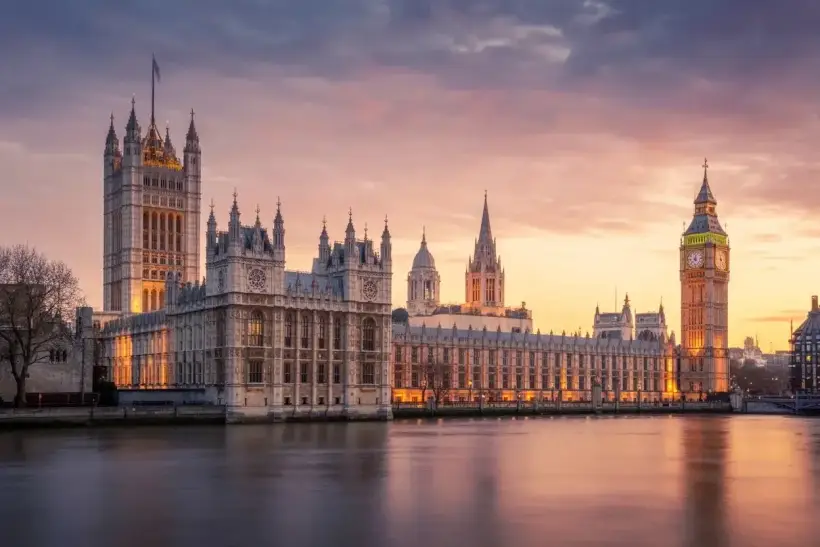
In London, the real story is political momentum rather than rollout. GOV.UK opened a consultation in November 2025 on an overnight visitor levy in England, proposing to give combined authority mayors and the Mayor of London the power to create such charges. The House of Commons Library notes that, as of December 2025, English local authorities still did not have the power to impose a visitor levy, while London Councils said in March 2026 that it wanted at least half of any future levy revenue raised locally to remain with boroughs. It also cited analysis suggesting a London levy could raise more than £350 million a year. That is significant, but it is still not a live charge. Any London implementation would depend on legislation and subsequent local decisions, making 2027 or later a more realistic horizon.
Why accommodation taxes are becoming a national tourism policy theme
Economically, the UK is moving toward a model in which part of the cost of tourism growth is borne more directly by visitors. Edinburgh links its levy to culture, infrastructure and city management. Wales frames it around local services, landscapes, visitor facilities and sustainable tourism. Manchester and Liverpool are already using their charges to fund destination marketing, events and public-facing improvements. But the policy architecture remains fragmented, and that fragmentation matters for investors, hotel operators and travelers. Scotland and Wales are building statutory visitor-levy systems, while English destinations are either using BID-style workarounds or lobbying for formal legal powers.
As International Investment experts note, the UK accommodation market is entering a phase in which visitor taxation is no longer an outlier but part of a new urban funding model. Yet investors, hoteliers and travelers should keep one point in mind: the phrase “tourist tax” now covers three very different realities in the UK, namely existing BID-style charges in some English cities, statutory visitor levies in Scotland and Wales, and a still-unrealised future power that London and other English mayors are seeking.