







 Vietnam Mortgage Surge Pushes Homes Out of Reach
 Lithuanian Apartment Prices Accelerate Across Major Cities
 London Flats Lose Value Ahead of Leasehold Reform
 Construction of the Batumi–Sarpi Highway Begins in Georgia
 Baltic Property Investment Accelerates in 2026
 Hong Kong and Singapore Renew Their Expat Rivalry
Britain’s Housing Plan Loses Momentum
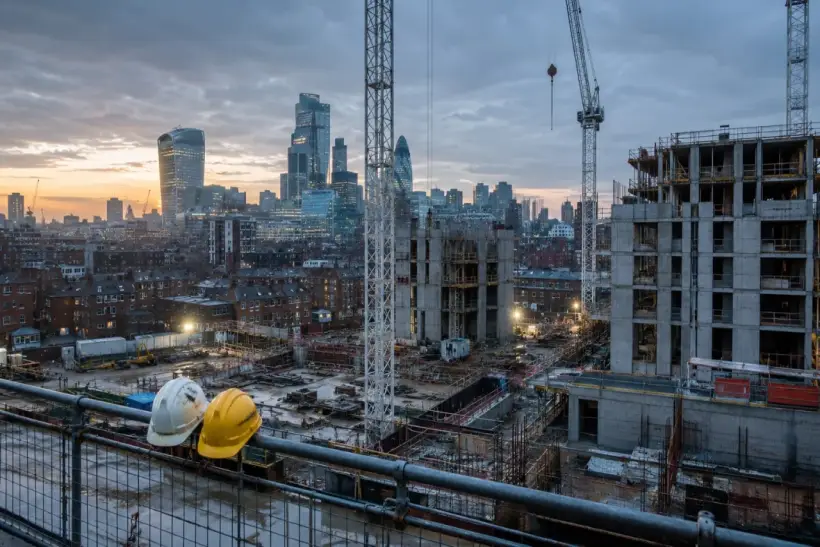
The UK government is at growing risk of falling well short of its pledge to deliver 1.5 million new homes, as official supply data, private-sector forecasts, weak buyer demand, high borrowing costs and London’s construction slowdown all point to a widening gap between political ambition and market delivery.
Britain’s housing target runs into market reality
London — The UK’s drive to accelerate housebuilding, one of the Labour government’s core economic promises, is facing a widening gap between official targets and the construction market’s ability to deliver. Bloomberg reported that researchers warn the country could miss its housing target by 40% or more if current constraints persist.
The government’s pledge is to deliver 1.5 million new homes over the parliamentary term. In practical terms, that requires about 300,000 net additional dwellings a year. Net additional dwellings means the overall increase in the housing stock after counting new homes, conversions from non-residential buildings, subdivisions of existing homes and other gains, while subtracting demolitions.
Official data show England is running below that required trajectory. The Ministry of Housing, Communities and Local Government said the housing stock rose by 208,600 net additional dwellings in the 2024/25 financial year, down 6% from the previous year. Of that total, 190,600 came from new-build homes, while the rest came from changes of use, conversions and other gains, partly offset by demolitions.
To meet the 1.5 million target, annual delivery would need to be roughly 91,400 homes above the 2024/25 level. That is not a statistical rounding issue but a structural gap: England’s net additions have fallen from a peak of 248,590 in 2019/20 to 221,410 in 2023/24 and 208,600 in 2024/25.
Forecasts point to a large delivery shortfall
Market forecasts reinforce doubts about whether the target is achievable. Savills estimated that about 840,000 new homes may be completed in the five years to 2028/29. That would be more than 40% below the 1.5 million goal and reflects not only planning delays but also the weaker ability of buyers, investors and social landlords to absorb new supply.
The forecast matters because UK housing delivery depends on more than political decisions about land use. Developers raise output when they believe they can sell or transfer completed homes at prices that cover land, construction, financing, tax and regulatory costs. With mortgage rates still elevated, household budgets stretched and service charges rising, demand for new-build homes is not expanding fast enough.
The Office for Budget Responsibility previously estimated that planning reforms could add about 170,000 homes by 2029/30 and lift gross domestic product by 0.2%. Gross domestic product is the total value of goods and services produced in an economy. Even that uplift, however, would not close the full gap between current housing delivery and the government’s target.
London becomes the biggest bottleneck
The sharpest stress is visible in London, where land costs, construction costs and safety compliance make projects especially difficult. JLL said only 6,325 homes were built in the capital between March 2025 and March 2026, against an annual target of about 88,000. That is roughly 7% of the required level.
London’s market is being hit by expensive mortgages, high new-build prices per square foot, the exit of some investors from the rental market and weaker off-plan sales. Off-plan sales are purchases agreed before a home is completed. For developers, fewer early sales mean more capital tied up for longer and greater risk of unsold stock.
The price gap between new homes and existing properties also weakens affordability. If a new apartment costs materially more than a comparable older home, buyers without state support or a large deposit are more likely to choose the resale market or delay a purchase. After the end of Help to Buy, a government equity-loan scheme for buyers, part of the demand for new homes disappeared.
Planning reform cannot create demand alone
The government has made planning reform the central tool of its housing policy. Measures include mandatory housing targets for local authorities, changes to parts of the green belt and faster approval for some developments. The green belt is land around towns and cities where development is restricted to limit urban sprawl.
But planning permission is not the same as a completed home. A developer may secure approval and still delay construction if buyers are not ready, infrastructure connections are slow or project economics are unviable. Project viability means the development can generate revenue above all costs, including land, materials, labour, financing, taxes and required contributions.
The National Housing Federation has warned that without additional funding and policy intervention, the annual shortfall could run into tens of thousands of homes. Housing associations are central to affordable housing delivery, but their balance sheets are constrained by repair costs, building-safety spending, debt servicing and higher operating expenses.
High borrowing costs weigh on builders and buyers
Interest rates remain one of the main constraints. The higher the mortgage rate, the less a household can borrow for the same income. That is especially important for first-time buyers, who typically have smaller deposits and rely more heavily on bank lending.
For developers, costly money works in two directions. Buyers delay purchases or negotiate harder, while construction finance becomes more expensive. That raises project costs before homes are sold. If sales are slow, developers carry those costs for longer and project risk increases.
The industry is also dealing with pressure from materials, wages and tighter building-safety rules. After the Grenfell Tower tragedy, regulation of tall and multi-unit residential buildings became more demanding, increasing costs for design, inspection, insurance and construction. Those measures improve safety, but they also make financial models more difficult.
Regional divergence complicates the national target
The challenge is not evenly spread. More affordable regions with lower land values and steadier demand may perform better, while London and southeast England face the largest gap between new-build prices and household purchasing power.
In some parts of the country, single-family rental housing, institutional rental projects and student accommodation are supporting construction. Institutional rental projects are homes built or acquired by large investors for long-term rental use. But those sectors are not yet large enough to replace the mainstream sales market, which still drives the bulk of housing output.
The National House Building Council has reported a decline in new-home registrations in the first quarter of 2026, pointing to a weaker pipeline of future completions. Registrations are not the same as completed homes, but they indicate how many projects are entering the construction cycle.
Political risk rises with the housing gap
For the government, the housing target carries both social and macroeconomic importance. Undersupply pushes up rents, limits worker mobility, raises household costs and constrains productivity in cities where jobs are growing faster than homes.
If annual delivery remains close to 200,000 net additions, the country will move closer to 1 million homes over five years than to 1.5 million. Reaching the pledge would require a sharp acceleration in the next few years, not only in approvals but also in completions, sales and affordable housing delivery.
Ministers point to planning reform, investment in social and affordable housing, support for first-time buyers and measures to accelerate infrastructure. The market, however, is showing that opening more land for development does not guarantee demand when mortgages are expensive and construction costs remain high.
According to experts at International Investment, the main weakness in Britain’s housing strategy is that it relies heavily on faster approvals while the bottleneck has shifted toward project economics and solvent demand. Unless the state connects planning reform with lower financial risk for builders, buyer support and long-term affordable-housing funding, the 1.5 million target will remain a political benchmark rather than a construction programme.