







 Egypt’s Economy Accelerates to 5.1%
 Kazakhstan Recovers $2.5 Billion in State Assets
 Argentina Draws Families While Investor Citizenship Remains Uncertain
 Antalya Loses 665,000 Tourists in Eight Months
 New Housing in the UAE: Dubai Leads in Construction Volume
 Cyprus May Restrict Airbnb in Areas Facing Housing Shortages
Buses from Latvia to Russia and Belarus May Be Cancelled
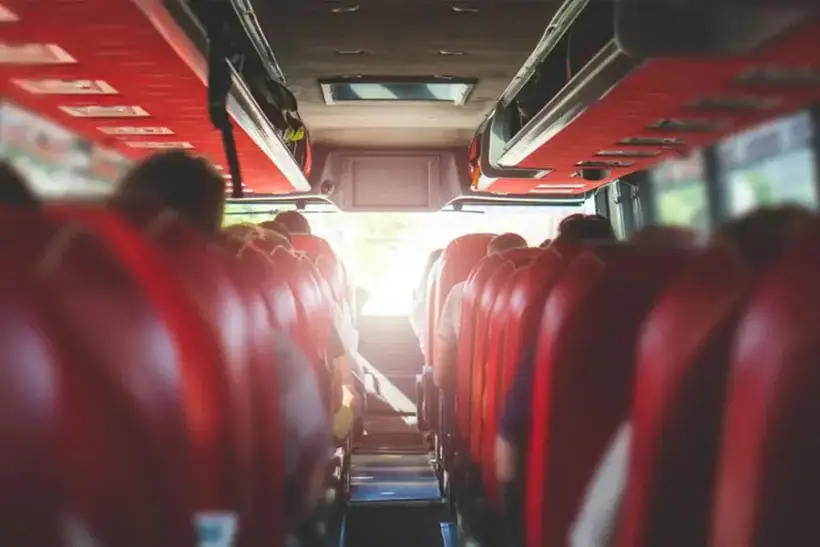
Latvia plans to discontinue passenger bus services to Russia and Belarus from 2027. The country’s Ministry of Transport has prepared the relevant legislative amendments and submitted them to the government for consideration. Direct transport links with Russia have already been reduced to a minimum.
What Latvia’s Transport Ministry Proposes
The ministry proposes amending the Road Transport Law to ban regular and non-regular international passenger bus services to Russia and Belarus from 2027. The restrictions would also cover transit services through Latvia to these countries. The proposals have already been submitted to the government for consideration.
Regular services operate along approved routes and timetables, while non-regular services include individual organised trips, such as excursions or travel to various events. The new amendments would cover both types of passenger transport.
However, these measures would not completely halt overland travel to Russia and Belarus. Passengers would still be able to travel with connections through Lithuania and Estonia, while some minibus services are not covered by the regulations governing bus transportation. Latvia therefore intends to seek a coordinated approach together with the other Baltic states and at the European Union level.
Road Transport between Latvia and Russia
Freight Transport Quotas Are Being Reduced
Road transport links between Latvia and Russia have been shrinking for several years. The trend is particularly visible in freight transport, where the two countries agree annual permit quotas. In 2022, Latvia received 100,000 permits for bilateral and transit operations, as well as 14,000 universal permits that also allowed carriers to handle freight involving third countries. In 2023, these figures fell to 75,000 and 10,500 respectively.
In 2024, the available quota declined to 57,000 permits, and in 2025 only 28,500 remained. In 2026, Russia issued 23,000 single-use permits for bilateral and transit freight operations. Latvia’s Road Transport Administration noted that this amount was already insufficient to meet existing demand.
Latvian Companies Are Leaving the Russian Market
The number of Latvian companies continuing to operate on the Russian route is also declining. In 2025, there were 424 such companies, accounting for 18.8% of all licensed international freight carriers in the country. The figure was 24.2% lower than in 2024. Most activity is increasingly concentrated within the Baltic region. In 2025, Lithuania accounted for 32.6% of transport operations by Latvian companies, while Estonia accounted for 26.6%. Together, the two destinations represented 59.2% of the total.
Broader statistics also point to a long-term decline in activity on the eastern route. According to the Road Transport Administration, Latvia sold 60.76% fewer single-use permits for international freight and passenger transport in 2024 than in 2021. The authority links this trend to restrictions and sanctions introduced after the start of the war in Ukraine.
How Buses Currently Operate between Latvia and Russia
Direct passenger transport with Russia has already been reduced to a single regular service between Riga and Moscow. It is operated daily by Norma-A under the Ecolines brand. The permit remains valid until January 9, 2027, and Latvian authorities do not intend to renew it.
Restrictions on non-regular bus trips are considerably tighter. Since November 1, 2025, such services have been prohibited from crossing the Latvia–Russia and Latvia–Belarus borders. This category includes, for example, organised excursions, trips to sporting events and other journeys following a pre-arranged itinerary. The measure is currently in force until October 31, 2026, and the Transport Ministry is preparing to extend it.
When the ban was introduced, regular services were preserved as a minimum travel channel operating under intergovernmental agreements. The situation is now changing.
What Will Change for the Transport Market
Analysts at International Investment expect the ban to redirect passenger flows through neighbouring countries. Carriers will have to adjust their logistics to the new restrictions. This could increase both travel times and costs and strengthen the role of Lithuania and Estonia as transit routes.
For Latvia, this policy means a further decline in the importance of the eastern route within the transport sector and a stronger business focus on the EU market. For Russia and Belarus, the main consequences will be reduced direct overland links with the European Union, greater reliance on alternative routes and more complicated travel for passengers and companies.
The trend is part of a broader reduction in transport and economic ties between Russia, Belarus and EU countries since the start of hostilities in Ukraine in 2022. The prospects for restoring previous levels of connectivity will depend on the political situation and the sanctions regime.