











Bulgaria Estate Scandal Hits Politics

A political row in Bulgaria over an allegedly illegal construction complex near Varna has intensified after reports linked the project to Ukrainian businessman Oleg Nevzorov, KYB and more than 100 buildings that local authorities say were built or under construction without the required permits near the Golden Sands resort.
Illegal construction near Varna becomes a national issue
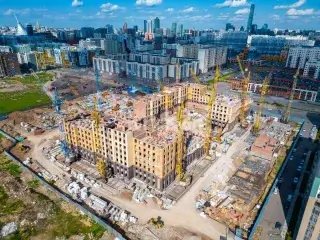
Bulgaria is facing one of its most sensitive construction scandals of the year. At the center of the case is a large complex in the Baba Alino locality between the Golden Sands resort and the Aladzha Monastery north of Varna. Local authorities say 104 buildings were built or were under construction across about 10 hectares without valid construction permits.
Balkan Insight reported that the dispute has moved from a municipal conflict into a national political issue. The reason is the alleged connection between the project, Ukrainian businessman Oleg Nevzorov and KYB, as well as questions over how construction on such a scale could develop near a natural area without earlier intervention by state institutions.
For Bulgaria, the case is not only about building rules. It touches several vulnerable issues at once: control over the Black Sea coast, municipal corruption, the influence of major investors, the political responsibility of former and current authorities, and public confidence in prosecutors and security services.
What is known about the Baba Alino complex
Baba Alino is located near Golden Sands, one of Bulgaria’s best-known seaside resorts. The area is also close to natural and tourist sites, including the Aladzha Monastery. That makes the scale of construction especially sensitive, because major works in such zones usually require strict procedures, permits and environmental checks.
According to Varna Mayor Blagomir Kotsev, the site includes residential buildings, multi-storey blocks, roads, sewage infrastructure, electricity substations and landscaped internal areas. Authorities also identified 24 two-storey houses of about 280 square meters each.
EUalive previously reported that construction in the area began as early as 2023 and that the first warnings concerned the logging of old trees. According to the outlet, local and national institutions did not respond quickly enough, allowing the project to grow to the scale of a small settlement.
Why authorities call the construction illegal
The municipality’s central claim is that the buildings lack construction permits issued by Varna. The city mayor said none of the 104 structures had the required municipal permit. If that position is confirmed through administrative and court procedures, the buildings could be officially classified as illegal.
Illegal construction means building without required documents, approvals or in breach of planning rules. In Bulgaria, as in other European Union countries, such cases can lead to work stoppages, fines, administrative proceedings, court disputes and eventually demolition.
Authorities have already halted further construction and started legal procedures to classify the structures as illegal. Even if violations are confirmed, demolition on this scale could take months or years because of appeals, ownership disputes, technical reviews and political pressure.
KYB denies wrongdoing and alleges pressure
KYB rejects allegations of illegal activity. Representatives of the investor have said they disagree with statements by the Varna administration and consider them misleading. The company has also said it holds the required documents and has become the target of a smear campaign.
That position makes the case legally complex. The municipality says permits are missing, while the investor insists it has documentation. In such disputes, the deciding factor is not a political statement but a review of specific papers: construction permits, planning documents, tolerance certificates, forestry and environmental approvals, ownership records and infrastructure connection documents.
A separate issue concerns so-called tolerance certificates. In Bulgarian practice, such documents may confirm that older buildings meet certain conditions and should not be demolished even if they were built without a full set of modern permits. Much of the Baba Alino controversy turns on whether such documents could apply to new structures if the construction was in fact recent.
Politicians argue over the former administration’s role
The case quickly became part of a broader clash between political camps. Boyko Rashkov, an MP from Continue the Change, said prosecutorial inaction had allowed illegal construction to continue and linked the project to broader questions about financial and political influence. The Bulgarian News Agency reported his statement that Oleg Nevzorov, according to information available to him, was in Turkey.
Rashkov also claimed that a bank connected to financing projects in Baba Alino had appeared in previous political scandals. These claims require verification by competent authorities because they move the case beyond construction law into possible finance, oversight and institutional accountability.
Opponents of the current administration argue that conclusions about political responsibility are premature before investigations are completed. Critics of the former Varna leadership, meanwhile, ask how a complex with dozens of buildings, roads and engineering infrastructure could appear near a resort zone without systematic checks by the municipality, forestry bodies, construction supervision and prosecutors.
Oleg Nevzorov factor raises the stakes
Oleg Nevzorov is described in Bulgarian publications as a Ukrainian businessman linked to KYB. His name turned a local construction dispute into a national story. Public questions now concern the origin of investment, the legality of the project, possible influence over local institutions and the businessman’s status.
According to Bulgarian media reports, Nevzorov previously attracted the attention of the State Agency for National Security, known as DANS. Investigative outlets reported that a decision declaring him persona non grata was reversed within days. That episode has intensified suspicions among politicians and activists, but it does not by itself prove wrongdoing in the construction case.
Legally, it is important to separate political rhetoric from established facts. At this stage, authorities allege illegal buildings and are conducting checks. The company denies wrongdoing. The question of personal responsibility must be decided by investigators and courts, not by public statements.
Prosecutors and police face pressure
Police and municipal authorities conducted a joint operation at the site. According to official accounts, workers were found there and some attempted to hide in the surrounding forest. Authorities said the detained workers were foreign nationals from Ukraine and Moldova.
Prosecutors are conducting several investigations. Their outcome will determine whether the case remains an administrative construction matter or moves into more serious territory involving possible official inaction, corruption, illegal logging, financial violations or organized evasion of control.
For Bulgaria’s political system, this is especially sensitive. The country has long faced criticism over weak anti-corruption mechanisms, slow investigations and selective enforcement. The Baba Alino case is therefore seen as a test of whether institutions can respond not only to minor violations but also to large projects with political and financial weight.
The Black Sea coast remains a high-risk zone
The scandal near Varna has again exposed the vulnerability of Bulgaria’s Black Sea coast. The country’s resort areas have long been under pressure from development, seasonal tourism, infrastructure projects and private investment. High land values near the sea create incentives to bypass procedures, especially if oversight is weak or fragmented between agencies.
For investors, the signal is mixed. On the one hand, Bulgaria’s coast remains attractive: the country is an EU member, has developed tourist infrastructure, relatively low prices compared with Western Europe and steady demand for seasonal housing. On the other hand, legal risks in projects with unclear documents can sharply reduce the value of an asset.
If the buildings in Baba Alino are classified as illegal, buyers, contractors and lenders could face serious losses. In such cases, risk is not limited to the developer. It can extend across the chain to banks, suppliers, brokers, agents, tenants and potential property owners.
The EU context raises the importance of the case
As a European Union member state, Bulgaria is expected to uphold legal certainty, environmental protection and transparent construction control. If a large complex did appear without permits near a natural and tourist zone, the case raises questions about the quality of local governance and the effectiveness of national oversight.
The EU context also matters for the real estate market. Foreign buyers often see property in an EU country as a more secure investment. But scandals of this kind show that EU membership does not remove the need for detailed legal due diligence on the property, land, permits and project history.
For Bulgaria itself, the case could become a reason to review procedures in resort areas. That could include digitized permits, public construction registers, stricter control over forest land, accountability for district chief architects and mandatory checks of engineering infrastructure before property sales.
What happens next
The coming weeks should show whether prosecutors and the municipality can move from public statements to legally durable decisions. If the investor’s documents do not confirm the legality of construction, authorities will have grounds to seek formal classification of the buildings as illegal. If KYB proves that it has valid permits or lawful grounds for the works, the Varna administration’s political position will come under pressure.
The key issue is not only the fate of 104 buildings. More important is whether the state can establish who allowed, enabled or failed to notice construction on this scale. Without an answer, the scandal risks ending as a partial administrative dispute without addressing the systemic problem.
As experts at International Investment report, the Baba Alino case is dangerous for Bulgaria not only because of possible environmental or property-market damage, but because it demonstrates an institutional failure: if a complex of dozens of buildings, roads and utility networks could appear near a major resort without a clear permit chain, investors should treat legal verification, not asset price, as the central risk. The critical conclusion is that Bulgaria’s coast remains attractive for investment, but projects with opaque land histories, questionable documents or political ties can turn real estate into a legal trap.