











Serbia Is Heading for the Schengen Area: There Will Be No Visas for Russians
Serbia plans to fulfill all the requirements for joining the Schengen Area by the end of 2027, RTS reports. To this end, the government has established a task force led by the Ministry of Internal Affairs. Possible requirements include changes to the visa regime, which has already raised concerns among Russian citizens. However, the Serbian authorities say they do not intend to introduce such measures.
Serbia Plans to Join the Schengen Area
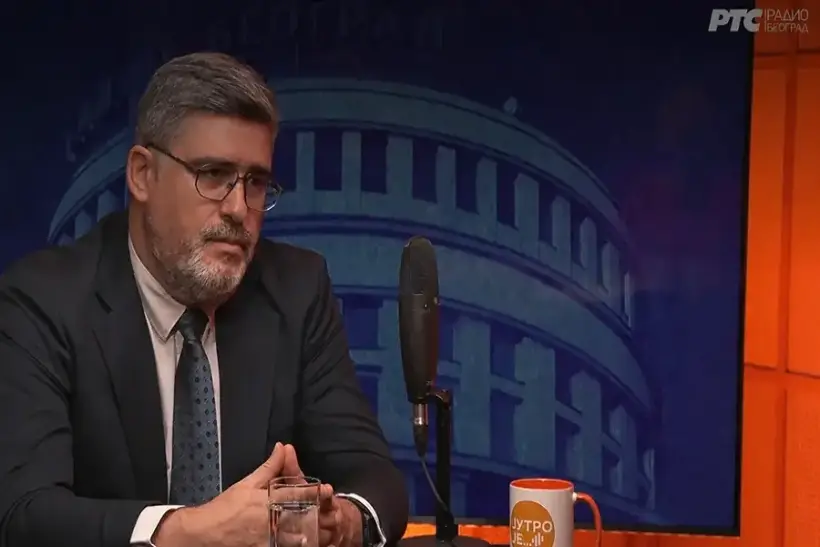
Serbia’s Minister for European Integration, Nemanja Starović, outlined the government’s plan in an interview with Radio Belgrade. The plan is to be implemented by the end of 2027. Once the measures have been completed, Serbia will be ready to join the Schengen Area. This will be one of the country’s main priorities in the coming years and will facilitate the free movement of people, trade, services and capital. The minister later clarified that the introduction of visas for Russian citizens is not being considered.
Starović noted that full EU membership for candidate countries by the end of the decade remains unlikely because of internal problems within the bloc. For this reason, Belgrade intends to seek gradual access to key European mechanisms before obtaining full membership. He stressed that Serbia’s European course has contributed to economic growth and higher living standards. Over the past decade, incomes in the country have tripled.
The minister also emphasized the importance of cooperation with the United States, which could pave the way for major investments in energy, infrastructure and high-tech industries. The potential value of these investments is estimated at up to $20 billion. Starović also highlighted the importance of regional initiatives, including the Berlin Process and the Open Balkan initiative. In his view, these frameworks accelerate the integration of the Western Balkans with the EU and should be preserved even after some countries in the region join the bloc.
Background. The Berlin Process brings together the six Western Balkan countries and EU member states to develop a common market, transport and energy infrastructure, digitalization and other joint projects. The Open Balkan initiative, which includes Serbia, Albania and North Macedonia, is aimed at facilitating the movement of people, goods, services and capital between the participating countries.
Serbia’s European Integration
Serbia has pursued a policy of European integration for years. The country signed a basic cooperation agreement with the EU, secured visa liberalization and receives around €200 million annually from European funds. Serbia also receives additional financing through the EU Growth Plan for the Western Balkans. According to Starović, the amount of funding available to the country doubled after the plan was launched.
Belgrade has already received around €168 million in pre-financing and under the first tranche. Its application for the next three tranches exceeds €300 million. The preliminary list includes 11 projects, including the reconstruction of the Potpeć Hydroelectric Power Plant near Priboj and the integration of renewable energy sources into Novi Sad’s district heating system.
Since early May, Serbia has been connected to the Single Euro Payments Area, or SEPA, which reduces the cost of bank transfers. According to the minister’s estimates, citizens and businesses could save up to €300 million a year on such transactions.
The next step could be Serbia’s participation in the “Roam Like at Home” system. Belgrade expects to begin formal negotiations with the European Commission in the coming weeks. Serbia will need to amend its telecommunications law and adopt several secondary regulations. The authorities are ready to complete this work within several months, after which the European Commission will have to decide whether to grant the country access to the system.
EU Has Not Approved Negotiations with Serbia
In early July, the European Commission recommended opening Cluster 3 in Serbia’s EU accession negotiations for the sixth consecutive time. However, the EU member states failed to approve the decision unanimously.
Cluster 3 covers negotiations on competitiveness and economic growth. It includes taxation, economic and monetary policy, social policy and employment, industrial policy, digital transformation and media, science, education and the customs union. Opening the cluster would allow Serbia to continue aligning its legislation with EU standards in these areas.
The issue could be considered again at the end of August. The timing depends on Ireland, which holds the rotating presidency of the Council of the EU and must assess whether support from all 27 member states can be secured. The decision will then be discussed by several EU bodies. No date has yet been set for opening the cluster. Starović explained the delay by saying that the political positions of some member states had become more important than the assessment of Serbia’s compliance with the requirements.
Serbian-Albanian Initiative
In winter 2026, Albania and Serbia proposed the accelerated integration of candidate countries into the EU internal market and the Schengen Area without granting them veto rights. According to Albanian Prime Minister Edi Rama and Serbian President Aleksandar Vučić, this model would allow citizens to gain the practical benefits of integration sooner while strengthening the EU’s economic and geopolitical position.
EU Commissioner for Enlargement Marta Kos rejected the initiative, saying that participation in these systems would require candidate countries to carry out a substantial number of difficult reforms. The European Commission is considering three possible models for reforming its enlargement policy. The first would preserve the existing system. The second would involve gradually connecting candidate countries to individual EU initiatives and programs without granting them formal membership. The third would provide accelerated but reversible accession, with reforms continuing after membership.
Kos considers the third option unacceptable and described it as revolutionary. At the same time, she also ruled out maintaining the status quo. The commissioner considers gradual integration the most realistic approach, as it could speed up the process without abandoning reform requirements. In her view, Iceland could move through the procedure faster than other candidates.
Prospects for Russian Citizens and Other Foreign Nationals
Analysts at International Investment note that Serbia is moving toward closer integration with the EU, but the process will be gradual and require the country to fulfill numerous requirements. In addition, politicians and public figures in Serbia do not share a common position on the issue, making consensus difficult to achieve. Montenegro is not a direct example, as it has made considerably more progress toward EU membership but is still not part of the Schengen Area.
Reaching agreement on the necessary decisions could take many years. At the same time, the Serbian authorities have not announced any sharp changes to the visa regime. Moreover, officials continue to state that no tightening of the rules for Russian citizens is planned. Citizens of Russia and other countries are unlikely to lose visa-free access to Serbia in the near future unless the composition of the government and the country’s political course change. Under the current institutional framework, the rules could be revised only in the longer term, after Belgrade steps up efforts to meet EU requirements and moves from a general plan to specific legislative decisions.