










Bulgaria’s Property Market Enters a More Mature Phase
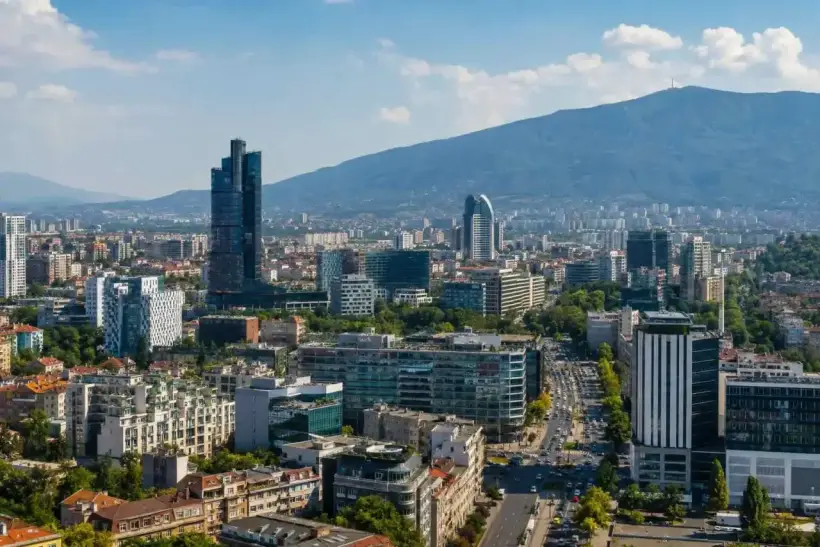
Bulgaria’s real estate market entered the second half of 2026 after a major structural change: the country adopted the euro on Jan. 1, investment is spread across offices, retail, logistics, housing and hotels, and scarce high-quality space is supporting rents in several commercial segments. At the same time, residential prices are rising at one of the fastest rates in the European Union even as transaction numbers fall, while elevated inflation and a widening budget deficit continue to pose risks.
Euro Adoption Changes Bulgaria’s Property Market Framework
The starting point is a CEE Real Estate Matters analysis describing Bulgaria as an increasingly diversified and predictable real estate market. First-half data strongly support the diversification argument, with investment spread across several property classes rather than concentrated in a single sector.
Bulgaria became the euro area’s 21st member on Jan. 1, 2026, replacing the lev at the irrevocably fixed conversion rate of €1 to 1.95583 leva. The transition was less disruptive for property than it might appear because many residential asking prices, rents and large investment transactions had already been quoted in euros. The European Commission says adoption eliminates currency-conversion costs within the euro area and brings Bulgaria fully into the European Central Bank’s common monetary-policy framework. Its Spring 2026 forecast nevertheless projects GDP growth slowing from 3.1% in 2025 to 2.5% this year, inflation rising to 4.2% and the general government deficit reaching 4.1% of GDP.
For property investors, that means one source of currency risk has disappeared, but financing, construction and operating-cost risks remain.
Bulgaria Records Almost €188 Million of Property Investment
Commercial real estate investment amounted to just under €188 million in the first half of 2026. Several large announced transactions expected to close in the following months could lift that figure to about €405 million.
Offices accounted for 45% of the completed volume, followed by retail at 29%, industrial and logistics assets at 12%, mixed-use property at 9% and hotels at 5%. Colliers also found that all completed investment volume during the six-month period came from domestic capital. Income-producing assets represented 82% of transactions, while 18% was classified as speculative. Prime yields remained about 7.75% for retail property and 7.5% for offices and industrial and logistics assets.
The €405 million figure should therefore be treated as the volume that could be reached after identified large transactions are completed, rather than as an already achieved or guaranteed full-year total.
Sofia Offices Remain Stable Without a New Boom
Sofia’s office market continued to expand at a measured pace. Class A and B office stock reached approximately 2.5198 million square metres by the end of the first half, an increase of 23,800 square metres from the end of 2025.
Gross take-up reached 87,700 square metres, while net take-up — the actual increase in occupied space after stripping out relocations and similar transactions — was 26,100 square metres.
Technology companies accounted for 24% of leased space, professional services for 21% and trade companies for 15%. Market data also point to stronger occupier preference for high-quality, functional and energy-efficient workplaces.
The result is an increasingly two-tier market in which older buildings compete not just on headline rent but also on energy costs, building systems, accessibility and the efficiency with which tenants can use their space.
Sofia Logistics Vacancy Falls to a Record Low
Industrial and logistics real estate is showing the tightest supply-demand balance. Take-up reached 78,900 square metres in the first half of 2026, compared with only 8,600 square metres in the same period a year earlier. New demand generated 92% of the volume.
About 112,200 square metres of Class A and B space was under construction, with 62% concentrated in several buildings within a single large development. Vacancy fell to roughly 1.3%. Average monthly warehouse rents remained around €6 per square metre for Class A buildings and €4.50 for Class B, while service charges were about €0.80-€1 per square metre.
For occupiers, the numbers indicate limited availability of immediately usable modern space. For landlords, the low vacancy rate strengthens the position of well-located, high-quality logistics assets.
Retail Parks Expand Sofia’s Property Supply
Retail property is following a different growth pattern. Sofia’s eight leading shopping centres provide more than 358,300 square metres, but an increasing share of new development is moving into retail parks.
The capital has five operating retail parks totalling about 123,000 square metres, while three projects under construction are expected to add another 71,500 square metres. Average vacancy in established shopping centres was about 2.3%.
Prime monthly rents remained around €46 per square metre in shopping centres, €13 in retail parks and €59 on Vitosha Boulevard. Development is also shifting toward mixed-use schemes combining retail with housing, offices, services, restaurants and entertainment.
Low vacancy is still supporting rents, but the expanding development pipeline will increase competition for tenants in some locations.
Bulgarian Home Prices Surge as Sales Decline
Housing provides the clearest counterpoint to the relative stability of commercial rents. Bulgarian home prices rose 14.8% year on year in the first quarter of 2026, the second-fastest increase in the EU after Portugal. Prices climbed 6.2% from the previous quarter, the strongest quarterly increase among EU member states.
Among the country’s major cities, quarterly prices increased 5.8% in Sofia, 5.9% in Burgas, 4% in Varna and 3.9% in Plovdiv.
Transaction numbers moved in the opposite direction. Bulgaria recorded 18.5% fewer dwelling transactions in the first quarter than a year earlier. Sales of newly built homes fell 14%, while transactions involving existing homes declined 20.5%. Compared with the preceding quarter, the total number of transactions was down 19.8%.
The combination matters. Rapid price appreciation is not being accompanied by broader transaction activity, making it difficult to interpret the headline price increase simply as evidence of accelerating demand.
Sofia’s New Housing Supply Is Concentrated
Around 7,630 apartments under construction were being marketed for sale in Sofia in mid-2026, representing approximately 810,000 square metres of gross floor area. The average asking price stood at about €2,070 per square metre excluding value-added tax.
Roughly 35% of the available stock was concentrated in five fast-growing districts: Malinova Dolina, Vitosha, Ovcha Kupel, Manastirski Livadi and Krastova Vada. Two- and three-bedroom homes accounted for the largest part of supply, while the average apartment under construction measured about 106 square metres.
That concentration makes citywide averages less informative for individual investments. Infrastructure capacity, construction density and available supply can differ significantly between Sofia districts.
Tourism Supports Sofia’s Hotel Market
Hotels remain a smaller part of Bulgaria’s investment market, but Sofia’s tourism figures provide support for the sector. Almost 670,000 tourists visited the capital in the first half of 2026, up 3% from a year earlier. Overnight stays exceeded 1.5 million, an increase of about 4%, while average length of stay exceeded 2.3 days. The figures were compiled by Sofia’s tourism administration using the country’s Unified Tourism Information System.
Sofia currently has roughly 8,400 hotel rooms. About 500 additional rooms are expected by 2028, equivalent to a supply increase of roughly 6%. Planned additions include the 232-room Sofia Marriott and the 100-room Nobu Hotel and Restaurant Sofia.
The pipeline is moderate relative to existing stock, leaving tourism and business-travel demand as the main variables for hotel performance.
Bulgaria’s property market is clearly becoming more diversified. Offices, retail, logistics, residential property and hotels are now following different demand and supply cycles, making the investment market less dependent on any one segment. Euro adoption has also simplified the financial framework and removed a distinct currency risk for euro-denominated investors.
As International Investment experts report, describing Bulgaria as a fully predictable property market would still be premature. Euro adoption improves financial transparency but does not eliminate market risk. Residential prices are rising at double-digit rates while transaction numbers are falling, logistics availability is exceptionally tight, inflation remains elevated and public finances have weakened. The next phase of the market is therefore likely to reward asset selection rather than exposure to Bulgaria alone: acquisition price, tenant strength, leverage, energy efficiency and exit liquidity will become increasingly important if economic growth slows.
FAQ: Bulgaria Real Estate in 2026
How has euro adoption affected Bulgarian real estate?
Bulgaria adopted the euro on Jan. 1, 2026. The change removed lev-to-euro currency risk and conversion costs for euro-area investors. Its immediate effect on property pricing was limited because much of the Bulgarian property market had already been quoted in euros.
How fast are Bulgarian house prices rising?
Home prices increased 14.8% year on year in the first quarter of 2026 and 6.2% from the previous quarter. Bulgaria recorded the EU’s second-highest annual increase after Portugal.
Are housing transactions also increasing?
No. The number of residential transactions fell 18.5% year on year in the first quarter. Bulgaria is therefore experiencing strong price growth alongside weaker transaction activity.
Which commercial property sector attracts the most investment?
Offices accounted for 45% of Bulgarian commercial property investment in the first half of 2026. Retail represented 29%, followed by industrial and logistics assets at 12%.
How much was invested in Bulgarian commercial real estate?
Completed investment volume was just under €188 million in the first half. Identified major transactions expected to close subsequently could increase the figure to around €405 million.
Why is Sofia logistics property attracting investors?
Modern industrial and logistics vacancy has fallen to roughly 1.3%, while take-up has risen sharply. Limited immediately available supply supports rents and increases the scarcity value of modern warehouses.
Where is Sofia’s new residential construction concentrated?
About 35% of apartments under construction and marketed for sale were concentrated in Malinova Dolina, Vitosha, Ovcha Kupel, Manastirski Livadi and Krastova Vada.