







read also
 Fines for Illegal Rentals in Spain Reach €800,000
 Australia’s Spring Auctions Rise but Remain Well Below 2025
 Number of Foreigners Holding Turkish Residence Permits Exceeds 1.27 Million
 Demand from Russian Tourists for Holidays in Georgia Rises by 20–25%
 Montenegro Property Buying Costs in 2026
 Four in Ten Companies Would Not Choose Slovakia
Business / Real Estate / Investments / Tourism & hospitality / Analytics / News / Spain / Real Estate Spain / Tourism Spain 18.11.2025
Canary Islands cut the tourist rental market to 10%: new law
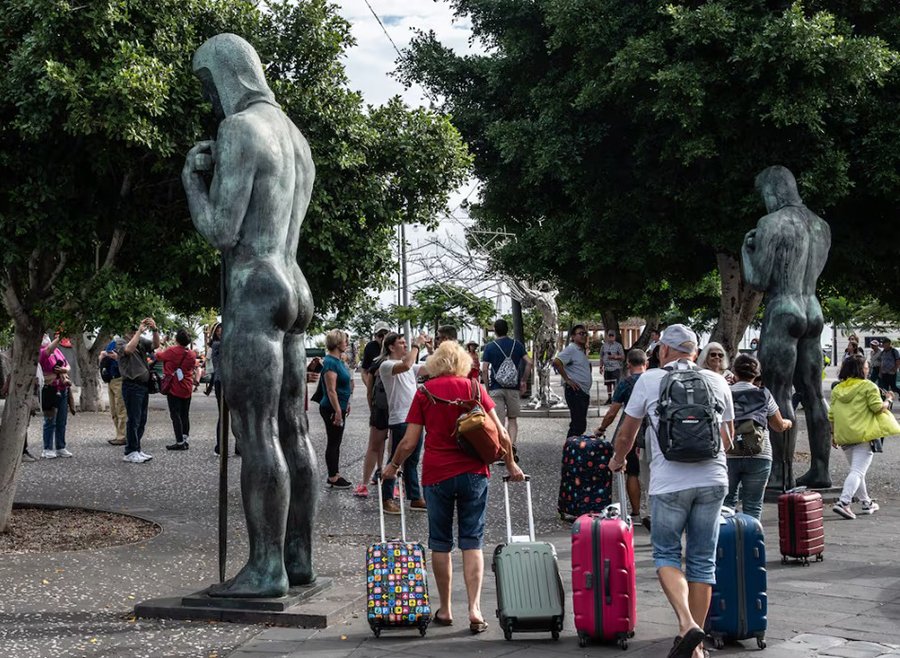
Photo: El País
The Parliament of the Canary Islands has approved a law restricting short-term tourist rentals, reports El País. Converting a regular apartment into a holiday rental is now only possible if several additional conditions are met, including a separate entrance and location outside protected zones. According to market analysts, these measures may reduce the investment appeal of the region for private landlords.
What is restricted
The Sustainable Tourism Housing Law was adopted after 18 months of discussions and was supported by the governing coalition parties. The PSOE, Nueva Canarias and Vox voted against, arguing that the document does not reflect the interests of residents. In April, the region registered 49,840 short-term rental units — up 6.4% year-on-year — concentrated mainly in Tenerife and Gran Canaria.
Short-term rentals are now allowed only if the property meets the established requirements: a minimum of 35 sq.m and a separate entrance that does not involve shared spaces. The law also confirms the right of homeowners’ associations to impose restrictions in their statutes, in line with the position of the Spanish Supreme Court.
Tourist use is prohibited in protected natural areas, special rural zones and territories included in the Natura 2000 network, except where management plans explicitly allow it. Rules have also been strengthened in municipalities exceeding acceptable levels of tourist and urban pressure, to prevent further stress on the long-term housing market.
Reference: Natura 2000 is a pan-European network of protected natural sites. It includes around 27,000 areas, covering more than 18% of EU land and 9% of its marine surface. The Canary Islands belong to the Macaronesian biogeographical region, which is characterised by high endemism and significant human pressure, including tourism. On the archipelago, Natura 2000 status covers coastal areas, volcanic landscapes and habitats of rare species.
Limits and control
In urban areas, the law sets a limit: at least 90% of residential stock must remain for permanent use, and only 10% may be allocated to short-term rentals. On the less populated islands — La Palma, La Gomera and El Hierro — the threshold is increased to 20%. Municipalities may adjust these limits, but only with technical justification and in line with sustainability criteria.
In municipalities classified as “stressed” in terms of housing access, new tourist rental permits will be automatically suspended. The law also prohibits using social housing and price-regulated residential units for holiday rentals to prevent further shortage of affordable homes.
Instead of mandatory prior licences, the region will continue to use a system of “responsible declaration”, subject to verification by island councils. They will also maintain the rental register and oversee compliance. Providing false information is considered a serious offence, leading to fines and loss of rental rights.
Political and market reaction
Ashotel president and head of the Spanish hotel confederation CEHAT, Jorge Marichal, supported the reform, saying it provides clear rules and separates the tourist segment from the permanent housing market. He notes that the issue is not competition between hotels and apartments, but increasing social pressure on affordable rental supply.
Regional tourism minister Jessica de León admitted that the law has been difficult to explain and implement, but called it necessary for the protection of public interest. PSOE representative Gustavo Santana argues that it strengthens the “pull effect” of tourist rentals: the number of holiday units has risen by more than 32,000 since September 2023. The owners’ association ASCAV predicts the displacement of small landlords, while the hotel sector sees the measure as a tool to organise the market.
Spain-wide trend
Tightening regulations on holiday rentals has become a nationwide trend. Barcelona has announced it will stop renewing around 10,000 rental licences by 2028. Málaga has imposed a three-year moratorium on new permits, after previous selective bans in over-saturated districts. In Seville, authorities began cutting off water to unlicensed tourist apartments in 2024–2025, signalling a move from formal control to enforcement.
A national short-term rental registry has also started operating: this summer nearly 50% of applications were rejected — 34,500 out of about 69,000. Restrictions do not always apply retroactively, but market entry has become much more difficult. Analysts at International Investment note that Spain is moving toward a model of “controlled accessibility” — the market remains open, but regulatory barriers for new players are rising faster than potential returns.
Tags: Canary Islands, Spain, Real Estate, Tourism, Regulation, Investment, Airbnb, Housing Market, Rental Law