







read also
 Australia’s Spring Auctions Rise but Remain Well Below 2025
 Number of Foreigners Holding Turkish Residence Permits Exceeds 1.27 Million
 Demand from Russian Tourists for Holidays in Georgia Rises by 20–25%
 Montenegro Property Buying Costs in 2026
 Four in Ten Companies Would Not Choose Slovakia
 Gulf Countries Prepare Unified Tourist Visa
Croatia launches a short-term rental register: how the new rules will work
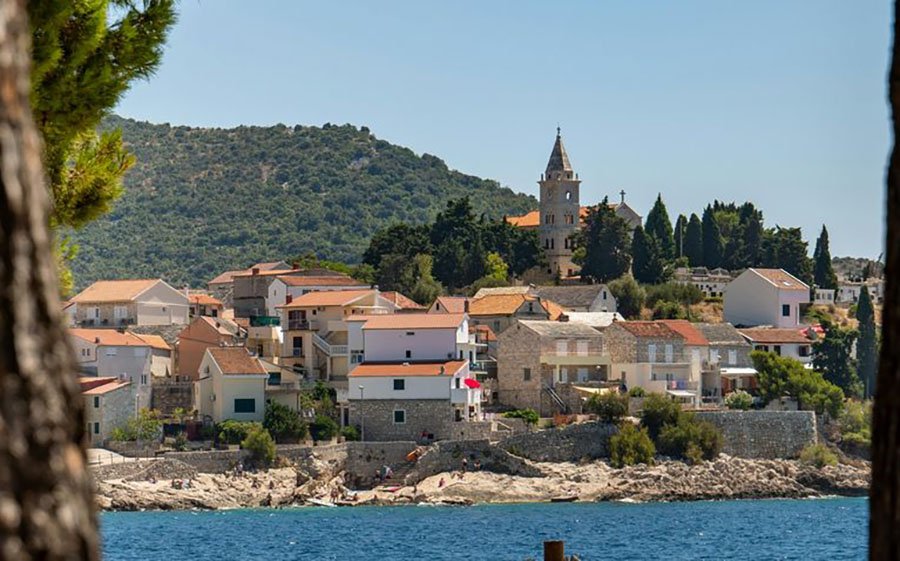
Photo: Croatiaweek.com
Starting from June 2026, Croatia will introduce a new short-term rental register, Travel and Tour World reports. Every property rented to tourists will receive a unique number and will be subject to closer monitoring. The changes are aligned with new EU legislation aimed at reducing illegal listings and increasing transparency in the market.
Registration of properties
The registration number will become a mandatory identifier for every flat, villa or apartment rented to tourists. It will be created by analogy with the OIB, Croatia’s personal identification code for individuals and companies, but will apply exclusively to short-term rental properties. The procedure will be free of charge. Registration will confirm that the property meets the required standards and is being used in line with the law. The code is assigned to the property for the entire period of its activity on the market.
Having a number will become a prerequisite for publishing listings on booking platforms. Without it, a property will not be able to appear on any major service, including Airbnb and Booking.com. The system will be linked directly to these platforms, so listings without a verified code will be automatically blocked.
Management of the new register will be handed over to municipal authorities. They will assign numbers, update data on properties and monitor compliance with the rules. Shifting powers to the local level is expected to speed up inspections, simplify administration and reduce the scale of illegal rentals.
Crackdown on illegal rentals
The problem of grey schemes is particularly evident in Croatia’s coastal regions. In Umag alone, local authorities estimate around 20,000 bed places in properties that are regularly rented out but never registered. Some of these offers appear on international platforms, while others are promoted via social media, where control is especially difficult.
Lorena Jon, President of the Family Accommodation Association of Istria County, emphasises that mandatory numbers are targeted precisely at the shadow segment. In her view, it is unregistered properties that put pressure on the market, while the new rules will strengthen trust in legal offers. Milovan Popović, Director of the Umag Tourist Board, supports this position, calling the system a key tool in the fight against illegal listings.
Specifics of renting in Croatia
The ExpatInCroatia portal notes that short-term rental properties include rooms, apartments, holiday homes, campsites and private plots, as well as remote “Robinson-style” units — buildings with minimal infrastructure, for example without mains electricity or a central water supply. Such accommodation can be legally rented only by Croatian citizens, residents of EU and EEA countries and Swiss citizens. Owners from third countries are allowed to operate only through a registered company.
To start renting, owners must obtain a permit to provide accommodation services confirming that the property is suitable for use. The procedure includes verification of ownership rights, the building’s fitness-for-use certificate and documents confirming the safety and proper condition of utility systems. In apartment buildings additional rules apply: written consent from neighbours is required, at least two thirds of co-owners of the building, as well as consent from the owners of adjacent flats.
Once the permit is obtained, the owner must notify the tax authorities. The amount of the annual payment is set by the municipality and depends on the category of housing, the number of beds and the location of the property. Compliance with all requirements is the essential basis for legal operation, which becomes even more important with the introduction of the registration number.
Yields and market outlook
According to Global Property Guide and Njuskalo, the average gross yield of rental housing in Croatia amounted to 4.41% in the fourth quarter of 2025. Returns are higher in Osijek, at 5.08%, and in Zagreb, at 4.72%, and lower in Rijeka, at 4.28%, and Split, at 3.58%. After taxes, maintenance, utilities and marketing costs, net yields typically come out at around 2–3%. At the same time, the entry threshold is high and periods without tenants are possible.
Analysts at International Investment point out that foreign investors still find it challenging to operate in Croatia’s property market. The country remains a popular tourist destination, yet strict rules, frequent regulatory updates and moderate yields limit its investment potential. Under these conditions, owners must model their risks and financial scenarios more precisely and factor in the likelihood of further tightening of regulations.
Tags: Croatia, real estate, short-term rental, regulation, Airbnb, EU law, tourism, investment, rental yields