







 Vietnam Mortgage Surge Pushes Homes Out of Reach
 Lithuanian Apartment Prices Accelerate Across Major Cities
 London Flats Lose Value Ahead of Leasehold Reform
 Construction of the Batumi–Sarpi Highway Begins in Georgia
 Baltic Property Investment Accelerates in 2026
 Hong Kong and Singapore Renew Their Expat Rivalry
Marriott reshuffle of regional leadership structure
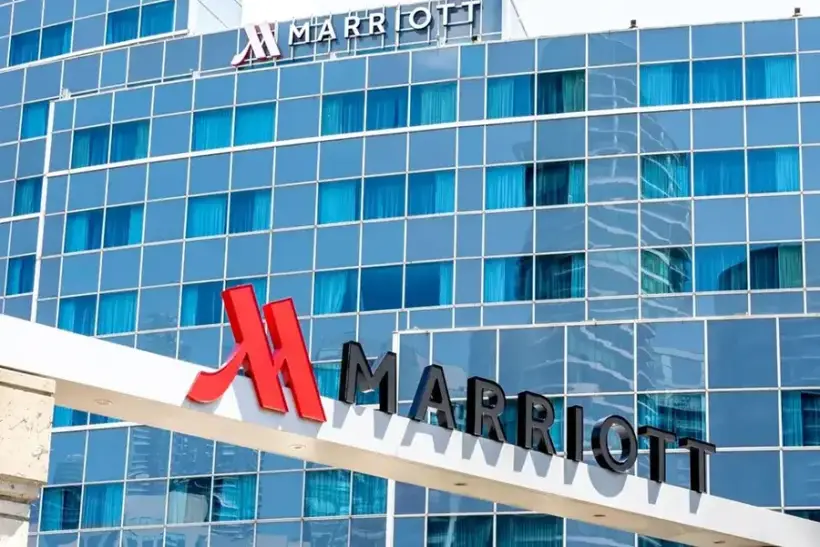
Marriott International has announced a major reshuffle of its regional leadership structure, framed as a growth-driven evolution but increasingly seen as a response to a more fragile global hospitality environment. The changes, effective in spring 2026, mark a clear shift toward tighter central control over the company’s most important markets.
Leadership exits mark the end of an era
The retirement of Liam Brown and Brian King closes a chapter defined by expansion and scale. Their simultaneous departure suggests not just succession planning, but a recognition that Marriott’s previous growth playbook is less effective in today’s slower, more complex market.
The timing signals a strategic reset rather than routine leadership renewal.
Over-centralisation risks in the Americas
By placing the U.S., Canada and CALA under Satya Anand’s authority, Marriott is betting heavily on centralised execution. While this may improve coordination, it also concentrates decision-making across markets with fundamentally different risk profiles and regulatory frameworks.
The structure risks diluting local responsiveness, particularly in Latin America, where economic volatility and political risk require tailored strategies rather than hemisphere-wide solutions.
EMEA remains structurally challenging
Neal Jones’ promotion ensures continuity in EMEA, but continuity does not eliminate structural complexity. The region spans mature European markets, volatile Middle Eastern hubs and underdeveloped African destinations, each with distinct demand cycles and cost pressures.
Marriott’s increasing focus on luxury and lifestyle brands in EMEA raises exposure to discretionary spending and cyclical downturns.
CALA growth comes with higher uncertainty
Federico Greppi’s appointment underscores CALA’s strategic importance, but also its fragility. Expansion in the region is increasingly asset-light and partner-driven, reducing capital exposure but heightening operational and reputational risk.
Currency instability and political shifts continue to challenge predictable returns.
A defensive signal beneath the optimism
Behind the optimistic messaging, Marriott’s restructuring appears designed to protect margins, simplify oversight and reduce execution risk rather than to fuel aggressive expansion.
As noted by International Investment experts, Marriott’s leadership realignment reflects a defensive pivot toward consolidation and control. While the strategy may stabilise operations in the short term, it also heightens execution risk and limits flexibility in volatile regions. For investors, the move signals caution, not acceleration, in the global hospitality cycle.