







 Australia’s Spring Auctions Rise but Remain Well Below 2025
 Number of Foreigners Holding Turkish Residence Permits Exceeds 1.27 Million
 Demand from Russian Tourists for Holidays in Georgia Rises by 20–25%
 Montenegro Property Buying Costs in 2026
 Four in Ten Companies Would Not Choose Slovakia
 Gulf Countries Prepare Unified Tourist Visa
Georgia’s Economy in January 2026: GDP Growth Reaches 7.9%
In January 2026, Georgia’s economy grew by 7.9% compared to the same month last year. Against the backdrop of GDP growth, statistics recorded accelerating inflation, explosive export growth, and a record reduction in imports. At the same time, business activity slowed, and the state budget maintained a surplus.
Georgia’s GDP: Main Trends
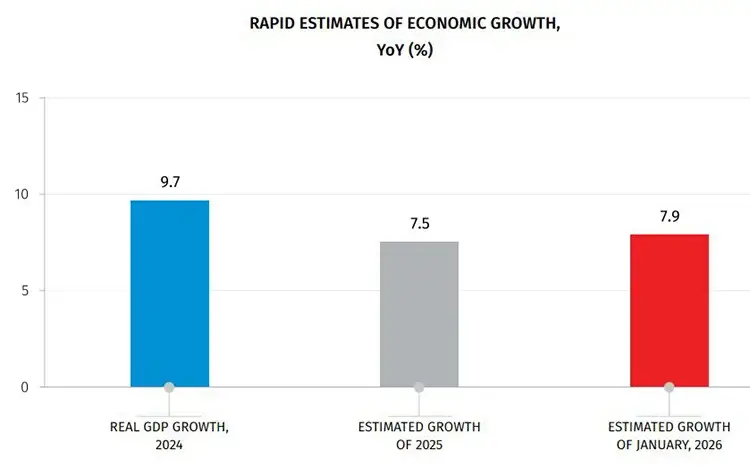
In January 2026, Georgia’s real GDP increased by 7.9% compared to the same month last year. This is higher than the final estimate for all of 2025 (7.5%), though lower than the peak values of 2024 (9.7%).
The main drivers of growth were the information and communications sector, financial and insurance activities, the mining industry, as well as the accommodation and food services sector. At the same time, statistics recorded a decline in construction and trade. The start of 2026 was stronger than the average annual pace of the previous year, indicating the preservation of investment and consumer activity despite problems in certain sectors.
Inflation and Foreign Trade in Georgia: Export Growth
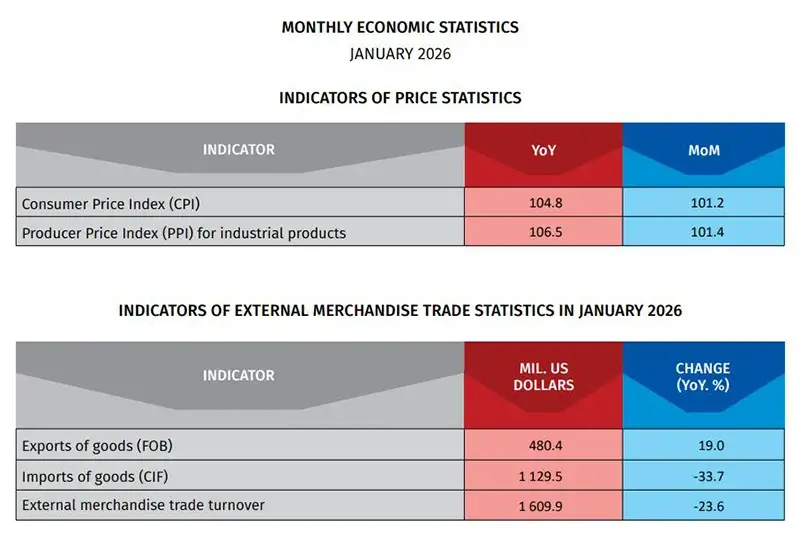
Consumer prices in January rose by 4.8% year-on-year and by 1.2% compared to December. The industrial producer price index increased even more — by 6.5% year-on-year and 1.4% compared to the previous month.
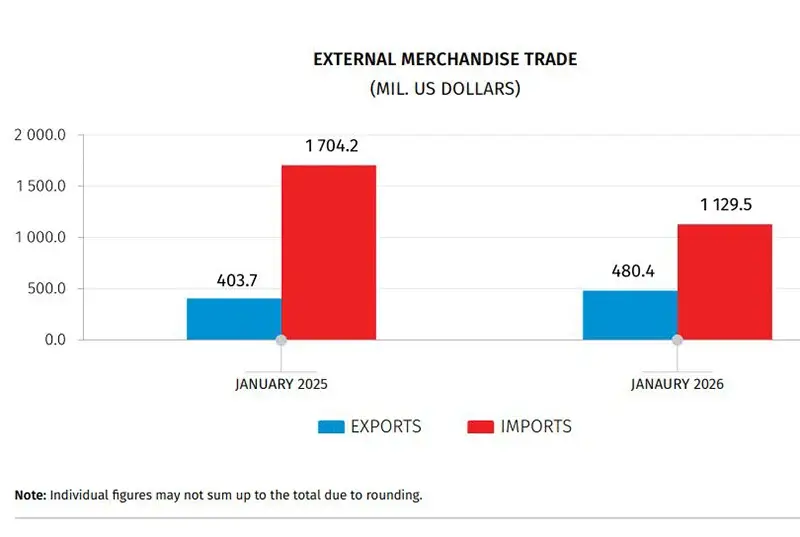
The foreign trade turnover of goods amounted to $1.61 billion — 23.6% less than a year ago. However, the structure of trade changed dramatically. Exports grew by 19% to $480.4 million, while imports fell by 33.7% to $1.13 billion. As a result, the negative trade balance decreased by more than half: from $1.3 billion in January 2025 to $649 million in January of this year.
Such a sharp decline in imports with growing exports may indicate both the strengthening of Georgian producers’ positions in foreign markets and a contraction of domestic demand for foreign goods. Combined with accelerating inflation, this creates a mixed picture: the consumer sector experiences price pressure, while the foreign trade balance improves due to the outpacing growth of exports.
Business Statistics: New Companies
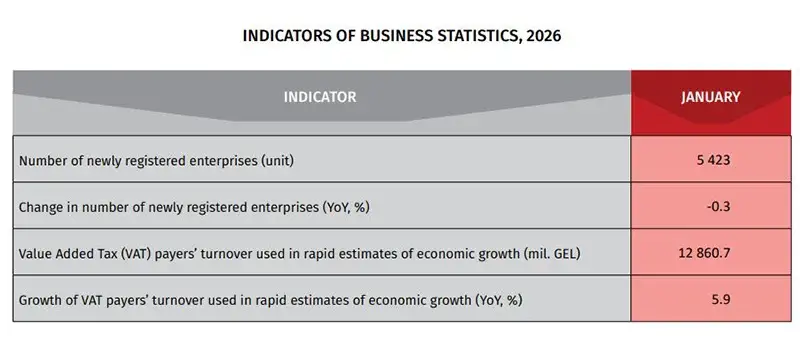
In January 2026, 5,423 new enterprises were registered in Georgia — almost the same as a year ago (a decrease of 0.3%). VAT payer turnover, a key indicator for the operational assessment of GDP, grew by 5.9% and reached 12.86 billion GEL.
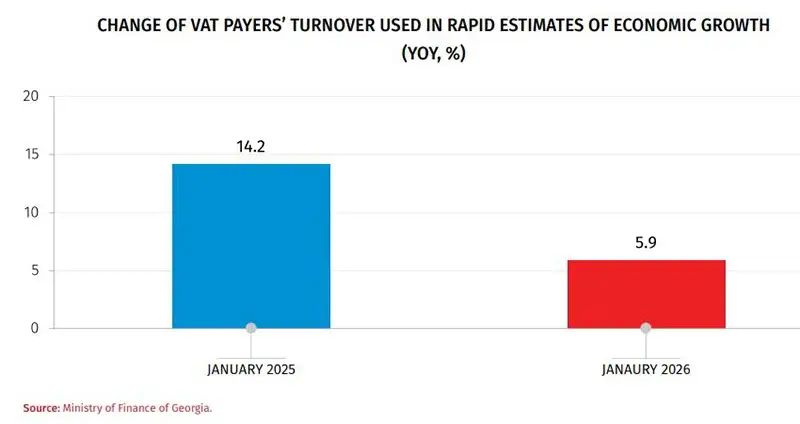
However, turnover growth noticeably slowed. A year ago, in January 2025, this indicator increased by 14.2%. Businesses are increasing revenue, but no longer at the high pace seen at the beginning of last year.
Stagnation in the registration of new companies, combined with a positive but more moderate turnover growth of existing enterprises, indicates a stabilization phase after rapid growth. Entrepreneurs are not in a hurry to create new legal entities, but existing businesses continue to show strong results.
State Budget and Banking Sector: Rising Revenues
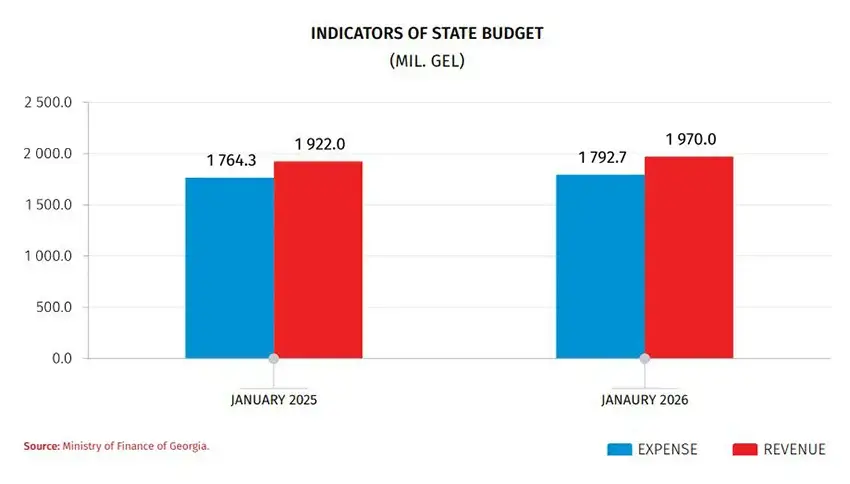
The state budget in January 2026 was executed with a surplus. Revenues amounted to 1.97 billion GEL, which is 48 million (+2.5%) more than in January 2025. Expenditures over the same period increased by 28.4 million (+1.6%) — to 1.79 billion. As a result, the surplus grew from 157.7 million to 177.3 million GEL. The indicators confirm the stability of public finances and the outpacing growth of revenue.
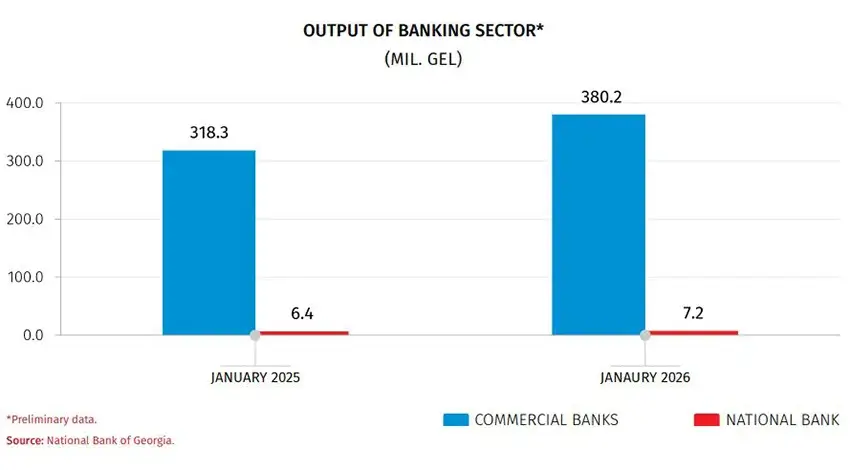
Preliminary data from the National Bank indicate increased activity in the financial sector. Commercial bank expenditures rose to 380.2 million GEL (a year ago — 318.3 million), while receipts increased from 6.4 million to 7.2 million. The outpacing growth of expenses (+19.4% vs. +12.5% for revenue) may be explained by higher operational costs or increased reserves. At the same time, income remains moderate.
Geopolitics and Investment in Georgia: Toward Regional Leadership
President Mikheil Kavelashvili emphasized that Georgia intends to use its position to strengthen economic integration between Asia, Europe, and the Middle East. The country consistently strengthens its status as a regional hub in the South Caucasus. Recent visits to Armenia, Azerbaijan, Turkey, and Serbia, as well as a meeting with the President of Croatia, confirm this course.
The global crisis did not prevent the growth of the budget, salaries, and pensions. International organizations rank Georgia among the world leaders in terms of economic growth rates and as a country with a high level of safety.
Prime Minister Irakli Kobakhidze linked the country’s investment attractiveness to liberal economic policy, low taxes, and minimal corruption. Over the past five years, Georgia’s average GDP growth has been 9.3% — the best indicator in Europe and the region. IMF forecasts confirm that the country will maintain a leading position in the medium term.
In the World Bank Business Ready ranking, Georgia ranks fourth among 101 countries, surpassing about ten EU countries. The result reflects a high level of investor confidence and a stable economic environment.
Real Estate in Georgia — a Growth Driver
The real estate sector continues to make a significant contribution to the economy. Last year, real growth in the industry exceeded 10%, and revenues from international tourism reached record levels. Activity in the real estate market contributes to job creation, infrastructure development, and attracts foreign direct investment.
Irakli Kobakhidze noted Eagle Hills’ $6.6 billion project. It will bring about 11 billion GEL to Georgia’s economy. The initiative plans large-scale projects in Tbilisi and Gonio, a resort area near Batumi.
Gonio also attracts other major developers and international hotel chains. One of the largest luxury hotel complexes, Wyndham Grand Batumi Gonio, is under construction there. The project is interesting both for tourists and investors. This segment features higher profitability and capitalization growth. Even in difficult periods, hospitality real estate of this class remains stable and attractive to investors.
International Investment analysts note that Georgia combines safety and steady economic growth even in turbulent times. Such resilience increases the country’s attractiveness for global business.