










Energy War in the Middle East
Strikes on Oil and Gas Giants Threaten Global Markets
Attacks on key facilities in the Persian Gulf have increased pressure on the global oil and gas markets. The hostilities have affected major fields, processing facilities, and export hubs, driving up prices and complicating efforts to stabilize supplies, Bloomberg reports. The consequences of the energy war are felt both regionally and globally.
Global LNG Hubs
Fire in Ras Laffan
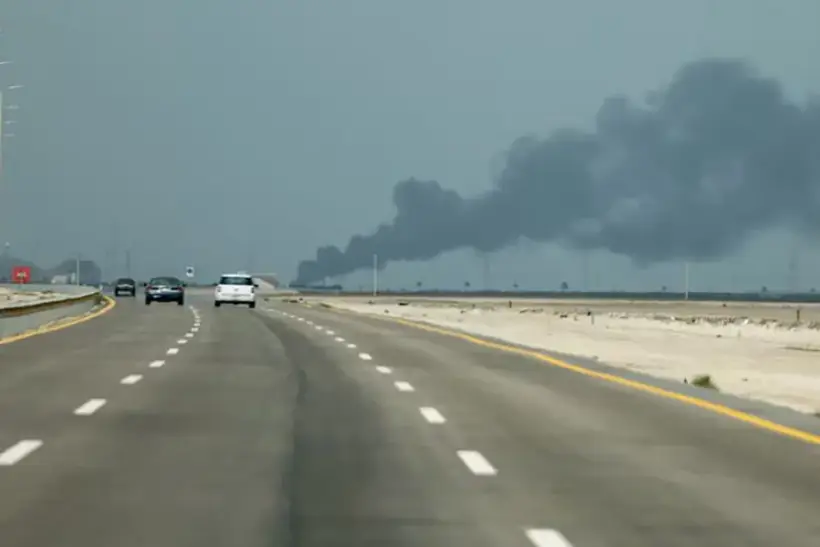
The main event on March 18 was Iran’s strike on Ras Laffan — an industrial city in Qatar home to the world’s largest liquefied natural gas (LNG) plant. It accounts for about one-fifth of global LNG supply. Any prolonged shutdown of the facility would inevitably lead to shortages in key Asian and European markets, which are still recovering from the previous energy crisis. State-owned oil giant QatarEnergy reported significant damage. Production was halted, immediately impacting global supplies.
Risks to South Pars
Israel struck the Iranian sector of South Pars — a massive gas field shared with Qatar. Up to 70% of Iran’s gas is produced here, with a significant portion used for electricity generation and industrial activity. Hamidreza Azizi, an expert at the German Institute for International and Security Affairs in Berlin, notes that even partial damage to South Pars could trigger systemic problems.
US President Donald Trump emphasized that the United States did not participate in the strike and called on Israel to refrain from further attacks. At the same time, he warned that any new Iranian strikes on Qatar’s LNG infrastructure would prompt decisive measures to protect strategic assets.
Other Countries
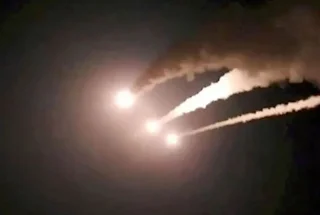
Iranian drones and missiles have also targeted facilities in other Persian Gulf countries. The backup oil port in Saudi Arabia on the Red Sea was attacked, according to Reuters. The UAE had to shut down its Habshan gas complex, and oil refineries in Kuwait — Mina Al Ahmadi and Abdullah Port — caught fire. Tehran warned that the energy infrastructure of any country supporting the US or Israel would be considered a “legitimate target.”
Impact on Energy Infrastructure
Iraq Loses Electricity
The regional consequences were immediate and cascading. Iraq, heavily dependent on Iranian gas for electricity generation, reported a loss of 3.1 gigawatts of capacity after Iran stopped supplies. Baghdad, already suffering from chronic energy shortages, has been forced to implement new rolling blackouts in the middle of the summer heat.
Strait of Hormuz Restrictions
A key factor remains the Strait of Hormuz. In peacetime, it carries about one-fifth of all traded oil, but it is currently effectively closed for safe navigation. Experts emphasize that any disruption of transit could trigger sharp price increases and heightened volatility in global markets.
Attempts by individual countries to ensure the safe passage of their ships have added to the chaos. Russia, for example, announced plans to provide military convoys to protect merchant vessels, introducing an element of direct geopolitical competition.
Donald Trump is considering sending thousands more US troops to the Middle East to restore the safe passage of oil tankers through the Strait of Hormuz, where Iran selectively targets vessels. Earlier, he called on US allies to help reopen the strait, but there was no response.
Brent Above $114
The escalation immediately affected markets: Brent crude futures rose about 7% and exceeded $114 per barrel. Meanwhile, European gas prices have increased by more than 60% since the start of the war on February 28.
Stocks of Japanese and South Korean companies fell by about 3%, while the pan-European index (.STOXX) dropped 2%.
Experts note that damage to key facilities creates the risk of prolonged supply disruptions, and the combined impact on production, processing, export, and transportation increases systemic risks for the global energy market.
Long-Term Risks and Systemic Consequences
The escalation of strikes on key energy infrastructure in Iran, Qatar, and other Persian Gulf countries poses significant risks to the global oil and gas market. Restrictions on production and export, along with instability in transport through the Strait of Hormuz, heighten uncertainty and could trigger cascading economic effects.
Retired General David Petraeus notes that Iran can conduct prolonged military operations thanks to its large army and stable command structure, making it difficult to predict when the conflict might end. Continued attacks on infrastructure increase the likelihood that even formally neutral countries in the region will face supply disruptions, price spikes, and rising inflation.
Taken together, these factors create a new reality for the global energy market, where supply security is no longer guaranteed and the consequences of local strikes can be long-lasting.