







 Vietnam Mortgage Surge Pushes Homes Out of Reach
 Lithuanian Apartment Prices Accelerate Across Major Cities
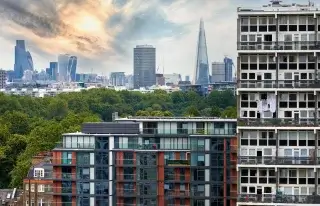 London Flats Lose Value Ahead of Leasehold Reform
 Construction of the Batumi–Sarpi Highway Begins in Georgia
 Baltic Property Investment Accelerates in 2026
 Hong Kong and Singapore Renew Their Expat Rivalry
LA Hotels Clash With New Labor Rules

Los Angeles hotels are at the center of a growing debate over how the city should prepare for the 2026 FIFA World Cup and the 2028 Olympics: by raising standards for workers or by easing pressure on operators who say costs are rising faster than the market is recovering. A new industry report from the American Hotel & Lodging Association, prepared with Oxford Economics, estimates that Los Angeles hotels generate $12.5 billion in annual economic activity, support nearly 64,000 jobs and contribute more than $1.1 billion in state and local tax revenue. At the same time, the group argues that recent city policies are increasing operational pressure just as Los Angeles needs a stable hotel base ahead of a run of major global events.
Los Angeles hotels remain a major economic engine
The importance of the sector extends well beyond room sales. According to the AHLA-Oxford Economics report, hotel guest spending in Los Angeles exceeds $7.2 billion and helps support restaurants, retailers and arts and entertainment venues across the city. That makes the fight over hotel costs and labor standards larger than a narrow industry dispute and turns it into a broader question about the strength of the city’s tourism economy.
The events calendar raises the stakes. Visit California’s February 2026 lodging forecast says gateway markets such as Los Angeles should benefit from stronger average daily rate growth because of the 2026 World Cup, while statewide California hotel revenue is projected to rise 3.5% in 2026 to $27.8 billion. For Los Angeles, that means the market is entering a period of unusually high global visibility, when hotel capacity and operating conditions become part of a wider investment story.
New Los Angeles rules are raising labor costs
But that growth phase now intersects with tougher local standards. Official City of Los Angeles materials show that hotels with 60 or more rooms are covered by the Citywide Hotel Worker Minimum Wage Ordinance, and that the minimum hourly wage for covered hotel workers rises to $25 on July 1, 2026. It then climbs to $27.50 on July 1, 2027 and $30 on July 1, 2028. From July 1, 2026, employers must also provide a health-benefit payment of $8.15 an hour or pay the difference as additional wages if equivalent benefits are not provided.
The requirements go further than wages. The city’s Bureau of Contract Administration says covered hotel employers must provide 96 compensated hours off per year and at least 80 additional hours of uncompensated time off under defined conditions. Los Angeles has also layered in hotel worker protection and training requirements, adding to the compliance burden facing operators.
Why hotel owners say Los Angeles is becoming harder to invest in
This is the core of the backlash. According to the new AHLA survey, 88% of Los Angeles hotel owners and operators said they had reduced staffing or hours in the past year, 80% said Los Angeles is not a good place for long-term hotel investment and 97% said repealing recent labor regulations would make the city more attractive for investment. The same report says 86% rank rising labor costs as their top challenge, while 93% link staffing changes directly to higher labor expenses.
The industry also argues that the market has not fully recovered. AHLA says Los Angeles has yet to return to its pre-pandemic peak of 84% occupancy and 2.8 million monthly room nights in demand. That allows operators to argue that costs are being reset upward before demand has fully normalized.
Why the city and labor groups support the policy
City officials and labor advocates are working from a different premise. The text of the hotel wage ordinance says Los Angeles has made significant investments in transportation, public attractions and the broader visitor economy, and that hotels benefit directly from those public assets. The ordinance also says the city’s Economic Development Department found that 43% of people working in Los Angeles hotels earned wages below the federal poverty line, which city lawmakers used to justify stronger wage standards as a way to support workers and the local economy.
Labor groups have framed the policy as part of Los Angeles’s preparation for major events. After the council vote, the LA County Federation of Labor described the move to raise wages for hotel and airport workers to $30 an hour by 2028 as a way to ensure the benefits of the Olympics and other global events reach frontline workers rather than only employers and investors. It is an advocacy source rather than a neutral one, but it captures the coalition that helped drive the legislation.
World Cup 2026 and Olympics 2028 sharpen the conflict
That is what makes the current dispute economically important. On one side, Visit California expects major events to support hotel pricing in gateway markets such as Los Angeles. On the other, AHLA says many hotels are already reducing overtime, trimming benefits and delaying investment, which could leave the city entering its biggest tourism cycle with a more expensive and more cautious hotel sector.
This does not yet look like a collapse in California lodging overall. Visit California says the state’s hotel industry outperformed the broader US hotel market in 2025 despite weaker international travel, economic uncertainty and unrest in Los Angeles last summer. That is exactly why the Los Angeles fight matters: it is less about a cyclical downturn and more about whether one of America’s flagship visitor cities can reconcile expensive labor rules, social-policy goals and the need to serve surging global demand.
As experts at International Investment report, the Los Angeles hotel dispute matters well beyond Southern California. It is becoming a test case for whether host cities can prepare for mega-events while tightening labor standards at the same time. If compliance costs rise faster than demand and room supply, developers may slow new projects and investors may become more selective. But if Los Angeles manages to preserve profitability while improving worker standards, the city could emerge as a rare example of tourism growth without suppressing wages.
FAQ on Los Angeles hotels and labor policy
How much do Los Angeles hotels contribute to the local economy?
According to the new AHLA and Oxford Economics study, Los Angeles hotels generate $12.5 billion in annual economic activity, support nearly 64,000 jobs and contribute more than $1.1 billion in state and local tax revenue.
What minimum wage will hotel workers in Los Angeles receive?
Covered hotel workers are scheduled to receive at least $25 an hour from July 1, 2026, $27.50 from July 1, 2027 and $30 from July 1, 2028.
What other requirements apply to covered hotels?
Covered employers must also provide health-benefit payments or their cash equivalent, along with 96 compensated hours off and at least 80 additional hours of uncompensated time off under the ordinance. Los Angeles also enforces hotel worker protection and training rules.
Why are hotel operators pushing back?
AHLA says hotel owners and operators are facing rising labor and operating costs before the Los Angeles market has fully recovered to pre-pandemic demand, and many say that has already led to cuts in hours, staffing and investment plans.
Why do the city and labor groups support the changes?
The city argues that hotels benefit from public investment in tourism and infrastructure and should provide better compensation to workers, while labor groups say the new wage path is meant to ensure the gains from the 2028 Olympics and other global events are shared more broadly.