







 How Ukraine’s New-Build Housing Market Has Changed Over Four Years
 European Prime Rents Rise as Property Yields Turn Higher
 The Most Expensive Airlines in Europe in 2026
 Housing Prices in Italy Reach a Two-Year High
 Travellers Increasingly Choose Cooler Scandinavia
 Serbia Property Sales Decline as Transaction Value Rises
Saudi Arabia delays key projects until 2030
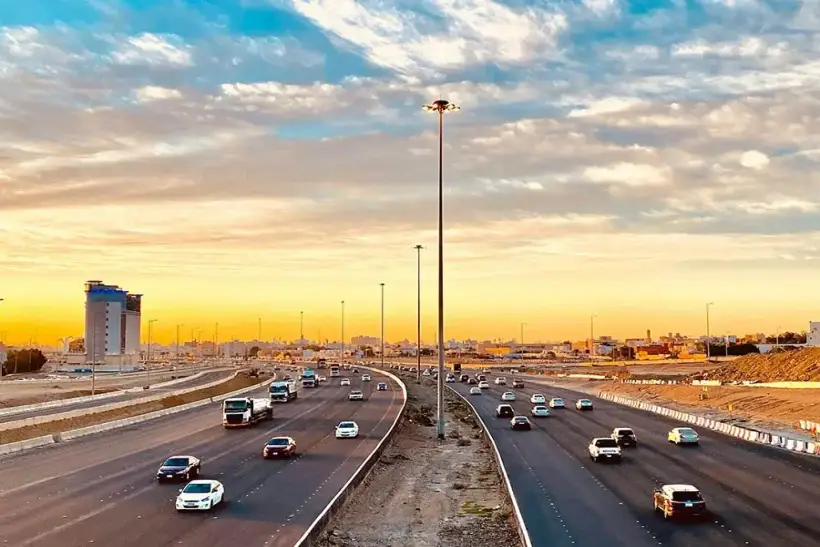
Saudi Arabia continues to reassess some of the most ambitious initiatives under its Vision 2030 economic transformation program. NEOM has postponed further development of its futuristic city The Line, tourism projects along the Red Sea coast, and new investments in the mountain resort Trojena at least until the start of the next decade, Semafor reports.
Saudi supercity and new resort plans
NEOM has suspended further work on one of Saudi Arabia’s flagship projects — The Line. The project envisions two parallel mirrored skyscrapers stretching 170 kilometers, intended to serve as the centerpiece of a new megacity in the country’s northwest. The project was previously estimated to cost more than $1 trillion.
Construction of The Line will not progress further at least until 2030. At the same time, project leadership has decided to postpone the development of tourism destinations along the Red Sea coast. The Trojena mountain resort, which had previously been planned as a venue for the 2029 Asian Winter Games, will also receive no new investment until the start of the next decade.
NEOM is controlled by the Public Investment Fund (PIF) and chaired by Crown Prince Mohammed bin Salman. The delay is part of a broader reassessment of project priorities aimed at reducing spending on the most costly and complex initiatives.
Why authorities are revising plans
The decision to delay The Line and several other projects resulted from a strategic review of NEOM’s development plans conducted by CEO Aiman al-Mudaifer after his appointment last year.
One outcome of this review was a further downward revision of population expectations for the future city. Initially, the project aimed to accommodate around 1.5 million residents by the end of the decade. Two years ago, this forecast was reduced to 300,000 residents. The latest estimate now envisions up to 100,000 residents by 2030.
The reassessment is linked to rising budget deficits, weaker-than-expected foreign investment inflows, and doubts about the feasibility of several large-scale initiatives financed by the Public Investment Fund. These factors led authorities to re-evaluate priorities even before the war between Iran and Israel began affecting economic sentiment.
Saudi officials have previously signaled their willingness to adjust earlier plans. Finance Minister Mohammed al-Jadaan said last year that the government does not prioritize “prestige” when making decisions on major projects. He added that authorities are prepared to accelerate, delay, or cancel initiatives depending on their effectiveness and economic viability.
Focus on industry, ports and data centers
NEOM will now focus on projects capable of delivering faster economic returns. A key priority is the development of the Oxagon industrial complex on the Red Sea coast, with around $3 billion allocated for further expansion.
Port infrastructure plays a central role in Saudi Arabia’s strategy to develop new trade routes and reduce dependence on traditional logistics corridors.
Investment is also being directed toward energy systems and digital infrastructure, including expanded data networks. These investments are intended to attract technology companies and support the development of large-scale data centers, including those linked to artificial intelligence.
Saudi Arabia’s shifting investment priorities
The reassessment of NEOM’s projects reflects a broader shift in Saudi Arabia’s investment strategy. In May, the Public Investment Fund halted funding for LIV Golf after investing around $5 billion in an attempt to make the league sustainable.
Plans for the massive cube-shaped Mukaab development in Riyadh have also been put on hold, signaling a slowdown in several flagship megaprojects under the country’s economic transformation agenda.
Amid widening budget deficits, weaker foreign investment inflows, and questions about the feasibility of several initiatives, authorities have become more cautious in allocating resources even before heightened geopolitical instability in the region.
Finance Minister Mohammed al-Jadaan has previously said that the state does not treat “prestige” as a priority in project decisions and is willing to revise, accelerate, or postpone initiatives based on efficiency and economic rationale.
IMF: slower growth in Saudi Arabia
The conflict in the Middle East is already weighing on Saudi Arabia’s non-oil sector and business activity, according to experts from the International Monetary Fund. The IMF forecasts that Saudi GDP growth will reach around 2% in 2026, significantly below earlier expectations of 3.1%.
At the same time, Saudi Arabia remains resilient due to strong fundamentals, including low public debt and substantial foreign reserves. Higher oil prices could provide additional fiscal support by narrowing the current account and budget deficits in 2026. The IMF notes that the country has mitigated supply disruptions by rerouting oil exports through the east–west pipeline and Red Sea ports. Risks include a potential escalation of the conflict, which could further disrupt transport routes, damage energy infrastructure, and increase financial instability.
Analysts at International Investment note that on 7–8 June, hostilities between Iran and Israel flared up again, with both sides exchanging missile strikes. The renewed escalation has raised concerns that de-escalation talks in the Middle East may once again stall, increasing pressure on regional economies and global markets.