







 Housing Prices in Israel Fell 1.5% Year-on-Year
 Immigration Slowdown Reshapes the US Sun Belt
 Slovakia Reforms Building Rules as Housing Starts Slide
 EU Proposes New Restrictions on Short-Term Housing Rentals
 Canada Fast-Tracks Tax Rulings for C$1 Billion Investments
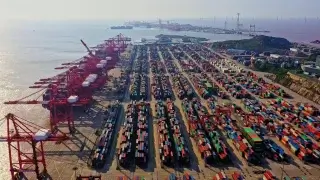 China Nears a Decision on Fresh Stimulus
Thailand Industrial Property Faces Rising Vacancy Risk

Thailand’s industrial and logistics property market showed clearer signs of excess supply in the second quarter of 2026, as net absorption turned negative and vacancy is expected to increase toward year-end. The shift does not yet amount to a reversal of Thailand’s industrial investment cycle. Investment-promotion applications rose 37% to THB1.47 trillion in the first half, Chinese manufacturers continue to expand in industrial estates, and the Eastern Economic Corridor remains the main centre for new industrial supply and manufacturing investment.
Thailand industrial property records negative net absorption
The balance between occupied and vacated industrial space weakened in the second quarter of 2026. Net absorption, which measures the change in occupied stock after tenant move-outs are taken into account, turned negative.
Only one project was completed during the quarter, resulting in a modest addition to supply, while a larger construction pipeline is scheduled for delivery toward year-end. Rental rates and capital values remained broadly stable, but vacancy is expected to increase if new supply continues to outpace occupier demand. These were the main conclusions of [JLL’s Thailand Industrial Market Dynamics Q2 2026 report], published on 21 August.
Negative net absorption does not mean that every part of Thailand’s industrial property market is losing tenants. It is an aggregate measure and can be affected by several large occupiers returning space even while demand remains strong in individual locations and asset classes.
Warehouses and ready-built factories are diverging
The most important distinction is between modern logistics properties and ready-built factories.
Ready-built factory vacancy was expected to remain below 5% in 2026, supported by manufacturers seeking a faster route to begin production and by a limited future supply pipeline.
The outlook for modern logistics property is weaker. New completions are forecast to exceed current demand in 2026, potentially pushing vacancy from around 10% to 13%. The figures are a full-year forecast rather than vacancy already recorded in the second quarter, according to [CBRE’s 2026 Thailand Real Estate Market Outlook].
This distinction matters for investors. Industrial real estate includes industrial-estate land, ready-built factories, standard warehouses, distribution centres and facilities developed for individual occupiers. Excess supply in one category does not imply the same conditions across the entire sector.
The Eastern Economic Corridor dominates new supply
Thailand’s Eastern Economic Corridor, covering Chachoengsao, Chonburi and Rayong, remains the core of the country’s industrial market. The area combines manufacturing estates with access to Laem Chabang and Map Ta Phut ports, highways and established automotive, electronics and petrochemical supply chains.
Total designated industrial-estate stock increased 2.08% quarter on quarter in Q1 2026 to 213,941 rai. One rai equals 1,600 square metres. Net saleable and leasable area stood at 143,251 rai, of which about 118,000 rai had already been absorbed. The overall take-up rate reached 82.55%.
The EEC accounted for 92.5% of the net increase in supply. Most expansion came from extensions to existing industrial estates rather than new greenfield developments. New supply totalled 4,369 rai during the quarter, while industrial land selling prices stabilised quarter on quarter after sharp increases in 2023 and 2024, remaining around 3–5% higher year on year, according to [Colliers’ Q1 industrial estate research].
The concentration explains why national market averages can obscure conditions at individual assets. Industrial land close to ports, mature supplier networks and reliable utilities may remain highly sought after even while vacancy rises in more generic warehouse locations.
The EEC has developed 46 promotion zones
Government policy continues to reinforce development in the eastern provinces. By May 2026, authorities had advanced the establishment of 46 special economic promotion zones across the Eastern Economic Corridor, including seven that were still awaiting submission to the Cabinet at the time.
The zones are designed for targeted industries and major projects, concentrating incentives, regulatory facilitation and infrastructure development in selected locations. Thailand’s [Eastern Economic Corridor Office] also continues to develop the framework for further expansion of the programme.
For property markets, the effect works in both directions. Incentives and infrastructure support industrial land values, but they also encourage new development and additional supply. Performance therefore depends increasingly on utilities, transport access and the surrounding supplier ecosystem rather than simply being located inside the broader EEC.
Investment applications reach THB1.47 trillion
Potential future demand remains supported by a large pipeline of investment projects. Companies submitted 1,299 applications for investment incentives worth THB1.474 trillion, or about $43.6 billion, in the first half of 2026, 37% more than a year earlier.
The digital sector accounted for approximately THB1.115 trillion across 90 applications. Electrical appliances and electronics represented another THB120.2 billion, agriculture and food processing THB61.4 billion, logistics and high-value services THB40.2 billion, and automotive and parts THB25.7 billion.
Foreign direct investment applications increased 80% to about THB1.37 trillion across 877 projects. Thailand’s eastern region accounted for approximately THB495.7 billion of proposed investment. These figures represent projects applying for investment promotion rather than capital already deployed into factories or real estate. Separately, 1,300 promotion applications worth around THB1.31 trillion were approved during the first half, according to the [One Start One Stop Investment Center of the Thailand Board of Investment].
The gap between proposed investment and actual property demand can be substantial. Large industrial projects move through incentive approval, site selection, permits, construction, equipment installation and commissioning before fully translating into demand for land, factories and logistics facilities.
China becomes the second-largest industrial-estate customer group
Thailand’s foreign manufacturing base has also changed significantly. Chinese companies are expanding beyond final assembly into components, machinery, materials and supporting industries.
The share of Thai industrial-estate land purchased or leased by Chinese investors rose from 6% in 2019 to 17% by April 2026, making China the second-largest customer group after Japan. The Japanese share declined from 26% to 22% over the same period.
Chinese investment is heavily concentrated in the EEC. In 2025, Chinese-owned firms accounted for 83 newly permitted foreign businesses in the corridor, or 27% of the total 313, compared with 67 Japanese and 46 Singaporean businesses. Around three-quarters of BOI-approved Chinese projects in 2025 were also located in the EEC, according to [Krungsri Research’s August study on Chinese investment in Thailand].
The effect on property demand is not uniform. A manufacturer can rent a ready-built factory, buy industrial-estate land or construct a specialised facility of its own. Growth in Chinese manufacturing investment therefore does not translate automatically into equivalent demand for standard warehouses.
EEC industrial land continues to appreciate
Strong manufacturing demand and infrastructure development continue to support land values in Chonburi, Rayong and Chachoengsao. These provinces benefit from proximity to deep-sea ports, established manufacturing clusters and transport infrastructure.
A late-July [Colliers assessment of the Eastern Economic Corridor] described industrial land prices as continuing to rise gradually, supported by manufacturing demand, foreign direct investment, government incentives and major infrastructure projects.
Higher land values create an additional challenge for developers. If acquisition and construction costs rise while warehouse oversupply limits rental growth, returns on new speculative logistics projects can come under pressure. This strengthens the relative position of sites with established utilities and projects developed for identified occupiers.
Digital investment is changing industrial land requirements
The surge in digital-sector applications is also changing what qualifies as attractive industrial land. Data centres require large sites but depend less on conventional highway access than factories and warehouses do.
Power availability, grid redundancy, fibre connectivity, water and cooling capacity can be decisive. As a result, some industrial sites increasingly compete for both manufacturing and digital infrastructure demand.
This creates further segmentation. A market can experience rising standard warehouse vacancy while strategically located land with sufficient power infrastructure becomes more valuable.
Thailand faces an imbalance, not an industrial collapse
Negative second-quarter net absorption should not be interpreted as a direct contraction in Thai manufacturing. The indicator measures occupied real estate rather than factory output, exports or aggregate foreign direct investment.
Three different trends are occurring at the same time. Manufacturing relocation continues to support industrial land. Ready-built factories remain relatively tight. Modern logistics property faces greater risk from an expanding supply pipeline.
The differences may become more visible through the end of 2026. Prime industrial sites in the EEC can remain strongly demanded while less differentiated logistics properties compete for tenants through pricing, incentives and lease terms.
As International Investment experts report, the second-quarter figures do not yet indicate a crisis in Thailand’s industrial property market, but they do show that the sector is becoming much more selective. Negative net absorption and the forecast increase in modern logistics vacancy raise the risk for speculative developments without secured occupier demand. At the same time, record investment applications, expanding Chinese manufacturing and the concentration of new industrial supply in the Eastern Economic Corridor continue to support land and specialised production assets. For investors, headline capital inflows are becoming less informative than location, utility capacity, building specifications and the presence of a credible tenant.
FAQ: Thailand industrial real estate in 2026
What happened to Thailand’s industrial property market in Q2 2026?
Net absorption turned negative, meaning occupied stock declined after space returned by tenants was taken into account. JLL also expects vacancy to increase toward year-end.
Is demand falling across all industrial property?
No. Conditions differ significantly by segment. Ready-built factories and strategically located industrial land remain comparatively strong, while modern logistics property is more exposed to oversupply.
How high could warehouse vacancy rise?
CBRE’s 2026 outlook forecast modern logistics property vacancy rising from about 10% to 13%. This is a full-year forecast, not the vacancy figure reported by JLL for Q2.
What is the outlook for ready-built factories?
CBRE expected vacancy to remain below 5% in 2026 because of resilient manufacturing demand and limited future supply.
What is Thailand’s Eastern Economic Corridor?
The EEC is an industrial and investment zone covering Chachoengsao, Chonburi and Rayong. It contains major industrial estates, ports, automotive and electronics manufacturing and supporting transport infrastructure.
How much investment was proposed in Thailand in H1 2026?
Companies submitted 1,299 investment-promotion applications worth about THB1.47 trillion, up 37% year on year.
Is THB1.47 trillion already invested?
No. It is the value of projects applying for investment incentives. Actual capital expenditure occurs later and may differ in timing and scale.
How important have Chinese investors become?
Chinese investors’ share of industrial-estate land purchased or leased rose from 6% in 2019 to 17% by April 2026, making them the second-largest customer group after Japanese investors.
Will warehouse rents decline?
Rents remained broadly stable in Q2. Higher supply and vacancy may reduce landlords’ ability to increase rents, but current evidence is insufficient to conclude that market-wide rents will necessarily fall.