







 Covivio Hotels Revenue Grows 4.7% as European Markets Split
 Lithuanian Apartment Prices Accelerate Across Major Cities
 Georgia's Tourism Revenue Hits Record High
 Norway's Sovereign Fund Commits €1.5bn to European Warehouses
 Market Rout of October 2026: Can Branded Hotels Protect Capital?
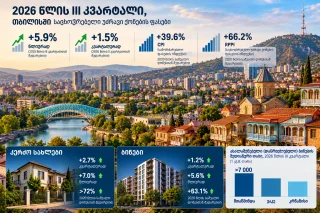 Residential Property Prices in Tbilisi Rise by 5.9% Year-on-Year
Ireland Plans National Short-Term Rental Register
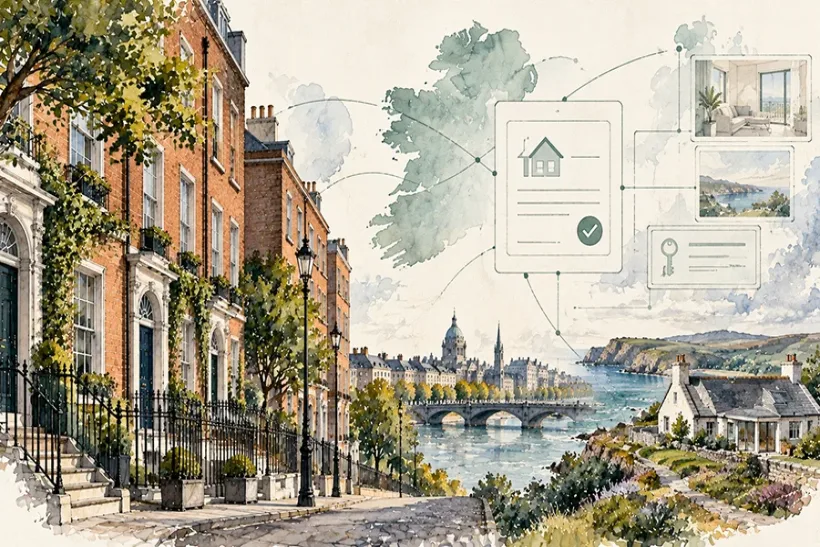
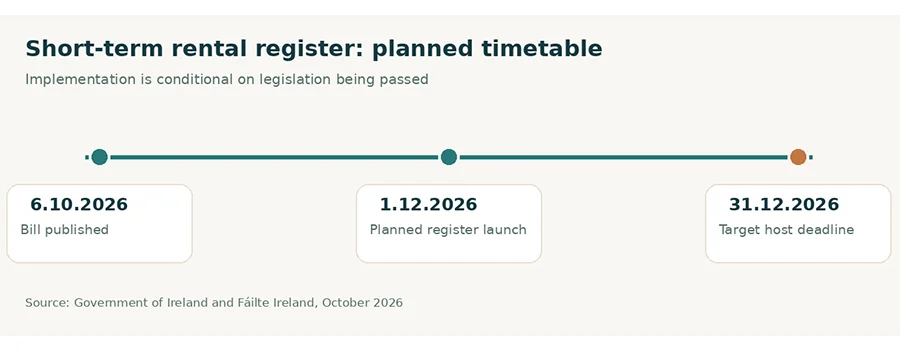
Ireland is preparing mandatory registration for short-term holiday accommodation and tougher obligations for booking platforms. The Short Term Letting and Tourism Bill, published on 6 October 2026, would introduce a national register for paid stays of up to 21 nights. The government aims to open registration on 1 December and require hosts to register by 31 December. Serious breaches by online platforms could attract fines of up to 2% of their annual global turnover. On 15 October, however, the measure remained a bill rather than an enacted law.
For property investors the crucial distinction is between a national registration number and local planning consent. Receiving the former would not legalise an otherwise unauthorised short-term rental. The greatest constraints on new tourist use are expected in larger cities, where housing pressure is strongest.
The bill is published, but registration is not open
Ireland's Department of Enterprise, Tourism and Employment published the bill on 6 October. It would designate tourism agency Fáilte Ireland to operate the register and administer information sharing with platforms. Parliamentary approval remains necessary before the system can operate.
The measure covers paid accommodation offered for stays of up to 21 nights, including apartments, entire houses and individual rooms. Hotels, hostels and camping grounds fall under different arrangements. Each letting unit will require its own registration number, including where a host operates several properties.
The proposed register is primarily a transparency measure. It allows authorities to match listings to identifiable units and assess patterns of use. It does not displace planning permission or determine whether a property is suitable for year-round residential occupation.
December dates remain conditional
The official target is to open the portal on 1 December 2026 and have operators registered by 31 December. Fáilte Ireland expressly states that registration will begin only once the necessary legislation has passed. Hosts should therefore distinguish the timetable from a legal obligation already in force.
Registration will take place online. Individuals must provide identity and contact details, including PPSN and Eircode, plus information about the unit and guest capacity. Companies must provide business details and a representative. Hosts will make a legal declaration about compliance with statutory obligations and pay a fee whose amount has not yet been announced.
Fáilte Ireland expects an application with complete information to take less than five minutes. It does not expect supporting documents to be uploaded routinely at registration, but can request information later. Registration numbers must appear in all listings and be renewed every year.
What Airbnb and Booking will have to do
Online booking platforms will need to facilitate and display registration numbers, check the completeness of information, perform random listing checks and remove or disable advertisements when ordered to do so. The bill would also establish powers for Fáilte Ireland to obtain records and investigate breaches.
Platforms will transmit standardised data through a Single Digital Entry Point, including registration numbers, nights booked, guest counts and listing identifiers. Such reporting would help public bodies distinguish occasional hosting from sustained commercial operation and measure accommodation availability more accurately.
For serious platform breaches, a panel of adjudication officers could impose penalties of up to 2% of a platform's annual global turnover. This is a maximum potential sanction against platforms under the specified procedure, not an automatic 2% fine on the revenue of individual hosts.
Registration is not planning permission
The distinction matters for any purchase made with holiday letting in mind. Registration covers the country, while legal use of the property remains subject to planning rules enforced by local authorities. Hosts will be required to declare their compliance when registering; a unique number alone cannot substitute for the required authorisation.
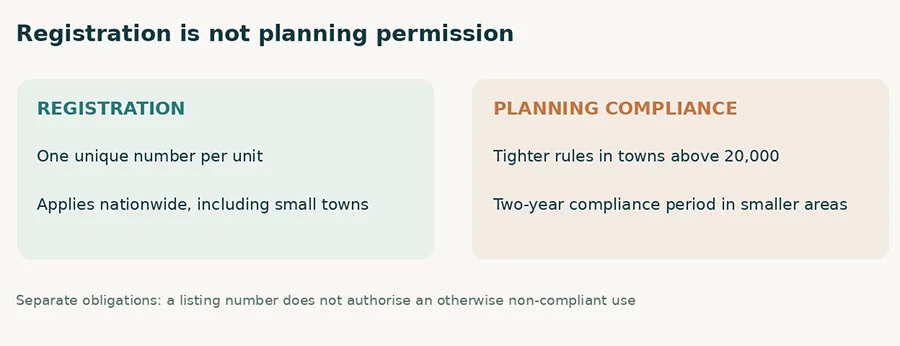
The policy generally restricts fresh planning consents for short-term rental use in towns and cities above 20,000 residents. Operators in smaller locations will be allowed two years to regularise planning compliance. That is not a two-year delay to national registration.
Properties used continuously for short-term letting for at least seven years without enforcement action may benefit from a presumption in favour of retention permission, provided other conditions are met. This does not amount to an unconditional amnesty. A streamlined procedure for retention applications came into operation on 29 September 2026.
|
Question |
National registration |
Planning compliance |
|
Coverage |
Qualifying stays ≤21 nights |
Depends on use and location |
|
Geography |
All of Ireland |
Local authority decisions |
|
Deadline |
Target: 31 Dec 2026 |
Smaller towns: extra 2 years |
|
Listing number |
One per letting unit |
Not a planning approval |
|
Room in own home |
Registration still planned |
Exemption may apply |
|
Legal status |
Bill pending enactment |
Some rules already apply |
Letting a room at home is a separate planning case
Renting out a room in a principal private residence may be exempt from planning change-of-use requirements. Hosts can also let their entire primary home for a cumulative 90 days while temporarily absent, without normally requiring the same planning approval. But those exemptions do not remove the planned national registration requirement for paid stays of 21 nights or less.
A room rented to a student for a semester or a home rented under a conventional long-term arrangement does not fall into the same category as a short holiday let. For investors, the actual use and duration of stays matter alongside the property's description in advertising.
Ireland had about 32,060 online listings in August
In a parliamentary answer on 1 October, the Housing Minister cited Fáilte Ireland's estimate of approximately 32,060 short-term letting properties advertised online during August 2026. Up to 57% were listed as entire houses or apartments. The figures are a measure of online advertising, not a count of permanently occupied holiday homes or dwellings guaranteed to become long-term rentals.
Some properties are used by their owners for part of the year; others are seasonal or located outside areas with strong demand for permanent housing. It would therefore be misleading to treat the entire listing count as potential housing immediately returned to the residential market.
The benefit of the register is improved evidence about where tourist accommodation is concentrated, how intensively units are used and whether policies intended to protect housing are reaching their targets.
Housing policy and rural tourism pull in different directions
Larger cities, including Dublin, face pressure to retain dwellings for permanent residents. In smaller towns and coastal areas, holiday cottages and self-catering units can be important for visitors where hotel supply is limited. Ireland's approach combines one register nationwide with differentiated local planning rules.
This makes location and use history important investment variables. A city-centre apartment and a rural holiday cottage may achieve similar nightly rates but face very different permission risks. Registration alone cannot be used as evidence that either investment strategy is legally secure.
What investors should test before buying
Projected nightly rates and seasonal occupancy should be considered only after planning compliance, annual registration and platform access are checked. Owners should also test an alternative long-term rental scenario, operating costs and the possibility that a listing cannot continue in its current form.
A registered and planning-compliant property may have a more robust operating case than one without the necessary authorisations. Yet there is no evidence, before implementation, of a specific market premium for a registration number or an established increase in homes returning to long-term tenancy.
An Irish implementation of the EU rental data rules
The bill implements EU Regulation 2024/1028, which concerns the collection and sharing of data for short-term accommodation rental services. It became applicable from 20 May 2026. The European framework is about transparency rather than an EU-wide ban on holiday rentals; national planning policies remain separate.
International Investment previously examined the European regulation, Ireland's March proposal for stricter rules in large towns, and the subsequent concessions for smaller communities. Its April article still refers to an earlier 20 May Irish register launch and should be updated to reflect the current December plan and the remaining legislative condition.
What happens next
As of 15 October 2026, the new national register was not open. The key events to watch are passage of the bill, publication of the final fee and operating rules, and activation of Fáilte Ireland's registration portal. The impact on housing will need to be measured later through actual registrations, planning enforcement, rental supply and completed bookings.
FAQ
When is the Irish short-term let register due to open?
The government plans to open it on 1 December 2026, subject to passage of the legislation.
What is the host registration deadline?
The current target is 31 December 2026. The legal effect of that date depends on the bill being enacted.
Does the scheme cover whole homes and individual rooms?
Yes, for qualifying paid stays of 21 nights or less. Hotels, hostels and camping sites follow other regimes.
Can Airbnb be fined 2% of turnover?
A serious breach by an online platform may lead to a fine of up to 2% of annual global turnover, subject to the prescribed procedure. It is not an automatic penalty for hosts.
Does a registration number replace planning consent?
No. Local planning requirements still apply. Separate transitional and retention arrangements may be available depending on location and previous use.
Do smaller towns have a two-year exemption?
They have extra time to regularise planning compliance, not an exemption from the planned national registration requirement.
Will 32,060 short-term lets return to long-term renting?
That cannot be inferred. The figure describes properties advertised online in August 2026, not dwellings available or suitable for permanent rental.