







 Vietnam Mortgage Surge Pushes Homes Out of Reach
 Lithuanian Apartment Prices Accelerate Across Major Cities
 London Flats Lose Value Ahead of Leasehold Reform
 Construction of the Batumi–Sarpi Highway Begins in Georgia
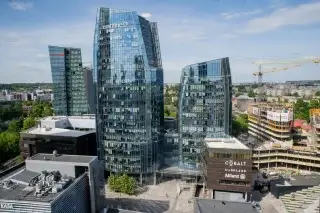 Baltic Property Investment Accelerates in 2026
 Hong Kong and Singapore Renew Their Expat Rivalry
Ireland plans new restrictions on short-term rentals

The Irish government plans to introduce restrictions on short-term rental properties in towns with populations exceeding 20,000 residents. The proposal follows discussions between government party leaders and Minister for Tourism Peter Burke and forms part of broader efforts to address the country’s ongoing housing shortage.
Short-term letting in Ireland generally refers to the rental of accommodation for periods of up to 21 nights. Earlier proposals suggested applying restrictions to towns with populations above 10,000, but the government is now considering raising that threshold to 20,000.
Regulation to focus on larger towns and cities
According to the 2022 census, around 20 towns in Ireland have populations above 20,000. Drogheda in County Louth is the largest among them, with more than 44,000 residents.
Under the proposed framework, properties used for short-term rental would need to obtain planning permission to continue operating legally. Legislation requiring short-term rental properties to comply with planning regulations is expected to be discussed by an Oireachtas committee in the coming days.
Transition period for property owners
Government officials are also considering a transition period that would allow property owners time to adjust to the new regulatory framework. Operators of short-term rental properties may be given up to two years to obtain the required planning permissions.
In addition, properties that have been operating as short-term rentals for seven years or longer could potentially benefit from a “grandfathering” provision, allowing them to regularize their status under specific conditions.
Tourism Minister Peter Burke said clarity for operators is essential and emphasized the need to balance housing policy with the needs of the tourism sector.
Housing supply concerns drive policy changes
The proposed restrictions are part of broader attempts to increase housing supply in Ireland, particularly in urban areas where housing shortages are most acute.
Officials believe that returning some properties from short-term rental markets to long-term housing could help ease pressure on the residential market, especially in major cities.
However, policymakers acknowledge that in some regions hotel construction remains economically challenging, meaning short-term rental accommodation still plays a role in supporting tourism infrastructure.
Political debate over the reforms
The proposal has already triggered political debate. Sinn Féin housing spokesperson Eoin Ó Broin criticized the policy change, arguing that increasing the population threshold weakens earlier plans to regulate short-term rentals more strictly.
Labour housing spokesperson Conor Sheehan also questioned the decision to raise the threshold, suggesting that political considerations may have influenced the change.
He also called for stronger enforcement against short-term rental platforms such as Airbnb, arguing that many properties currently listed on these platforms remain unregistered or non-compliant with existing legislation introduced in 2019.
Balancing tourism and property rights
Some government representatives have defended the approach as a pragmatic compromise. Minister of State Michael Healy-Rae said short-term rental operators should not be blamed for Ireland’s housing shortage and emphasized the importance of protecting property owners’ rights.
He also noted that in many rural and regional areas the number of hotels remains limited, making short-term rental accommodation an important component of the local tourism economy.
New initiatives to address vacant housing
Alongside these regulatory changes, the government plans to expand the City Living Initiative, a programme designed to address derelict and vacant buildings in large towns.
Tánaiste Simon Harris said applications for the scheme are expected to open later this summer, with the goal of bringing unused housing stock back into active use during the ongoing housing emergency.
Tourism industry calls for clarity
Industry representatives say the sector still faces uncertainty regarding the future of short-term rentals. Eoghan O’Mara Walsh, CEO of the Irish Tourism Industry Confederation, said the government’s intention to regulate short-term letting could be a step forward but stressed that further clarification is needed.
He noted that many short-term rental properties historically operated without planning permission due to the lack of clear regulatory guidelines.
According to O’Mara Walsh, while urban areas may need to redirect some properties back to long-term housing, short-term rentals remain important in regional destinations where hotel capacity is limited.
As experts at International Investment note, tightening rules on short-term rentals has become a common policy response across Europe as governments attempt to address housing shortages. However, the long-term effectiveness of such measures depends on balancing housing supply goals with the needs of tourism economies and property owners.