







 Covivio Hotels Revenue Grows 4.7% as European Markets Split
 Lithuanian Apartment Prices Accelerate Across Major Cities
 Georgia's Tourism Revenue Hits Record High
 Norway's Sovereign Fund Commits €1.5bn to European Warehouses
 Market Rout of October 2026: Can Branded Hotels Protect Capital?
 Residential Property Prices in Tbilisi Rise by 5.9% Year-on-Year
Georgia Expands Economic Ties with the UAE and India
mfa.gov.ge
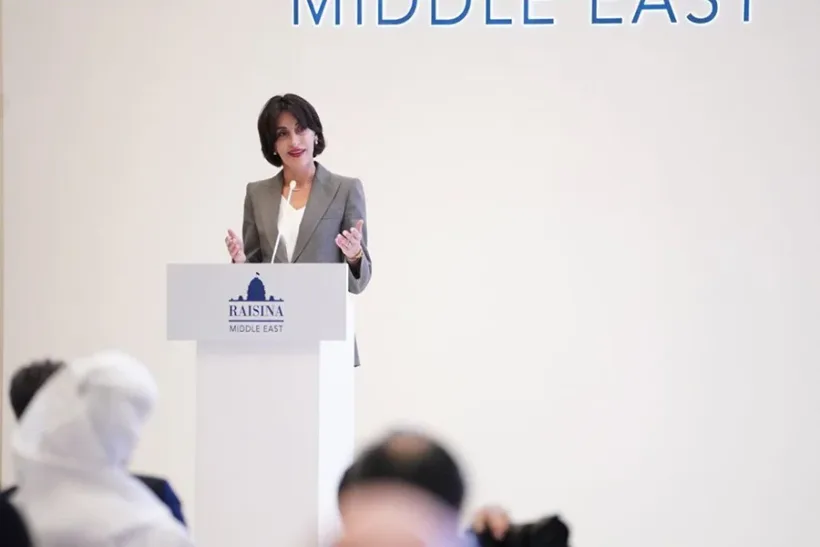
Georgian Foreign Minister Maka Botchorishvili attended the Raisina Middle East international conference in Abu Dhabi. The forum addressed security, trade and the development of transport routes, including the Middle Corridor. The minister also met with her counterparts from the UAE and India to discuss opportunities for further economic cooperation.
Key Topics at the Abu Dhabi Forum
The Raisina Middle East conference took place on October 14–15. It was organised by the foreign ministries of the UAE and India together with the Observer Research Foundation think tank. Policymakers and experts discussed international security, economic cooperation and the development of trade routes. A separate discussion focused on the Caucasus and its growing importance for freight transport between Europe and Asia.
Maka Botchorishvili took part in a discussion on the strategic future of the Persian Gulf. The Middle Corridor, which connects Central Asia with European markets, was among the main subjects of her remarks. Georgia also has 16 free trade agreements, including arrangements with the European Union, China and the UAE.
Regional conflicts have hindered the development of transit routes across the South Caucasus for many years. Nevertheless, Georgia, Azerbaijan and Turkey have implemented major energy and transport projects that laid the foundation for further expansion of the Middle Corridor. Botchorishvili emphasised the need for new infrastructure investment and stronger economic partnerships to reduce international trade's dependence on individual shipping routes.
Talks with the UAE and India
Georgian Foreign Minister Maka Botchorishvili and India's External Affairs Minister Subrahmanyam Jaishankar discussed expanding bilateral trade and transport links during their meeting in Abu Dhabi. Particular attention was given to the potential use of routes through Georgia for shipments between Asia and Europe.
Trade between Georgia and India is already growing. Bilateral turnover reached $432.2 million in the 2025/26 financial year, up nearly 19%. Indian companies export machinery, automotive components and pharmaceuticals to Georgia, while importing fertilisers, chemicals and metals. Cooperation also covers education and tourism, both of which were on the meeting agenda. The ministers agreed to maintain high-level contacts.
Talks with UAE Foreign Minister Abdullah bin Zayed Al Nahyan took place against a backdrop of growing investment from the Emirates in Georgia. The two countries have a comprehensive economic partnership agreement, while Emirati companies are involved in real estate construction and the development of logistics infrastructure. Major initiatives include projects by developer Eagle Hills and AD Ports Group, which opened the Tbilisi Dry Port. These projects lay the groundwork for further growth in trade and freight transport.
UAE Investment in Georgia
UAE-based Eagle Hills plans to invest $6.6 billion in real estate developments in Tbilisi and Gonio. In October 2025, the company signed an agreement with the Georgian government to establish a joint venture in which the state holds a 33% stake. The figure represents the planned value of the projects, not capital already invested.
One major project backed by UAE capital is already operational in the logistics sector. In June 2025, AD Ports Group opened the first phase of the Tbilisi Dry Port. The operator holds a 60% stake in the venture, which handles container transfers between rail and road transport. Its initial annual capacity is 96,000 TEU. The company has also announced plans to raise this to 200,000 TEU. The hub supports freight flows along the Middle Corridor between the Caspian and Black seas.
The trade agreement between Georgia and the UAE, which came into force in June 2024, supports business development. Preferential terms cover more than 92% of tariff lines. The agreement also simplifies customs procedures, expands access to services markets and provides support for small and medium-sized enterprises.
Cooperation also extends to the financial sector. On October 13, 2026, the National Bank of Georgia and the Central Bank of the UAE signed a memorandum in Bangkok covering banking supervision, information sharing and the development of financial technologies. They also agreed to conduct joint research and exchange experience in modernising payment systems.
Georgia's Role in Developing the Middle Corridor
The World Bank estimates that developing the Middle Corridor will require more than $55 billion through 2040. At least $25 billion will be needed to upgrade railways, ports and main transport links. Approximately $30 billion is required for access roads, inland terminals, warehouses and equipment.
The route's importance to Georgia is already evident in freight statistics. In January–August 2026, the country's ports and terminals handled 13.7 million tonnes of cargo, an increase of 24%. Rail freight reached 9.7 million tonnes, up 11%, while container throughput rose 9% to 554,200 TEU. Major infrastructure projects include the Anaklia port, capacity expansion at Poti and upgrades to road and rail connections.
The World Bank forecasts that, with targeted investment, trade volumes along the Middle Corridor could more than triple by 2040. With additional reforms, they could quadruple, while Georgia could see an additional 3.61% increase in GDP. These are long-term scenarios contingent on investment, faster border crossings and effective coordination among transport operators.
What This Means for Investors
International Investment analysts note that closer ties with the UAE and India open up new opportunities for Georgia to attract investment and expand foreign trade. The country already has significant advantages for international business: preferential access to major markets, developed transport infrastructure and a strategic location between Europe and Asia.
One particular strength is the combination of different areas of cooperation. Large-scale investment, growing trade and improvements in logistics reinforce one another. This approach creates opportunities for Georgian entrepreneurs, strengthens relationships with foreign companies and supports joint ventures across a range of industries.
In the longer term, increasing the volume of activities carried out within Georgia itself will be important. Storage, handling and distribution of goods, the establishment of manufacturing facilities and the growth of related services all add value to international trade. This generates new sources of income for local businesses and strengthens Georgia's position in links between European and Asian markets.