







 Poland Poised to Hold Rates at 3.75%
 Ljubljana's Million-Euro Deals Are Increasingly About Land
 Reform UK Reworks Its Offer to Wealthy Foreigners
 US Introduces Visa Bonds of Up to $20,000 for Tourists From 50 Countries
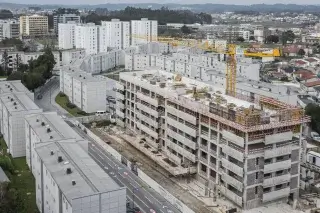 Portugal Secures €1.5 Billion for Social Housing
 Mortgage Lending in Georgia Increased by Nearly 50%
Canada’s Housing Engine Stalls as Economy Weakens

Canada’s housing market, which helped carry the economy through previous crises, has lost its role as a dependable growth engine. Lower interest rates have failed to restore the former buying frenzy, investors have retreated from pre-construction condominiums, and developers are reducing projects intended for ownership. Sales showed signs of recovery in spring 2026, but benchmark prices remained below year-earlier levels and residential investment continued to weigh on economic growth.
Canada’s Long Housing Boom Lost Momentum
For much of the past two decades, housing provided Canada with a powerful economic buffer. Cheap credit stimulated purchases, rising property values supported consumer confidence, and residential construction generated employment and demand across banking, building materials, legal services and real estate brokerage.
That mechanism had weakened substantially by the autumn of 2025. Bloomberg characterised the correction as the deepest in the available record and reported that prospective buyers had become more conscious of the possibility of losing money on property. The slowdown arrived as trade tensions with the United States damaged investment and export confidence, leaving housing unable to offset economic weakness as it had during earlier downturns.
The change was not caused by a single month of falling prices. Higher borrowing costs reduced purchasing power from 2022 onward, while property values remained high relative to household income. Even after monetary easing began, many buyers continued waiting for better prices or greater employment security.
Lower Interest Rates Failed to Restore the Boom
The Bank of Canada held its overnight policy rate at 2.25% in June 2026, well below the peak of the previous tightening cycle. The impact on housing remained limited because the policy rate does not determine every mortgage cost directly. Fixed mortgage rates also reflect government bond yields, lender margins and borrower risk.
The size of the loan matters as much as its interest rate. When prices remain high relative to income, cheaper financing may still leave the required deposit and monthly payment beyond a household’s budget.
Expectations of further price declines have also delayed purchases. Buyers wait, sellers reduce asking prices slowly, and developers struggle to secure enough advance sales to finance construction. Rate cuts can prevent a deeper downturn without immediately recreating the conditions that produced rapid price growth.
Sales Improved in May but Prices Lagged
Canadian home sales increased by 5.5% from April to May 2026, offering the clearest evidence of a delayed spring recovery. Activity nevertheless remained 5.1% below May 2025.
The MLS Home Price Index, which adjusts for differences in the characteristics of properties sold, edged down 0.1% during the month and was 4.1% lower than a year earlier. The actual national average sale price moved in the opposite direction, rising 1.5% to C$702,079. A larger share of expensive homes or transactions in higher-priced regions can raise the average even when comparable properties are losing value.
The sales-to-new-listings ratio increased to 49.2% from 46.2% in April, compared with a long-term average of 54.8%. National inventory represented 4.8 months of sales, close to the historical norm.
These figures point to stabilisation rather than a renewed boom. Buyers are returning gradually, but they retain more negotiating power than during the pandemic surge.
Ontario and British Columbia Remain Under Pressure
National figures conceal major regional differences. Home prices remained below year-earlier levels in British Columbia, Alberta and Ontario in May 2026, while markets in Quebec and parts of Atlantic Canada proved more resilient.
The greatest weakness has emerged in areas where prices became most detached from local income. The Greater Toronto Area and metropolitan Vancouver accumulated large inventories of condominium listings as investors became more cautious about purchasing units before construction.
At the end of 2025, the national benchmark index was down 4% from a year earlier. Price declines were larger for condominium apartments and townhouses than for detached homes, with much of the weakness concentrated in Ontario’s Greater Golden Horseshoe. Active listings were 7.4% higher than a year earlier.
Lower condominium valuations also create risks for pre-construction buyers. When a completed unit is appraised below the contract price, the lender may reduce the mortgage amount and require the buyer to provide additional cash.
The Pre-Construction Investment Model Has Weakened
Canadian condominium development has traditionally depended on advance sales. Developers sold a substantial share of units before major construction began and used those contracts to secure project financing.
The model worked when buyers expected prices to rise continuously. Investors acquired small units years before completion and planned to resell them or operate them as rentals. Higher mortgage expenses, weaker rental yields and growing resale supply have changed that calculation.
Canada Mortgage and Housing Corporation reported a collapse in condominium presales and rising inventories of unsold units. Construction intended for individual ownership weakened even though overall housing starts increased in 2025, supported by rental development.
Toronto has become the clearest example. Ownership-oriented housing starts fell to their lowest level since 2009. The decline may help absorb current inventory, but it also risks creating another shortage when demand eventually strengthens.
Rental Development Replaced Ownership Supply
Purpose-built rental construction remained comparatively strong because of public financing, tax incentives and government housing programmes. Several large cities recorded historically high rental starts during 2025.
This activity preserved construction employment, but it did not fully replace the economic effect of ownership transactions. A rental building is retained by one operator and does not generate thousands of individual purchases, mortgages and transaction fees.
The shift is also changing the future housing stock. More small rental apartments are being built, while fewer family-sized ownership units, townhouses and detached homes enter the pipeline. Canada can therefore add housing units without eliminating shortages in the types of homes buyers need.
Housing Weakness Is Affecting Economic Growth
Housing has an unusually large role in Canada’s economy. Activity associated with the production of residential assets generated C$152.1 billion in gross domestic product and supported more than 1.2 million jobs in 2025. Real housing investment increased by 1.2%, although Ontario and British Columbia were the only provinces to record declines in total investment.
The effect of the resale downturn became clearer in early 2026. Real GDP was unchanged in the first quarter after contracting 0.2% in late 2025. Residential investment fell 2%, while ownership transfer costs, a measure closely linked to resale transactions, dropped 9.9%. New residential construction edged down 0.1%.
Fewer transactions affect brokers, appraisers, mortgage advisers, lawyers, renovation firms and furniture retailers. Provincial and municipal governments also collect less revenue from property transfers. The economic impact therefore extends beyond lower home values.
Slower Population Growth Changed Housing Demand
Rapid population expansion was a major source of demand after the pandemic. International students, temporary workers and permanent immigrants supported rentals and accelerated household formation.
That source of growth weakened after immigration policy was tightened. Preliminary estimates indicate that Canada’s population fell by 102,436 during 2025. The number of non-permanent residents declined by 171,296 in the final quarter alone and fell from a peak of 3.15 million in October 2024 to 2.68 million at the beginning of 2026.
Reduced migration may relieve pressure on housing and public services, but it also lowers near-term rental demand. Neighbourhoods around universities and colleges are particularly exposed because investors frequently targeted students and temporary workers.
Higher rental vacancies and slower rent growth can weaken the cash flow of leveraged landlords. That makes new investment purchases less attractive even when property prices have already declined.
Housing Remains Unaffordable After the Correction
The market downturn has not solved Canada’s affordability problem. Prices have fallen from their peaks, but not enough to restore their historical relationship with household income. Buyers continue to face expensive properties and mortgage rates well above pandemic-era lows.
A household must accumulate a large deposit, qualify under Canada’s mortgage stress test and retain sufficient income for taxes, insurance and maintenance. Softer market conditions benefit buyers with stable employment and existing capital, but they do not automatically open ownership to renters with limited savings.
Canada’s unemployment rate declined to 6.6% in May 2026 as employment increased by 88,000. The improvement followed labour-market weakness earlier in the year, and housing demand will require sustained job growth rather than a single strong monthly result.
Recovery Is Expected Without Another Price Surge
The Canadian Real Estate Association expects 474,972 homes to change hands in 2026, an increase of only 1% from 2025. The national average price is forecast to rise 1.5% to C$688,955, with virtually no growth in British Columbia, Alberta and Ontario. Gains elsewhere are expected to slow to between 2% and 5%.
For 2027, the association projects a further 2.1% increase in sales and price growth of 0.9%. Under that scenario, the national average would remain close to C$700,000 for a sixth and seventh consecutive year.
Lower rates, pent-up demand and stabilising prices support a gradual recovery. Weak economic growth, slower migration, high construction costs and investor caution limit the upside.
As International Investment experts report, Canadian housing can no longer be treated as an automatic economic stabiliser. The spring recovery in sales has not reversed the decline in benchmark values or the contraction in residential investment. Buyers have gained negotiating room, but affordability remains poor. Investors face the risk of an extended period of weak appreciation, limited liquidity and compressed rental returns rather than a uniform national crash. The collapse in ownership-oriented construction may support prices later, but it will also deepen Canada’s structural shortage of suitable homes.
FAQ
What happened to Canada’s housing market?
Higher mortgage costs, weak affordability, increased listings and reduced investor demand ended the pandemic-era boom. Sales and benchmark prices declined, particularly in Ontario and British Columbia.
Is the Canadian housing market recovering in 2026?
Sales increased strongly in May, but remained below the previous year’s level. Benchmark prices were still down 4.1% annually, indicating stabilisation rather than a new boom.
Why did the average sale price rise while the price index fell?
The average changes with the mix of properties sold. More high-value transactions can raise the average, while the MLS index compares similar homes and shows the underlying price trend.
Which Canadian markets have weakened the most?
Ontario and British Columbia have experienced the strongest pressure, particularly the Greater Toronto and Vancouver condominium markets. More affordable regions have generally performed better.
Why have lower rates not produced a rapid rebound?
Property values remain high relative to incomes, fixed mortgage rates do not move directly with the central bank rate, and buyers remain concerned about employment and future price declines.
What is happening to Canadian new construction?
Condominium presales have collapsed, leading developers to delay or cancel ownership projects. Purpose-built rental construction has remained stronger.
How does lower immigration affect housing?
Fewer international students and temporary workers reduce rental demand and household formation, particularly in university districts and markets dominated by small investor-owned apartments.
Will Canadian home prices fall further?
The national forecast points to modest average growth, but regional declines remain possible where listings are high and investor or employment demand is weak.