












China to Accelerate Fiscal Spending After Growth Slows

China will accelerate fiscal spending, expand domestic demand and introduce additional targeted measures if necessary after growth in the world’s second-largest economy slowed. The Politburo stopped short of announcing a major new stimulus package, changing the budget or revising the government bond issuance schedule.
China Chooses Targeted Support Over Sweeping Stimulus
The Political Bureau of the Communist Party of China Central Committee set its economic priorities for the second half of 2026 at a July 30 meeting chaired by President Xi Jinping.
Before the official statement was released, Bloomberg reported that senior officials would consider new measures following weaker economic data. The final decisions were more restrained: policymakers promised to make full use of existing programs and introduce additional targeted policies when appropriate, but disclosed no separate large-scale funding package.
According to the official Xinhua readout, Beijing will maintain a more proactive fiscal policy and an appropriately accommodative monetary policy. The authorities also pledged stronger countercyclical adjustment, meaning measures designed to support demand and business activity during an economic slowdown.
No increase in the fiscal deficit or additional bond issuance was announced. The decisions therefore point primarily to faster implementation of the approved budget rather than a sharp expansion in government borrowing.
China’s GDP Growth Slows to 4.3 Percent
China’s economy expanded 4.3% from a year earlier in the second quarter of 2026, slowing from 5% in the first quarter. Gross domestic product increased 0.9% from the previous three months.
GDP reached 69.57 trillion yuan in the first half and grew 4.7%. That result remains within the government’s full-year target range of 4.5% to 5%. The second-quarter rate should not be treated as a direct failure to meet the target because the official objective applies to 2026 as a whole.
Figures from China’s National Bureau of Statistics show a widening contrast between resilient production and weak domestic demand. The agency acknowledged that the imbalance between strong supply and insufficient demand remained acute and that the foundation for the recovery still needed to be consolidated.
Consumption and Investment Remain Weak
Retail sales of consumer goods rose only 1.3% in the first half to 24.87 trillion yuan. Growth slowed to 1% in June, while catering revenue increased 2.8% over the six-month period.
A broader measure covering retail sales of goods and services advanced 2.7%. Services sales increased 5.3%, compared with a 1.1% gain for goods, indicating stronger activity in tourism, communications, leisure and other services than in merchandise retailing.
Fixed-asset investment excluding rural households fell 5.7% to 22.64 trillion yuan. Excluding real estate, it declined 2.7%. Infrastructure investment dropped 2.4%, manufacturing investment decreased 1.2%, and private investment contracted 8.5%.
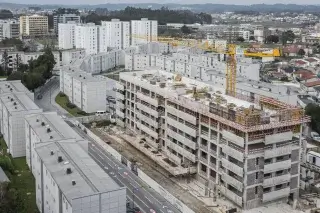
The property sector remained the deepest source of weakness. Real-estate development investment fell 18%, the floor area of newly sold commercial buildings declined 11.6%, and their sales value dropped 13.6%. The Politburo repeated its objective of stabilizing the market but announced no detailed new measures for developers or homebuyers.
Industry and Technology Outpace Domestic Demand
Value added at large industrial companies rose 5.4% in the first half. The official category covers industrial enterprises with annual revenue from their main business of at least 20 million yuan.
Manufacturing output increased 5.6%, equipment manufacturing expanded 9.3%, and high-technology manufacturing grew 13.3%. Production of three-dimensional printing equipment rose 48.5%, lithium-ion batteries increased 39.3%, and industrial robots advanced 28%.
Investment in high-technology industries gained 4.6% despite the overall decline in fixed-asset investment. Services expanded 5.2%, while information transmission, software and information-technology services grew 10.7%.
The figures show that industrial upgrading and digital industries continue to support economic output, but their expansion has not fully offset weakness in consumption, housing and private-sector investment.
Exports Remain a Major Economic Support
China’s goods trade increased 16.9% in yuan terms during the first half to 25.47 trillion yuan. Exports rose 13.4% to 14.73 trillion yuan, while imports increased 22.1% to 10.74 trillion yuan.
Exports of machinery and electrical products climbed 20.1%. Trade conducted by private enterprises expanded 17%, and those businesses accounted for 57% of total goods trade.
Strong exports are cushioning the domestic slowdown but leave the economy more dependent on overseas demand. The Politburo said China would expand trade in services, attract foreign investment and promote more balanced trade.
Beijing Will Accelerate Approved Investment Projects
The main support will be delivered through infrastructure, equipment renewal, government programs and incentives for consumer purchases. Authorities plan to advance six major infrastructure networks spanning areas such as energy, water, transport and logistics, underground utilities, telecommunications and computing capacity.
A policy plan published in March on the Chinese government portal estimated that total 2026 investment in infrastructure, public services and other priority areas would exceed 7 trillion yuan. This is not a new package announced in July and should not be described solely as direct central-government spending.
China has allocated 250 billion yuan from ultra-long special treasury bonds to consumer trade-in programs covering vehicles, household appliances and other products. A further 100 billion yuan was assigned to coordinated fiscal and financial measures supporting private investment and consumer spending.
Monetary Policy Will Remain Accommodative
The Politburo called for comprehensive and timely use of monetary-policy instruments. These include interest rates, banks’ required reserve ratios and liquidity provision to the financial system.
The meeting did not announce a specific rate cut or reduction in reserve requirements. Future decisions will depend on trends in demand, credit growth, real estate and external risks.
Consumer prices increased 1% in the first half, while core inflation excluding food and energy was 1.2%. Producer prices rose 1.5%. The figures do not indicate economy-wide price declines during the period, although moderate inflation coexists with weak consumption and excess supply in parts of industry.
Beijing Targets Destructive Price Competition
Policymakers also pledged to curb competition in which companies repeatedly cut prices and profit margins to defend market share. Such behavior can sustain production volumes but weaken corporate finances, reduce investment capacity and increase downward pressure on prices.
Other priorities include developing a unified national market, supporting private and platform businesses, reforming state-owned enterprises and expanding the “AI Plus” initiative, which seeks to integrate artificial intelligence into industry, services and public administration.
The Politburo also called for stronger employment support, protection for flexible workers, measures to contain local-government debt, restructuring of small and medium-sized financial institutions, and capital-market financing reforms.
As Reuters reported, many economists view faster implementation of already-budgeted infrastructure projects as a way to stabilize growth without widening the fiscal deficit. The absence of new funding totals, implementation deadlines or major household-income measures nevertheless underlines the cautious nature of the response.
As International Investment experts report, faster fiscal execution may stabilize China’s economy during the second half, but the structure of the response remains vulnerable: real-estate investment fell 18%, private investment declined 8.5%, and retail sales grew only 1.3%. If support remains concentrated on infrastructure and production, the gap between strong supply and weak domestic demand is likely to persist. More durable growth would require measures that have a clearer effect on household income, consumption and private-business confidence.
FAQ: China’s Economic Stimulus
Did China announce a major new stimulus package?
No. The Politburo promised faster implementation of existing fiscal programs and additional targeted measures when appropriate, but announced no separate large package, budget revision or new bond issuance schedule.
How fast did China’s economy grow in the second quarter of 2026?
GDP increased 4.3% from a year earlier and 0.9% from the previous quarter. First-half growth was 4.7%.
What is China’s 2026 GDP growth target?
The government has set a full-year target range of 4.5% to 5%. The second-quarter growth rate alone does not determine whether the annual target will be met.
Which sectors are expected to receive support?
The priorities include infrastructure, equipment renewal, consumer trade-in programs, basic research, artificial intelligence, emerging industries and stabilization of the property market.
Why is domestic demand a major concern?
Retail sales of consumer goods rose only 1.3% in the first half, while industrial output increased 5.4%. The difference shows that production is expanding much faster than household consumption.