







 Vietnam Mortgage Surge Pushes Homes Out of Reach
 Lithuanian Apartment Prices Accelerate Across Major Cities
 London Flats Lose Value Ahead of Leasehold Reform
 Construction of the Batumi–Sarpi Highway Begins in Georgia
 Baltic Property Investment Accelerates in 2026
 Hong Kong and Singapore Renew Their Expat Rivalry
China Inflation Accelerates After Holiday Spending
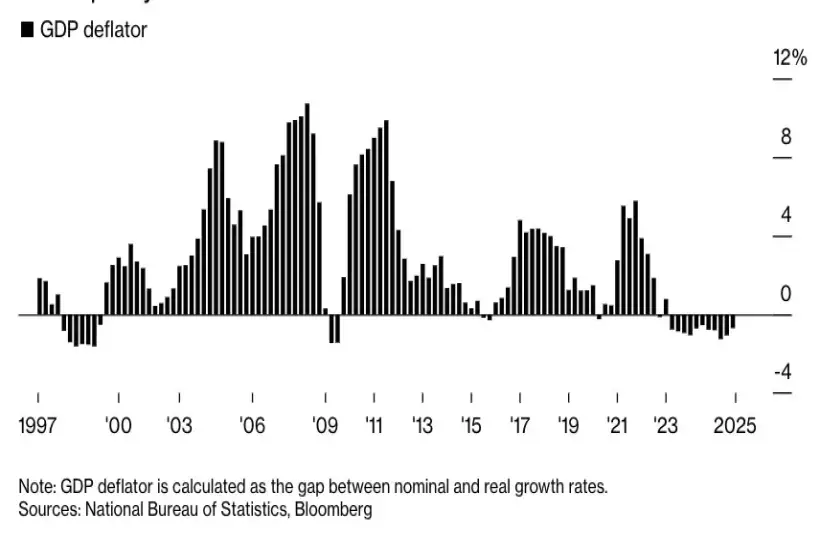
Consumer prices rise at fastest pace in three years
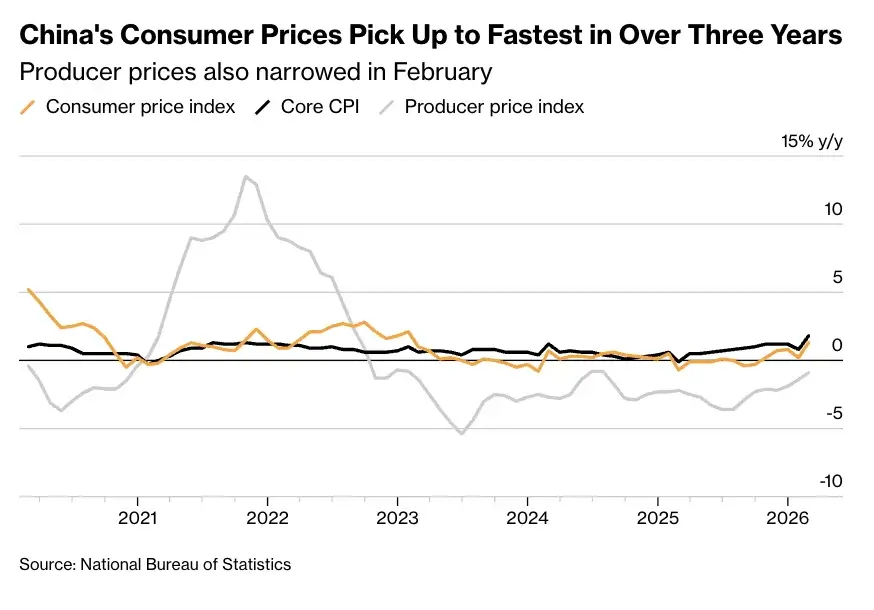
China’s inflation accelerated to its fastest pace in more than three years as holiday spending during the Lunar New Year and rising energy prices pushed consumer costs higher.
According to data released by the National Bureau of Statistics, China’s consumer price index increased by 1.3% year on year in February. The figure exceeded economists’ expectations, which had predicted a rise of around 0.9%. In January inflation had been just 0.2%.
The stronger reading marks a notable shift after a prolonged period of weak price growth and deflationary pressure across large parts of the economy.
Core inflation, which excludes volatile items such as food and energy, climbed to 1.8%, the highest level since 2019, indicating some recovery in domestic demand.
Factory deflation persists but begins to ease
While consumer prices rose, producer prices continued to decline. China’s producer price index fell 0.9% from a year earlier in February. This marked the 41st consecutive month of decline, although the drop was the smallest since July 2024.
Economists view the narrowing decline in factory prices as a potential signal that deflationary pressures in the industrial sector are beginning to ease.
Authorities have stepped up efforts to address overcapacity and excessive price competition in several industries. Beijing has launched a campaign aimed at curbing aggressive competition among companies, sometimes referred to as the “anti-involution” policy.
Signs of stabilization are emerging in some sectors. Prices for lithium-ion batteries, for example, increased by 0.2% year on year, the first increase after 33 months of decline.
Lunar New Year spending drove temporary price surge
A key factor behind February’s inflation jump was the timing of the Lunar New Year holiday. In 2026 the entire holiday period fell in February, whereas in the previous year it had partially taken place in January.
The holiday period typically triggers large-scale domestic travel and consumer spending. Prices for several services rose sharply during this period. Airline tickets, travel agency services, transportation rentals, vehicle maintenance and pet care services all recorded double-digit price increases.
Food prices also moved higher. They rose 1.7% year on year in February after falling 0.7% in the previous month. Higher costs for fresh vegetables, beef, lamb and fruit contributed to the increase.
Gold jewelry prices surged as well. The price of gold jewelry jumped 76.6% from a year earlier amid a global rally in gold markets.
Oil price surge may add inflationary pressure
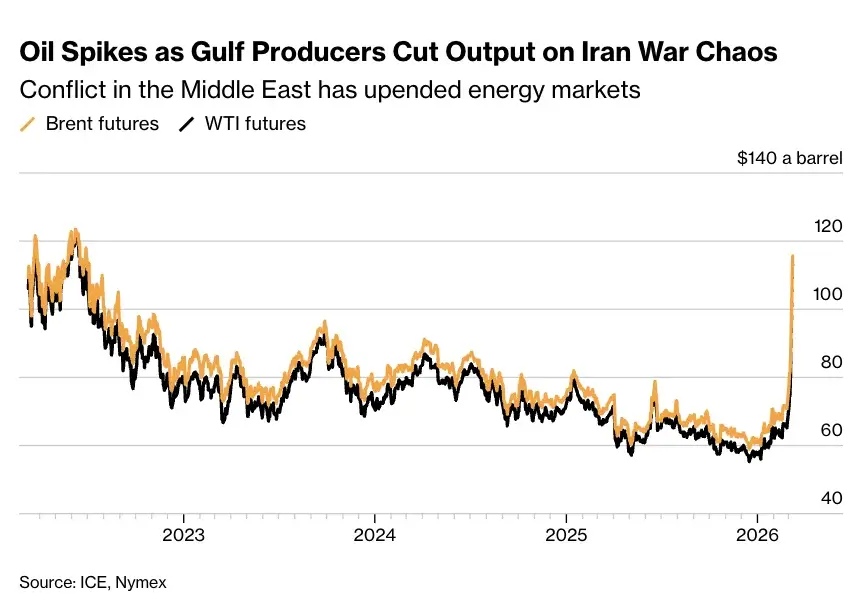
Another important risk factor for China’s inflation outlook is the recent surge in global oil prices. Geopolitical tensions in the Middle East have pushed energy markets higher, with Brent crude briefly approaching $120 per barrel after a sharp rally.
China is the world’s largest oil importer, which means global energy shocks can have a significant impact on domestic inflation.
Economists estimate that if oil prices remain around $100 per barrel this year, China’s consumer inflation could increase by around 0.3 percentage point compared with current forecasts.
At the same time China has built a partial buffer by rapidly accumulating crude oil reserves over the past year, including strategic stockpiles.
Monetary policy outlook may become more cautious
Rising inflationary pressure could complicate the policy outlook for the People’s Bank of China. The central bank has signaled a cautious approach to monetary easing after implementing a modest 10-basis-point policy rate cut in 2025.
Governor Pan Gongsheng recently warned that global volatility could spill over into China’s financial system and said authorities would work to shield domestic markets from external shocks.
Some economists believe potential interest rate cuts could be delayed if energy prices remain elevated and global inflation pressures increase.
At the same time Beijing is continuing efforts to end the deflationary cycle that has affected the Chinese economy since the end of the pandemic. Consumer prices were essentially flat in 2025, marking the weakest inflation performance since 2009.
The government has set a consumer inflation target of around 2% for this year, although policymakers view it more as a ceiling than a strict goal.
As experts at International Investment note, China’s recent inflation increase appears largely driven by temporary seasonal factors and holiday spending. However the combination of stronger consumption and rising global energy prices could gradually shift the country’s inflation dynamics, forcing policymakers to carefully balance economic stimulus with price stability.