







 Housing Prices in Israel Fell 1.5% Year-on-Year
 Immigration Slowdown Reshapes the US Sun Belt
 Slovakia Reforms Building Rules as Housing Starts Slide
 EU Proposes New Restrictions on Short-Term Housing Rentals
 Canada Fast-Tracks Tax Rulings for C$1 Billion Investments
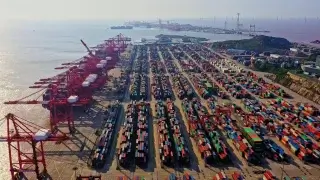 China Nears a Decision on Fresh Stimulus
China Home Prices Continue to Fall

China's property market remains under pressure. New-home prices fell for a third consecutive month in August, while property investment dropped almost 20% in the first eight months of 2026. The largest cities are proving more resilient, but housing values in tier-two and tier-three markets continue to decline as Beijing expands support beyond homebuyers to the financing and sales model of the property industry itself.
New-home prices fall for a third month
Average new-home prices across China's 70 major cities fell 0.1% in August from July, matching the declines recorded in June and July. Prices were 3% lower than a year earlier, compared with a 3.2% annual decline in July, the smallest year-on-year drop so far in 2026, according to Reuters calculations based on official data.
The figures suggest that the downturn is moderating rather than reversing. A Sept. 15 Bloomberg report similarly focused on persistent price weakness and whether recently announced policy measures can produce a more durable stabilisation. Bloomberg
The divergence between China's biggest metropolitan markets and smaller cities is becoming increasingly visible.
New-home prices in the four tier-one cities — Beijing, Shanghai, Guangzhou and Shenzhen — rose an average 0.1% from July. Shanghai gained 0.4%, Shenzhen 0.2% and Guangzhou 0.1%, while Beijing declined 0.2%.
Tier-two cities recorded a 0.1% monthly decline and tier-three cities a 0.2% drop. Compared with a year earlier, new-home prices were down 0.9% in tier-one cities, 2.7% in tier-two cities and 4.1% in tier-three markets.
Shanghai remains the strongest major market, with new-home prices 3% higher than a year earlier. Prices declined 2.3% in Beijing, 1.9% in Guangzhou and 2.3% in Shenzhen.
The resale market is weaker. Existing-home prices were down 2.7% year on year in tier-one cities, 4.9% in tier-two cities and 5.6% in tier-three markets. Only eight of the 70 cities recorded flat or rising resale prices from July.
New-home sales remain in decline
Price weakness is accompanied by a continued contraction in the primary market.
The floor area of newly built commercial property sold nationwide fell 12.1% year on year in January through August to 498.8 million square metres. Residential sales area declined 13%.
The value of new commercial-property sales fell 13% to 4.747 trillion yuan, while residential sales revenue declined 13.1%.
The existing-home market is moving in the opposite direction. Registered resale transactions totalled 549.23 million square metres during the first eight months, up 10.6% from a year earlier.
Completed but unsold commercial property stood at 753.49 million square metres at the end of August, down 1.1% year on year. Unsold residential inventory declined 0.5%.
The figures illustrate a structural change in the housing market: existing homes now account for a larger volume of transactions by floor area, while the primary market that remains crucial to developer cash flow continues to contract.
Property investment drops almost 20%
The construction side of the market is weakening even faster.
Real-estate development investment fell 19.9% year on year in January through August to 4.798 trillion yuan. Residential investment declined 19.7%.
New construction starts fell 24.8%, including a 25.4% decline for residential buildings. Completed floor space dropped 23.7%, while residential completions were down 25.4%.
Developers are also receiving less financing. Funds available to real-estate companies fell 21% to 5.089 trillion yuan. Domestic bank loans dropped 33.3%, deposits and advance payments declined 14.8%, and funds originating from individual mortgages fell 22.4%.
The pressure therefore extends beyond weak homebuyer demand. Developers are simultaneously receiving less money from presales and facing tighter access to traditional bank funding.
China rewrites its housing presale system
Authorities began changing the structure of the housing market itself in late August.
The Ministry of Housing and Urban-Rural Development, Ministry of Natural Resources and National Financial Regulatory Administration introduced rules requiring buildings offered for presale under the new framework to have their main structure topped out before units can be sold.
Buyers' down payments, mortgage proceeds and other purchase funds must be deposited in supervised accounts.
Authorities are also pushing for a gradual increase in completed-home sales. Newly supplied land and projects that have not yet obtained planning permits are encouraged to prioritise sales after completion, although the new system does not abolish presales altogether.
The reform is designed to reduce delivery risks that became a major concern after financially distressed developers left some projects unfinished.
Maximum mortgage term rises to 40 years
China's central bank and financial regulator have also changed the credit framework for the property sector.
The maximum term for individual housing loans has been increased from 30 years to 40 years. Longer maturities can reduce monthly repayments, although borrowers may pay interest over a longer period.
Development financing is also being adjusted. Loans for presale projects should generally have maturities of no more than three years, with a maximum of five years. Completed-home projects can receive loans with standard maturities of up to five years and a maximum of seven years.
Mortgage proceeds for completed homes are to be released after the sale is registered. For presold homes, funds should be issued after project completion has been registered.
The reforms also introduce a lead-bank system for development projects, intended to provide clearer oversight of financing and cash flows.
Developers gain broader access to capital markets
China's securities regulator has introduced a separate package aimed at widening financing channels for property companies.
Listed developers can make greater use of equity refinancing, corporate bonds, asset-backed securities and mergers and acquisitions financed through shares, convertible bonds or cash.
Regulators are also supporting eligible real-estate investment trusts and private property funds as alternative sources of capital.
Another important shift is the increased emphasis on individual project quality rather than relying mainly on the overall size and credit standing of the developer. That could allow viable projects to attract financing even while the broader industry remains under pressure.
Beijing shows transactions can recover before prices
Major cities are also continuing to relax restrictions on buyers.
Beijing lowered tax and social-security contribution requirements in August for non-local households seeking to buy homes within the Fifth Ring Road.
Around 14,000 existing homes were sold in the capital in August, 3.9% more than a year earlier. Sales in the first week of September were about 26% higher year on year. Transactions in the first eight months reached roughly 121,000 units, the highest level in five years.
The recovery in activity has not yet translated into a similar recovery in valuations. Official data show Beijing's existing-home prices were 3.5% lower than a year earlier in August.
The pattern demonstrates one limitation of local easing: lower purchasing barriers can bring buyers back, while sellers may still have to accept lower prices to complete transactions.
Economists do not expect a rapid turnaround
A Reuters poll of 11 institutions conducted from Aug. 17 to Aug. 27 showed that analysts still expect a prolonged adjustment.
Home prices are forecast to decline 3.4% in 2026 and another 0.3% in 2027. The projection for property investment was revised to a 20% decline this year, compared with a 12% drop expected in the May survey. Sales by floor area are forecast to fall 10%.
Actual investment data for January through August are already close to that full-year projection, with spending down 19.9%.
That leaves policymakers with a difficult balance. Insufficient support risks extending the decline in prices and investment, while aggressive stimulus could revive the debt-heavy expansion model that authorities are now trying to replace.
As experts at International Investment report, the August figures do not yet provide evidence of a nationwide turning point in China's property market. Price declines are moderating and the largest cities are proving more resilient, but investment, construction starts and primary-market sales are still falling at double-digit rates. The widening gap between tier-one cities and weaker regional markets is particularly important. The new financing and sales framework may reduce unfinished-project risks, but any recovery in demand will still depend on household income, buyer expectations and banks' willingness to finance viable developments.
FAQ
Are Chinese home prices still falling in 2026?
Yes. Average new-home prices across the 70 major cities fell 0.1% in August from July and about 3% from a year earlier.
Which major Chinese property market is performing best?
Shanghai is the clearest standout among the four tier-one cities. New-home prices rose 0.4% from July and 3% from a year earlier in August.
How much have new-home sales fallen?
Residential sales by floor area declined 13% in the first eight months of 2026, while the value of residential sales fell 13.1%.
What is happening to property investment?
Real-estate development investment dropped 19.9% in January through August. New construction starts were down 24.8%.
What property support measures has China introduced?
Authorities have tightened oversight of presales, encouraged completed-home sales, increased the maximum mortgage term to 40 years and widened financing options for property projects and developers.
Has China's property market reached a bottom?
There is still insufficient evidence of a sustained nationwide recovery. Annual price declines are narrowing, but primary sales, investment and new construction remain weak.