







 Poland Poised to Hold Rates at 3.75%
 Ljubljana's Million-Euro Deals Are Increasingly About Land
 Reform UK Reworks Its Offer to Wealthy Foreigners
 US Introduces Visa Bonds of Up to $20,000 for Tourists From 50 Countries
 Portugal Secures €1.5 Billion for Social Housing
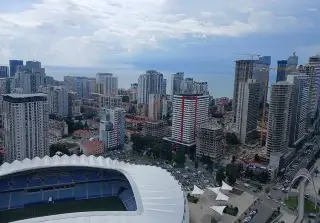 Mortgage Lending in Georgia Increased by Nearly 50%
Croatia Home Prices Rise as Sales Drop Sharply

Croatia entered 2026 with an unusual combination of double-digit housing price growth and a decline of more than 40% in completed transactions. Investropa expects national property prices to rise by 6% to 10% over the full year and by 30% to 45% by 2031, but the latest official figures suggest that rapidly deteriorating affordability is already pushing buyers out of the market.
Croatia Property Price Forecast Through 2031
Investropa estimates the average Croatian residential property price at approximately €2,850 per square metre and the average purchase value at around €200,000. These are the platform’s own estimates rather than an official national transaction average. Its central forecast points to an 8.5% price increase in 2026, within a range of 6% to 10%. Nominal residential values are projected to rise by 30% to 45% by 2031, with a central scenario of approximately 38%. The ten-year forecast envisages growth of 65% to 95% by 2036, based on assumptions about tourism, wages, construction supply and rental regulation.
A nominal forecast does not account for inflation. A 30% increase over five years would therefore not produce a 30% real investment return. Inflation, maintenance, renovation, taxes, insurance, financing costs and periods without tenants would reduce the final result.
Official Prices Rose by 14.3%
Croatia’s latest official figures reveal a growing divergence between prices and market activity. The national House Price Index increased by 3.3% during the first quarter of 2026 and by 14.3% from a year earlier. New homes became 9.7% more expensive, while existing properties rose by 16.1%. Annual growth reached 14.7% in Zagreb, 12.6% on the Adriatic coast and 18.1% in the rest of the country. At the same time, the number of residential sales fell by 42.2%. New-home transactions dropped by 50.9%, existing-home sales declined by 37.4%, and the total value of housing transactions decreased by 35.4%.
The first-quarter figures do not directly invalidate a 6% to 10% full-year forecast. The 14.3% figure compares one quarter with the same period a year earlier, whereas the forecast concerns the complete calendar year. Price growth could slow during the remaining quarters. The collapse in transactions nevertheless indicates a narrower market, with fewer households able or willing to complete purchases at current prices.
Croatia Continues to Outpace the EU
House prices across the European Union increased by an average of 5.1% year over year in the first quarter of 2026, while the euro-area increase was 4.7%. Croatia’s 14.3% growth was almost three times the EU rate. The gap benefits existing owners but intensifies affordability pressures when wages and household savings fail to keep pace with residential values.
The fastest percentage growth occurred outside Zagreb and the Adriatic region. A lower starting price can produce a larger percentage increase from a similar rise in euros, so stronger inland growth does not automatically indicate better liquidity or investment performance.
Zagreb and the Coast Follow Different Dynamics
Zagreb is primarily supported by year-round demand linked to employment, education, public institutions, domestic migration and long-term rentals. Coastal prices depend more heavily on tourism, international buyers, seasonal income, sea views and the legal status of short-term accommodation.
This distinction matters for forecasting. A Zagreb apartment can retain continuous tenant demand during a weaker tourist season. A home in Dalmatia or Istria may generate more revenue during summer but will be more exposed to occupancy, season length, management expenses and regulatory changes.
Research published by Croatia’s construction ministry and the Institute of Economics in Zagreb shows that apartment transactions remain concentrated in major urban markets such as Zagreb, Split, Rijeka, Zadar, Osijek, Pula and Dubrovnik. Median completed-sale prices are more useful for local comparisons than broad averages, which can be distorted by a small number of luxury villas and seafront transactions.
Falling Transactions Are the Main Warning
The 42.2% decline in sales is a more important warning than an isolated price forecast. It suggests that current values are increasingly preventing transactions. A housing index can continue rising while activity falls when sellers resist discounts and completed deals become concentrated in newer or higher-quality properties.
This creates a liquidity risk. Official indices track changes in completed transaction prices but do not reveal how many homes remain unsold for months or how far sellers eventually move from their original asking prices.
Large villas, properties requiring expensive renovation, homes without parking, units with unresolved documentation and apartments dependent entirely on short-term rentals are particularly exposed to this risk.
Mortgage Rates Remain Relatively Low
The average interest rate on newly granted Croatian housing loans stood at 3.03% in January 2026 and remained close to levels recorded during the second half of 2025. Relatively moderate financing costs continue to support demand.
A stable mortgage rate does not resolve affordability problems when the principal amount keeps rising. Even without a higher interest rate, a double-digit increase in the purchase price raises the required deposit and monthly repayment.
Financing conditions for non-residents may also differ from those available to Croatian households. Banks can consider the applicant’s country of income, salary currency, tax residence and equity contribution.
Housing Supply Remains Constrained
Limited construction supports the case for further price growth. Croatia issued 17.5% fewer building permits between January and April 2026 than during the same period a year earlier. April delivered a partial recovery, with permits rising by 7.4% and covering 2,263 planned homes. Permits issued during the first four months covered a total of 5,915 residential units.
Planning approval does not immediately create available housing. Projects can take years to complete or be delayed by financing costs, land prices, labour shortages and infrastructure constraints.
Supply is particularly difficult to expand in historic centres and coastal districts affected by geography, protected landscapes and limited development land.
Tourism Supports Adriatic Demand
Croatia recorded more than 21.8 million tourist arrivals and 110.1 million overnight stays in 2025. Arrivals increased by 2% and nights by 1%, with 104.6 million nights spent along the Adriatic coast. Istria, Split-Dalmatia, Kvarner and Zadar were the leading regions. Tourism continues to support demand for properties suitable for seasonal letting.
A modest rise in overnight stays alongside faster property appreciation requires caution. Rental income does not automatically increase with the property’s market value. Buyers may pay considerably more while facing stable occupancy, higher management expenses and resistance to elevated accommodation prices.
Rapid appreciation can therefore reduce rental yield even when gross revenue remains stable.
Short-Term Rental Rules Have Tightened
Rental regulation has become one of the main risks for coastal investment. New short-term accommodation in an apartment building requires approval from two-thirds of the co-owners as well as neighbouring owners whose walls, floors or ceilings adjoin the unit. Local authorities can impose higher property taxes on homes not used for permanent residence, while flat-rate tourism taxes have also increased. The government says these changes have expanded long-term rental supply in Zagreb, Split, Zadar, Šibenik and Osijek.
Legal status now has a measurable effect on value. Two similar apartments in the same district can command different prices when one has valid rental permissions and the other cannot legally operate as tourist accommodation.
Existing permission should not be treated as a guarantee that operating costs and local conditions will remain unchanged throughout the ownership period.
The 2036 Forecast Carries Significant Uncertainty
A ten-year nominal increase of 65% to 95% implies average annual appreciation of approximately 5% to 7%. Such a trajectory is possible, but it depends on factors that cannot be predicted accurately in 2026.
These include population trends, construction volumes, real wage growth, European interest rates, climate risks, taxation of second homes, tourism-rental rules and Croatia’s competitiveness against other Mediterranean destinations.
Individual properties would also perform differently from the national index. A legally compliant, mid-sized apartment with parking and year-round demand may outperform. An overpriced seasonal property with high maintenance costs may lag the market or require a significant discount when sold.
As International Investment experts report, Investropa’s forecast captures Croatia’s long-term strengths: scarce supply, strong tourism, euro-area membership and sustained demand for quality housing. The 42.2% fall in completed sales shows that the market is already reaching an affordability limit for many buyers. Further appreciation remains possible, but performance will increasingly depend on the city, legal status and genuine rental income of each property. Investors should not assume an automatic annual gain of 5% to 7%; in a market with falling liquidity, published values may rise much faster than the amount obtainable in an urgent sale.
FAQ
How fast are Croatian home prices rising in 2026?
The official House Price Index increased by 14.3% year over year and by 3.3% during the first quarter of 2026.
Why are prices rising while sales are falling?
Quality supply remains limited and many owners are unwilling to reduce prices. At the same time, fewer buyers can afford current values, resulting in lower transaction volumes but higher average completed-sale prices.
What is the 2026 Croatia property forecast?
Investropa expects national prices to rise by 6% to 10% over the full year, with a central projection of 8.5%. This is a private forecast rather than an official government estimate.
How much could Croatian property rise by 2031?
The forecast projects a nominal increase of 30% to 45%, with a central scenario of approximately 38%. Real returns would be lower after inflation and ownership costs.
Which part of Croatia is recording the fastest growth?
In the first quarter of 2026, areas outside Zagreb and the Adriatic coast recorded the highest annual growth at 18.1%. Zagreb rose by 14.7% and the coast by 12.6%.
Are new homes or existing properties rising faster?
Existing homes increased by 16.1% year over year, compared with 9.7% for newly built dwellings.
Is Croatian tourist-rental property still attractive?
It can be attractive when the unit is legally rentable, correctly priced and capable of generating sufficient net income after taxes, maintenance, management and seasonal vacancy.
Could Croatian house prices decline?
The official index does not yet show a broad fall. Risks include worsening affordability, declining transactions, tighter rental regulation, weaker tourism and greater supply in individual locations.