









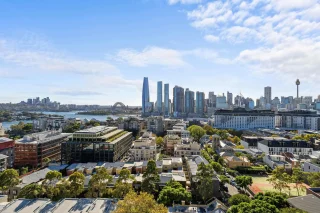



Prague rents climb again

Prague’s rental market has settled at record levels in 2026, with studios, one-bedroom flats and family apartments becoming less affordable and the gap between central districts and outer neighbourhoods widening. Rent growth is being driven by limited new supply, expensive home ownership, returning foreign demand and still-restricted access to mortgages.
Prague remains Czechia’s most expensive rental market
Czechia’s rental market has returned to growth, but Prague remains the main pressure point for household budgets. According to Expats.cz, tenants in the capital in 2026 face a range of roughly CZK 14,000 a month for a small studio to CZK 35,000 or more for a family apartment. These figures usually refer to base rent and do not always include utilities, building-service advances, internet or energy costs.
For Prague, this is not a short-term spike. The city has lived for years with undersupply, a slow construction cycle and steady demand from students, young professionals, foreign workers, families and investors buying flats to rent out. After the period of high mortgage rates, some would-be buyers remained in the rental market, increasing competition for available homes.
The main change in 2026 is that the market has become less forgiving of compromise. Cheap flats with good transport links disappear quickly, while units in central districts are increasingly affordable only for tenants with above-average income. Families needing two bedrooms, a separate children’s room or space for remote work are moving more often to Prague’s outer districts or commuter towns.
Studios are the entry ticket to the market
Studios remain the most accessible rental format in Prague, but their affordability is increasingly relative. Small flats and garsonka-style units, meaning one-room homes with a compact kitchen area, attract students, single tenants, young professionals and foreigners arriving in Czechia. That makes demand in this segment especially dense.
In practical terms, studios in Prague in 2026 often start at around CZK 14,000 per month, but in good districts and near metro stations the price rises quickly. In central areas, a compact unit can cost almost as much as a one-bedroom flat in an outer district. This changes the rental decision: tenants pay not only for floor area, but also for transport, time, proximity to work and access to urban amenities.
For landlords, studios remain one of the most liquid formats. Their small size keeps the absolute monthly rent lower, while the high price per square metre supports yield. For tenants, the reverse is true: the monthly payment may look lower than for a larger flat, but the cost of each square metre is high.
One-bedroom flats show the affordability squeeze
One-bedroom flats are the clearest indicator of the middle of Prague’s rental market. This is the format for a couple, a single professional with above-average income or a tenant no longer willing to live in a studio. In Czech listings, layout terms matter: 1+kk usually means one room with a kitchenette, 1+1 means one room plus a separate kitchen, and 2+kk means two rooms with a kitchenette.
In 2026, a one-bedroom flat in a good Prague district increasingly requires a budget close to CZK 20,000 or more, especially if the home is near a metro station, in a new building or recently renovated. Prague 1, Prague 2, Prague 3, Prague 5 and Prague 7 are significantly more expensive than peripheral districts, but demand remains strong because of access to offices, universities and services.
Deloitte Rent Index shows that the average rent in Prague in the first quarter of 2026 was CZK 466 per sq. m, while Prague 1 reached CZK 505 per sq. m. That means a 40 sq. m flat would cost about CZK 18,600 at the city average before utilities and about CZK 20,200 in the central district. The actual price depends on building condition, furniture, floor level, energy efficiency and contract length.
Family apartments are moving out of the centre
The most painful segment is family housing. Apartments with two bedrooms, a separate workspace or 65–75 sq. m of floor area are becoming less affordable in central Prague. These are the homes needed by families with children, expats on long contracts, couples working from home and tenants who do not want to move every year.
In Prague, a family apartment in 2026 often costs around CZK 30,000–35,000 per month or more if it is in good condition, has strong infrastructure and offers convenient transport. In central and popular neighbourhoods such as Vinohrady, Karlín, Smíchov, Dejvice and Holešovice, rents can move well above the average range.
That is why families increasingly look to Prague 4, Prague 9, Prague 10, Prague 13, Prague 15 and commuter locations with railway or metro access. But those areas are also rising. Once a district has reliable transport, schools, parks and retail infrastructure, rents follow demand upward.
The centre is not expensive only because of tourism
High rents in central Prague are often explained by tourism and short-term rentals, but that is only part of the picture. Central districts are expensive because supply is physically limited: historic urban fabric does not allow fast housing additions, while building quality varies widely. Demand comes not only from tourists, but also from employees of international companies, diplomats, entrepreneurs, private-university students and tenants who value time more than floor space.
Prague 1 remains the most expensive district by rent per square metre. Prague 5 recorded the fastest growth within the capital in the first quarter of 2026, reflecting demand for Smíchov, Anděl, new projects and areas well connected to the centre. This shift shows that growth is no longer limited to the historic core; it is spreading to districts with transport, offices, schools and new residential development.
For tenants, this means the old strategy of moving slightly farther from the centre to save a lot works less well. Savings are still possible, but they require larger compromises on travel time, flat size, building condition or nearby services.
Wages are not enough to solve affordability
The average gross wage in Czechia in the first quarter of 2026 was CZK 50,282. But gross wage means income before taxes and social contributions, so take-home pay is significantly lower. For tenants, net income is what matters because it has to cover rent, utilities, transport, food, healthcare, communications and savings.
If a flat costs CZK 20,000 a month before utilities, a single tenant needs an income well above the average to avoid spending an excessive share on housing. For a family, a CZK 35,000 apartment creates an even tighter constraint: even with two working adults, rent plus services can absorb a large part of the budget.
A common international affordability benchmark is 30% of income spent on housing. If a household spends more, it becomes more vulnerable to price increases, job loss, illness or contract changes. In Prague, many renters are already above that threshold, especially if they live alone or rent in central districts.
Buying remains an expensive alternative
Rising rents could push some tenants toward buying, but Prague home ownership remains very expensive. CBRE reported that in the first quarter of 2026 the average price of new homes in Prague reached CZK 179,500 per sq. m, while the average flat size was 64.5 sq. m. That means a typical new apartment in the capital costs many millions of crowns before finishing, furniture, taxes and financing costs.
Lower mortgage rates compared with peak levels have helped revive demand, but they have not made ownership widely affordable. The Czech National Bank recorded growth in demand for housing loans, linked to expectations that residential property prices would continue to rise. For the rental market, this matters: some people are trying to buy, but many remain tenants until they save a deposit or secure stable income.
The market paradox is that expensive ownership supports expensive rent. The fewer households can move from renting into ownership, the more pressure remains on the rental sector. And the higher rents rise, the harder it becomes to save for a down payment.
New construction is not keeping up
Around 1,200 new apartments were delivered in Prague in the first quarter of 2026. For a city with a stable resident base, migration, student demand and a high number of small households, that is not enough to ease pressure quickly. New supply reaches the market slowly, and some units are bought by investors who then rent them out at market rates.
Prague’s problem is not only the number of projects under construction, but also permitting times, land costs, infrastructure requirements and resistance to densification in some districts. Even when developers launch projects, the path from planning to occupancy takes years. The rental market reacts faster than the construction market.
If demand continues to rise and supply expands only gradually, rents will stay high even if the economy slows. Stabilisation is possible, but falling prices would require a marked increase in housing supply, weaker demand or a sharp improvement in purchase affordability.
Tenants are becoming more pragmatic
Tenant behaviour is changing. In the past, many renters chose districts mainly by prestige or proximity to the centre. Now they increasingly calculate the full monthly budget: rent, utilities, heating, transport, internet, parking and commuting time. A flat that is CZK 3,000 cheaper may not be a good deal if the commute takes an hour longer or requires a car.
The most sought-after flats are near metro stations, tram hubs, schools, kindergartens, parks and supermarkets. Foreign tenants value clear contracts, the ability to register an address, transparent payments and English-language communication with the landlord or property manager. Czech families focus on contract length, predictable rent increases and building condition.
This makes the market more professional. Owners of good flats can choose tenants, but tenants are also more careful in checking contracts, energy ratings, deposits and utility-settlement rules.
Regions are cheaper, but the gap is narrowing
Prague remains the most expensive rental market, but rent growth is affecting other cities too. Brno, Plzeň, Liberec, Hradec Králové and Olomouc are becoming more important for tenants and investors. In some cities, demand is supported by universities and technology companies; in others by industry, logistics and regional employment.
Deloitte Rent Index showed that the fastest quarterly growth in the first quarter of 2026 was in Liberec, where rents rose 8.5% to CZK 294 per sq. m. The lowest average among tracked cities was in Ústí nad Labem at CZK 226 per sq. m. This highlights the geographic gap, but also shows the potential for further growth in cities where the base is still lower.
For investors, regional cities may look more attractive than Prague in yield terms because entry prices are lower. For tenants, they offer a chance to reduce costs. But as jobs grow and transport improves, the gap with the capital gradually narrows.
The rental norm is becoming stronger
Prague is gradually moving closer to the model of Western European cities, where renting is a long-term norm for a significant share of the population rather than a temporary stage before buying. This changes the social structure of housing. The more expensive ownership becomes, the longer young people, foreigners and families remain tenants.
For the economy, the effect is mixed. A developed rental market improves labour mobility because people can move for work more easily and are not tied to mortgages. But high rents reduce disposable income, limit consumption and increase social pressure around housing.
Czechia will have to decide whether renting is treated as a normal and protected way of living or as a forced alternative to unaffordable ownership. That depends not only on prices, but also on contract quality, tenant rights, payment transparency and the presence of professional landlords.
As experts at International Investment report, the main risk in Prague’s rental market in 2026 is not rent growth itself, but the gap between rents, wages and new housing supply. If the city does not accelerate housing delivery while ownership remains out of reach for the middle class, rent will absorb a growing share of household income. For investors, that supports yields, but for the wider economy it creates a long-term problem: expensive rent makes Prague less competitive for young professionals, families and international workers, the very groups the city depends on for growth.
FAQ on renting in Prague and Czechia in 2026
How much does a studio cost in Prague in 2026?
Studios in Prague often start at around CZK 14,000 per month, but prices are higher in central districts, near metro stations and in new buildings. Utilities are usually calculated separately.
How much is a one-bedroom flat in Prague?
A one-bedroom flat or 1+kk unit often costs around CZK 18,000–22,000 per month depending on district, size, condition and transport access. Central locations can be more expensive.
How much does a family apartment cost in Prague?
Family apartments with two bedrooms or larger floor area often cost around CZK 30,000–35,000 per month or more. In popular districts and new developments, rents can be significantly higher.
Why are Prague rents rising so quickly?
The main reasons are limited new supply, expensive home ownership, restricted mortgage affordability, returning foreign demand, wage growth and the concentration of jobs in the capital.
Which Prague districts are most expensive for renting?
The central districts remain the most expensive, especially Prague 1 and Prague 2. Demand is also strong in Prague 3, Prague 5, Prague 7 and other areas with strong transport links and amenities.
Can tenants save money by moving outside the centre?
Yes, but savings depend on transport access and flat quality. Areas near metro stations and major tram routes are becoming more expensive, so the cheapest options often require compromises on commute time or housing condition.
Why does expensive ownership keep rental pressure high?
Buying a home in Prague remains costly and mortgages require high income and a down payment. Many households remain in the rental sector longer than planned, which keeps demand high.
Will Prague rents fall in 2026?
A sharp fall is not expected. Some segments may stabilise, but limited supply and strong demand continue to support rents. A decline would require a major increase in new housing, weaker demand or improved purchase affordability.