







 Asunción Property Market Accelerates as Construction Booms
 Latvia’s Residence Permits for Real Estate to Be Abolished from September 15
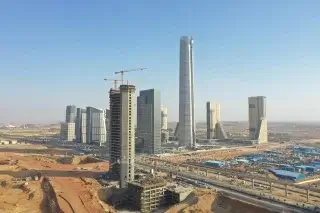 Egypt Prepares New Law for Property Developers
 Young Japanese Buyers Turn to 50-Year Mortgages
 Argentina Narrows Tourism Gap as Arrivals Rise
 Seattle Luxury Housing Loses Its Former Momentum
Egypt Expands Aviation for Tourism Growth

Egypt is preparing its airlines and airports for further tourism growth after welcoming a record of nearly 19 million international visitors in 2025. The government continues to target 30 million tourists a year, although official publications give different deadlines, ranging from 2028 to 2031. EgyptAir is renewing and expanding its fleet, Air Cairo plans to almost double its aircraft count, and Cairo International Airport is preparing a fourth terminal. Seasonality adds another challenge: tourism charter traffic increased 32% last year, leaving airlines with sharp capacity peaks on particular routes and at particular times of year.
Egypt welcomed a record 19 million tourists
Egypt received nearly 19 million international tourists in 2025, about 21% more than a year earlier and a new national record. Tourism charter traffic rose 32%, while charter services connected Egyptian destinations with 193 cities worldwide, according to the Ministry of Tourism and Antiquities.
Growth continued in 2026, though at a slower pace. Arrivals reached 6.1 million in the first four months, up 7% from 5.7 million a year earlier. By the end of the first half, Tourism Minister Sherif Fathy was reporting growth of around 4%.
That distinction matters for airline planning. Aircraft are bought or leased for years, while demand can shift quickly between seasons and routes.
Official sources give different deadlines for 30 million tourists
AeroTime says Egypt aims to reach 30 million tourists annually by 2030. That date has also appeared in Egyptian government communications during 2026, while another official year-end review referred to 2031.
However, the National Sustainable Tourism Strategy page updated by Egypt's State Information Service on August 26, 2026, sets the headline target at 30 million tourists annually by 2028.
The 30 million objective is therefore clear, but the public timetable is not fully consistent. Under the more ambitious 2028 scenario, Egypt would need to add more than 11 million annual visitors compared with 2025.
Europe supplies 65% of international arrivals
Europe is Egypt's largest source market.
OECD data show that more than 10.2 million European tourists visited in 2024, accounting for about 65% of international arrivals. The Middle East contributed another 3.2 million visitors, or 20.5%.
That mix creates different demand patterns across Egypt's aviation network. Hurghada and Sharm El-Sheikh depend heavily on European leisure and package-tour traffic. Cairo serves a broader combination of scheduled, business and connecting passengers, while North Coast demand is more concentrated in summer.
Even in a year-round tourism market, aircraft requirements can therefore change substantially from one season to another.
Resort airports continued to grow during summer 2026
The latest Civil Aviation Ministry figures illustrate those differences.
Between June and August 2026, Hurghada International Airport handled 2.71 million passengers, compared with 2.64 million in the same period of 2025. Flight movements increased from 17,310 to 18,208.
Sharm El-Sheikh handled just over 2 million passengers, up from 1.99 million. Cairo recorded 7.94 million passengers and 57,440 flights. Alamein grew more quickly, with passenger traffic rising from 98,175 to 120,345 and flights from 1,530 to 1,857.
These are airport passenger figures, not tourism arrivals, and include travellers visiting for other purposes. They are useful primarily as evidence of how unevenly demand is distributed across Egypt's airports.
Seasonal peaks create demand for temporary aircraft
This is the main issue explored by AeroTime. The article is authored by Avia Solutions Group and relies heavily on comments from KlasJet CEO Justinas Bulka. KlasJet belongs to the same group and supplies charter and ACMI capacity, so its assessment of the benefits should be read as an industry provider's view rather than independent market research.
ACMI refers to an aircraft lease that includes crew, maintenance and insurance. It allows a carrier to add an aircraft for a defined period without buying it or taking on a long-term dry lease.
For a tourism market, the arrangement can cover peak seasons, substitute for aircraft undergoing maintenance or bridge gaps caused by delayed deliveries.
KlasJet used the model with Air Cairo in 2025. The agreement ran from late May to the end of October, and the aircraft was ferried to Cairo three days after the agreement was signed.
EgyptAir is already receiving A350s and 737-8s
Egypt's flag carrier is simultaneously expanding its permanent fleet.
EgyptAir has ordered 16 Airbus A350-900s and took delivery of the first aircraft on February 9, 2026. The 340-seat jet is intended to support long-haul expansion, including new services to North Asia and the US West Coast.
In May, the airline received its first Boeing 737-8 from an 18-aircraft lease programme with SMBC Aviation Capital. The type will primarily support short- and medium-haul operations.
EgyptAir management said in February that 12 new aircraft were due in 2026 and another 13 in 2027, with 34 aircraft scheduled to join during the first phase of the modernisation programme through 2031.
EgyptAir has raised its fleet ambition to around 125 aircraft
The carrier's longer-term fleet targets have changed.
Earlier government plans referred to approximately 97 aircraft by fiscal 2030/31. In June, Civil Aviation Minister Sameh El-Hefny outlined a more ambitious target of around 125 aircraft in the coming years.
At that point EgyptAir operated 72 aircraft and was expected to receive 28 new planes during 2026 and 2027.
New deliveries do not translate directly into the same number of additional aircraft because part of the programme is replacing older equipment. Reaching a fleet of 125 would therefore require further decisions on acquisitions, leasing and retirements.
Air Cairo plans to expand to 82 aircraft
Air Cairo, in which EgyptAir holds a 60% stake, is also preparing a major expansion.
The Civil Aviation Ministry said the carrier was operating about 41 aircraft and planned to increase that number to 82 within four years.
El-Hefny also said Air Cairo currently carries around 20% of inbound tourism air traffic to Egypt and about 30% of passenger traffic at Hurghada International Airport. The government is working to coordinate Air Cairo's network more closely with EgyptAir's.
That makes Air Cairo particularly important to the resort market, where direct services from European cities account for a significant share of international traffic.
Cairo airport handled more than 31 million passengers
Cairo International Airport handled 31.29 million passengers in 2025, an increase of 8%. Flight movements rose 5.8% to 226,477.
The figure should not be compared directly with Egypt's 19 million tourists. Airport statistics include Egyptian residents, business travellers and connecting passengers, while many international holidaymakers fly directly to resort airports.
The tourism target will therefore place additional pressure on the entire airport network rather than on Cairo alone.
Terminal 4 will raise Cairo's planned capacity
The largest expansion project at Cairo International Airport is Terminal 4.
In July, the government said the project was intended to increase the airport's total annual capacity to around 70 million passengers. The terminal is planned around automated systems, artificial intelligence and other digital technologies designed to improve passenger processing and operational efficiency.
The government also wants Cairo to attract more connecting traffic and strengthen its position as a hub linking Africa, Asia and Europe.
The July announcement did not give a firm completion date, so the additional capacity should not yet be tied to a specific year.
Regional airports grew more than 22% in 2025
Airports operated by the Egyptian Airports Company handled around 28 million passengers in 2025, up 22.3% from 22.9 million a year earlier. Flight movements rose 20.7%, from approximately 173,800 to 209,800.
Hurghada and Sharm El-Sheikh are particularly important because international leisure travellers can reach the resorts directly without passing through Cairo.
Again, airport passenger totals are not the same as unique tourist arrivals: individual travellers may appear in the statistics on both their inbound and outbound journeys.
Hurghada is being prepared for private operation
Egypt is also changing the operating model for some airports.
In July, the Civil Aviation Ministry and the World Bank's International Finance Corporation were finalising preparations for a competitive tender to bring a private-sector operator into the management and operation of Hurghada International Airport.
Hurghada is intended to be the first major airport under the programme.
Its performance matters directly to tourism because it is one of the country's largest gateways for international leisure passengers and faces strong seasonal peaks.
Egypt is also speeding up arrival procedures
Airport capacity depends on more than runways and terminal buildings.
At the beginning of August, Cairo International Airport began trialling an automated visa-on-arrival system. The system replaces the traditional paper visa sticker with an electronic process using a QR code.
Later in August, the Tourism Ministry launched a promotional campaign in nine international markets explaining the new system.
Such measures become increasingly important as passenger volumes rise: more flights provide limited benefit if immigration, visa processing or baggage systems become bottlenecks.
Airlines cannot size permanent fleets only for peak weeks
The basic fleet-planning problem is a trade-off between utilisation and capacity.
If an airline owns enough aircraft to cover the highest winter demand for Red Sea destinations or a concentrated summer peak elsewhere in Egypt, part of that fleet may be underused in quieter months.
A fleet designed around average annual demand creates the opposite problem: too few seats when demand and potential revenue are highest.
That is why EgyptAir and Air Cairo can expand their permanent fleets while still using charter and short-term ACMI aircraft. The two approaches solve different problems. Permanent aircraft support sustained network growth; temporary capacity can cover short peaks and unexpected disruptions.
Aircraft deliveries create another source of uncertainty
Seasonality is not the only reason an airline may need temporary capacity.
EgyptAir's modernisation programme involves dozens of Airbus and Boeing deliveries spread across several years. If a delivery is postponed, an airline may already have schedules, airport slots and passenger bookings built around an aircraft that has not arrived.
Its options then include reducing frequencies, delaying a route, moving an aircraft from another service or leasing temporary capacity.
As the network expands, the commercial cost of being short even a few aircraft during peak periods becomes greater.
Aviation is becoming central to Egypt's tourism strategy
Egypt's increase from a record 15.8 million international tourists in 2024 to nearly 19 million in 2025 demonstrates the scale of recent demand growth.
Moving toward 30 million requires far more than adding a few international flights. Hotel capacity, airport terminals, airline seats, ground transport and passenger-processing systems all need to expand together.
As International Investment experts report, Egypt needs to distinguish between structural growth and temporary peaks. EgyptAir and Air Cairo require larger core fleets if the country is to accommodate millions of additional visitors over the coming years, but owning aircraft solely for a few high-demand months can be inefficient. Charter and ACMI capacity can absorb part of that seasonal pressure and cover delivery delays, but they cannot replace investment in airports and permanent fleets. The timetable adds another layer of uncertainty: official Egyptian sources currently cite 2028, 2030 and 2031 for the 30 million-tourist target, making it difficult to calculate the required pace of aviation investment around a single deadline.
FAQ: Egypt tourism and aviation
How many tourists visited Egypt in 2025?
Egypt welcomed nearly 19 million international tourists, about 21% more than in 2024.
How is tourism performing in 2026?
Arrivals increased 7% to 6.1 million during the first four months. By the end of the first half, the government was reporting growth of around 4%.
How many tourists does Egypt want to attract annually?
The headline target is 30 million international tourists a year.
When does Egypt plan to reach 30 million tourists?
Official publications give different dates. The National Sustainable Tourism Strategy page updated in August 2026 identifies 2028, while other government materials have referred to 2030 or 2031.
Where do most tourists come from?
Europe is Egypt's largest source region. European visitors represented about 65% of international arrivals in 2024.
How fast is charter traffic growing?
Tourism charter flights increased by 32% in 2025.
How large is EgyptAir's fleet?
The Civil Aviation Minister said in June 2026 that EgyptAir was operating 72 aircraft and was targeting a fleet of around 125.
Which aircraft is EgyptAir adding?
Its current programme includes 16 Airbus A350-900s and 18 Boeing 737-8s. The first aircraft of both types entered the fleet in 2026.
How much will Air Cairo expand?
The government says Air Cairo plans to increase its fleet from about 41 aircraft to 82 within four years.
What is an ACMI lease?
It is an aircraft lease that includes crew, maintenance and insurance, allowing an airline to add temporary capacity.
How many passengers does Cairo airport handle?
Cairo International Airport handled 31.29 million passengers in 2025. The planned Terminal 4 is intended to raise the airport's total annual capacity to around 70 million passengers.