







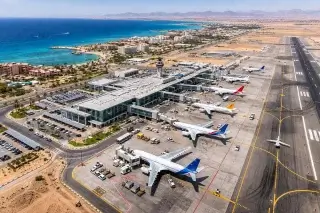
 Egypt Expands Aviation for Tourism Growth
 Latvia’s Residence Permits for Real Estate to Be Abolished from September 15
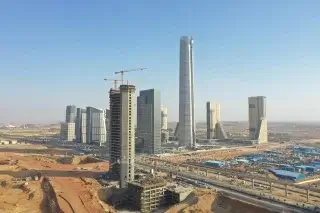 Egypt Prepares New Law for Property Developers
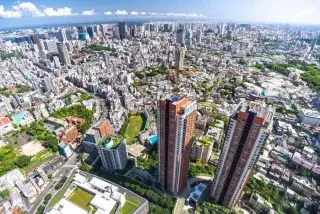 Young Japanese Buyers Turn to 50-Year Mortgages
 Argentina Narrows Tourism Gap as Arrivals Rise
 Seattle Luxury Housing Loses Its Former Momentum
Asunción Property Market Accelerates as Construction Booms

Asunción's property market is expanding rapidly. The median asking price for apartments reached $1,759 per square meter in August 2026, the municipality is reporting record activity in building-plan approvals, and nationwide apartment listings imply a gross rental yield of about 7.7%. Foreign demand has gained another incentive since Paraguay introduced the Investor Pass, which provides a route to direct permanent residency for qualifying real estate investments of at least $200,000. The main investment risk comes from the same force driving development: new apartment supply is growing quickly and is already increasing competition in parts of the capital.
Apartment asking prices are around $1,760 per square meter
The median asking price for apartments in Asunción stood at $1,759 per square meter in August 2026. The central half of active listings ranged from $1,488 to $2,129 per square meter, based on a sample of 977 properties.
These are advertised prices rather than registered closing prices, an important distinction when valuing an individual investment.
TuLugar, which uses a different methodology, put the broader residential price in Asunción at $1,709 per square meter in August. Manorá was the most expensive Asunción neighborhood in its database at $2,158 per square meter, while Luque stood at $1,077.
The figures are not directly contradictory. Proppy reports apartments separately, while TuLugar's city comparison combines apartments and houses.
New construction is concentrated in eastern Asunción
Asunción's municipal government describes the current cycle as a real estate boom, with particularly strong development along Santa Teresa, Aviadores del Chaco and Molas López, as well as emerging urban development clusters.
Revenue from building-plan approvals exceeded Gs. 10.2 billion in April 2026, a record. The equivalent figures were Gs. 4.2 billion in January, Gs. 5.9 billion in February and Gs. 9.892 billion in March.
The municipality has also shortened approval times. A fully compliant project can in some cases be approved in less than a week, while the normal process is now expected to take up to two weeks.
That makes Asunción a market where housing supply can respond relatively quickly to strong demand, limiting the assumption that rents and property prices can rise indefinitely simply because the economy is expanding.
Oversupply is becoming a neighborhood-level risk
This is one of the central arguments in The Wandering Investor's 2026 guide to Asunción.
The author views areas including Villa Morra, Los Laureles and Recoleta favorably but warns about a substantial pipeline of condominiums along parts of Avenida Dr. Felipe Molas López. He also expects rental yields to come under pressure as new buildings reach the market over the next several years.
That is an investor's assessment rather than official market data, but the underlying supply concern is consistent with the municipality's reported construction activity.
For buyers, the relevant question is therefore no longer only whether Asunción will grow. The number of competing apartments being built within a few blocks of a specific property increasingly matters.
Gross apartment yields are around 7.7%
TuLugar's August market report estimates gross apartment rental yields across Paraguay at 7.7% a year. The national median asking rent for an apartment was $605 per month.
The figure is not an Asunción guarantee and should not be confused with a net return. Individual results depend on the purchase price, unit size, vacancy, condominium charges, maintenance, management and taxes.
The platform also tracks short-term rentals separately. In Asunción, its August dataset covered 2,416 active entire properties. The median nightly rate was $59, median occupancy was 63%, and estimated gross monthly revenue was about $1,200.
That revenue figure comes before platform fees, cleaning, utilities, management, building expenses, maintenance, taxes and vacant periods.
Paraguay's economy remains supportive
The macroeconomic environment continues to support domestic demand.
Paraguay's central bank raised its 2026 GDP growth forecast from 4.2% to 4.5% in June while cutting its inflation projection from 3.5% to 3.3%.
The economy expanded 6% in 2025, while the policy interest rate stood at 5.5% during mid-2026.
For property, that is a relatively supportive combination of economic growth without a sharp acceleration in consumer inflation.
Asunción remains a comparatively small property market, however. A handful of large developments can materially increase supply in a particular district, so strong national growth does not guarantee the same performance for every apartment project.
Asunción proper is smaller than the wider metro area
Investment materials sometimes describe Asunción as a city of around 600,000 people or use metropolitan estimates approaching 3 million.
Paraguay's final 2022 census counted 462,241 residents within Asunción itself. The surrounding Central department had another 1,883,927 residents.
The administrative boundary is less relevant to housing demand than the wider urban area. Luque, Fernando de la Mora, San Lorenzo, Lambaré and other municipalities are closely connected to the capital through employment, shopping and daily commuting.
Infrastructure outside Asunción can therefore affect property values within the city.
Tourism is booming, but national arrivals are not Asunción demand
Paraguay registered 3,657,194 international visitors in 2025. Of these, 2,029,678 were tourists staying overnight and 1,627,516 were same-day visitors.
Argentina generated 79.98% of arrivals and Brazil another 10.14%.
Those national figures should not be treated as a proxy for short-term rental demand in Asunción. A substantial share of cross-border travel occurs elsewhere, including Ciudad del Este and Encarnación.
Air traffic is more relevant to the capital. Silvio Pettirossi International Airport handled 495,993 passengers between January and April 2026, an increase of 71,238 from the same period a year earlier.
That expands the potential audience for furnished rentals, although actual performance remains highly dependent on location and professional management.
A $200,000 investment can open a route to permanent residency
Paraguay launched its Investor Pass on April 17, 2026.
The programme allows qualifying foreign investors to apply directly for permanent residency without first holding temporary residency. One eligible category is an investment of at least $200,000 in Paraguayan real estate. The same threshold applies to qualifying stock-market investments, while tourism projects have a $150,000 threshold.
A $200,000 property purchase does not automatically produce a residency card. Investors must complete the formal certification and immigration process.
The official launch notice also does not confirm claims sometimes repeated in investment marketing that only 30% of the investment needs to be paid before applying or that permanent residency is universally issued within five days. Those conditions should not be treated as standard programme rules without project-specific verification.
Foreigners generally have the same property rights
Paraguay's Investment Law No. 117 establishes equal treatment for national and foreign investment.
Foreign investors receive the same guarantees, rights and obligations as domestic investors, and private investment generally does not require separate prior authorisation. The law also guarantees property rights for both domestic and foreign investments, subject to restrictions imposed elsewhere in Paraguayan law.
Foreign nationality therefore does not ordinarily prevent someone from owning an urban apartment or house in Asunción.
Border-zone restrictions are an important exception
There is a specific restriction affecting some rural land.
Law No. 2532 establishes a 50-kilometer security zone along Paraguay's land and river borders. Citizens of neighboring countries, and companies majority-controlled by them, are restricted from owning or holding usufruct rights over rural property within that zone unless an authorised exception applies.
This rule does not apply to an ordinary urban apartment in Asunción.
It does mean that broad claims that every foreigner can freely buy any land anywhere in Paraguay are too simplistic.
Rental taxation differs for residents and non-residents
For a resident individual under the Personal Income Tax system, capital income is taxed at 8%.
For rental property, the taxpayer can generally use a deemed taxable base equal to 50% of rent or calculate taxable income as the difference between rental receipts and specified documented expenses such as property tax, maintenance, management and administration.
Using the 50% deemed base produces an effective IRP burden of 4% of gross rent.
For a non-resident, rental income is subject to the 15% Non-Resident Income Tax on a deemed base equal to 50% of gross rent, equivalent to an effective 7.5% rate. Residential property used exclusively as housing is also subject to VAT at 5%.
Investors therefore need to model cash returns after taxation and operating costs rather than relying on advertised gross yields.
Non-residents face a different tax calculation on sale
Tax residency also matters when an investor exits.
For a resident individual, the IRP rate on capital gains is 8%, with rules allowing the taxable amount to be determined using documented acquisition and disposal costs in qualifying cases. A deemed 30% base is also used under the applicable framework.
For a non-resident property seller, the notary withholds both VAT and Non-Resident Income Tax. VAT is charged at 5% on a base equal to 30% of the property's sale value. The INR rate is 15% on a base equal to 30% of the value excluding VAT.
The frequently quoted description of this as a flat “6% exit tax” is therefore only an approximation. The precise calculation also depends on whether the transaction price is stated inclusive or exclusive of VAT.
Notary, registration and brokerage expenses are additional.
Luque combines lower prices with infrastructure improvements
Luque is one of the clearest lower-cost alternatives within the metropolitan area.
TuLugar's August data put residential asking prices there at $1,077 per square meter, compared with $1,709 in Asunción.
The city also benefits from its location beside Silvio Pettirossi International Airport and from new road infrastructure connecting it with the capital.
In August, construction crews completed installation of the 48 main beams on the Las Residentas viaduct. The project is intended to improve traffic flows from central Luque toward Asunción and reduce congestion around Ñu Guasu and Avenida Silvio Pettirossi.
For investors, the lower entry price comes with a different tenant profile. Luque depends more heavily on local long-term demand and less on the foreign and short-stay market found in parts of central Asunción.
Nueva Asunción remains a higher-risk infrastructure play
The Héroes del Chaco bridge has given the western side of the Paraguay River a direct road link with the capital, increasing interest in Nueva Asunción and the surrounding Bajo Chaco.
Road investment is continuing. At the end of August, the 166-kilometer upgrade of Route PY12 between Chaco'i in Nueva Asunción and General Bruguez was being developed in four lots, with Lot 4 reaching 72% completion.
Buying land there is very different from purchasing a finished apartment in Villa Morra or Recoleta.
Liquidity can be lower, infrastructure remains incomplete, and individual plots require careful assessment of elevation, drainage, road access and flood exposure.
The area's history of flooding makes plot-specific engineering and title due diligence particularly important.
High yields cannot be assumed to last
Asunción currently benefits from several supportive forces: economic growth, active development, foreign investment, expanding transport infrastructure and a new residency incentive for larger investors.
Those factors do not all push returns in the same direction.
More residents and investors increase demand. Faster construction increases supply. If the number of new apartments grows faster than the pool of solvent tenants, rents can stagnate even while the wider economy performs well.
Small investment units are particularly exposed where several developers are delivering similar buildings with comparable amenities to the same renter demographic.
As International Investment experts report, Asunción's appeal lies in the combination of a relatively accessible entry price, economic growth and an open property regime for foreign investors. The construction boom, however, means that choosing the right building is increasingly more important than simply choosing Paraguay. Investors need to examine the future pipeline within the immediate area, actual achievable rents, condominium expenses and resale liquidity. In established districts, the main risk is competition from new projects; in Nueva Asunción, investors also face land liquidity, infrastructure and plot-specific flood risks.
FAQ: Asunción real estate in 2026
How much does an apartment cost in Asunción?
The median apartment asking price was about $1,759 per square meter in August 2026, with the central range between $1,488 and $2,129.
Which Asunción neighborhood is the most expensive?
TuLugar ranked Manorá highest in August at about $2,158 per square meter. Villa Morra, Las Lomas and Ycuá Satí are also among the higher-priced areas.
What rental yield can investors expect?
TuLugar estimated gross apartment rental yields across Paraguay at 7.7% in August. This is a gross figure before expenses and taxes.
How much does a short-term rental earn in Asunción?
TuLugar estimated median gross monthly revenue of about $1,200 for active entire-property listings in August, with median occupancy of 63%.
Is there an oversupply risk?
Yes. Municipal data show strong construction activity, while multiple apartment developments are being delivered in some of the same districts.
Can foreigners buy property in Paraguay?
Yes, foreigners generally receive the same property rights as domestic investors. Specific restrictions apply to certain rural land in the border security zone.
Does buying property provide permanent residency?
Not every purchase does. The Paraguay Investor Pass creates a direct permanent-residency route for qualifying real estate investments of at least $200,000.
Is temporary residency required first?
Under the Investor Pass, qualifying investors can apply directly for permanent residency without first completing the temporary-residency stage.
How is rental income taxed for non-residents?
Non-resident income tax is 15% on a deemed base equal to 50% of rental income, resulting in an effective 7.5% rate on gross rent. Residential leases are also subject to 5% VAT.
How is a resident landlord taxed?
The IRP rate for capital income is 8%. When the 50% deemed rental-income base is used, the effective IRP burden is 4% of gross rent.
Is Luque worth considering?
Luque has substantially lower asking prices than Asunción and is benefiting from transport infrastructure and airport proximity, although its tenant base is more locally oriented.
What are the main risks in Nueva Asunción?
Key risks include land liquidity, infrastructure timelines, drainage, elevation and flood exposure of individual plots.