







 Young Japanese Buyers Turn to 50-Year Mortgages
 Argentina Narrows Tourism Gap as Arrivals Rise
 Seattle Luxury Housing Loses Its Former Momentum
 The World’s Strongest Passports for Travel, Living and Investment
 Russian Developers’ Debt Nearly Doubled in a Year
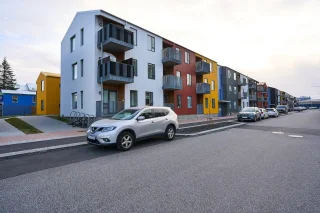 Young Icelanders Shift Into Rental Housing
Egypt Prepares New Law for Property Developers

Egypt is preparing new legislation for its real estate development market following delays at a limited number of projects and complaints from buyers over missed handover deadlines. The government plans to send the bill to the House of Representatives and strengthen oversight of developers, although the final legislative text has not yet been published. In parallel, authorities are working on an Egyptian Federation of Real Estate Developers, a unified market database and tighter rules for advertising projects in new cities. Prime Minister Mostafa Madbouly has stressed that difficulties at four or five developments do not amount to a crisis across the wider sector.
Egypt plans to send the developer law to parliament
Madbouly announced the next stage of the reform on September 3 after the weekly cabinet meeting. He said the government had completed an inventory of stalled or troubled developments and was examining appropriate solutions for individual projects.
The prime minister said the state intends to strengthen its role as market regulator while preserving the sector's contribution to economic activity. He also cautioned against treating a handful of distressed projects as representative of Egypt's property industry as a whole. Ahram Online reported that the dedicated law would be submitted to the House of Representatives “as soon as possible.”
As of September 4, 2026, the final text has not been made public. Specific provisions on developer capital, project accounts, reporting requirements or standard compensation for delays therefore cannot yet be treated as settled law.
A nationwide inspection of projects is already underway
The move toward tighter supervision began before the September announcement.
On August 10, President Abdel Fattah El-Sisi ordered the formation of a committee to inspect ongoing property developments across all governorates. Its remit includes checking whether units are delivered on time, contracts with buyers are respected and project infrastructure is completed.
The presidency said violators should be held accountable and that the president should receive regular updates on measures taken.
The forthcoming legislation therefore follows an earlier shift from responding to individual buyer complaints toward broader oversight of ongoing developments.
Egypt is considering a unified developers' body
One of the main elements of the regulatory overhaul was discussed by the cabinet on August 5, when the government reviewed a proposed law establishing an Egyptian Federation of Real Estate Developers.
The aim is to create a unified professional framework that balances the interests of the state, developers and buyers while maintaining incentives for private investment.
Earlier in May, the government had also called for a comprehensive property-market database that could increase transparency and help remove irregular developers from the sector. Egypt's State Information Service presented both initiatives as part of a wider effort to organise and govern the property market.
It is not yet clear whether the federation bill will become the core of the legislation Madbouly referred to in September or whether several regulatory initiatives will be combined. That will only be known once the draft is published.
Off-plan sales create a particular financing risk
The reform is especially relevant to developments sold before construction is complete.
Buyers typically make a down payment and then continue paying instalments over several years. Developers can use those sales receipts alongside their own capital and other financing to fund construction.
The structure is workable while sales provide sufficient cash flow and project costs remain close to the original assumptions. It becomes more fragile when building costs rise rapidly or new sales slow.
Egypt's currency depreciation and increases in construction materials, energy, transport and financing costs have exposed that weakness. Developers still have to meet land payments, contractor bills and construction expenses even though a large part of contracted sales revenue may not arrive for years.
Industry advisers have also warned about companies using proceeds from new launches to cover funding gaps in earlier developments. Daily News Egypt has highlighted weak financing structures, over-expansion and mismatches between customer instalment schedules and developers' immediate obligations as important causes of delayed delivery.
Mandatory project escrow accounts remain a proposal
One of the most closely watched reform ideas is the introduction of separate escrow accounts for projects sold before completion.
Member of parliament Ahmed Fayed has proposed requiring a developer to open a dedicated account for each project. All buyer instalments would flow into the account, with withdrawals linked to construction progress certified by independent engineering consultants.
The proposal also calls for a digital system connecting the Housing Ministry, Central Bank, commercial banks and New Urban Communities Authority.
For now, however, this remains a parliamentary proposal. Mandatory project escrow accounts are not yet a nationwide requirement and have not been confirmed as part of the government's final developer legislation.
Such a system could reduce the risk that money collected for one development is diverted to another project, new land acquisitions or unrelated company obligations.
Existing rules already address lengthy delivery delays
Buyer protection does not begin with the new bill.
Prime Ministerial Decision No. 2184 of 2022 already sets out measures that can apply to delayed delivery under specified circumstances.
Industry explanations of the framework indicate that it allows a 12-month period after the contractual handover date. Further delays can trigger instalment deferrals, while delays exceeding 24 months may, subject to the conditions of the decision and contract, give a buyer the option to continue under the deferral mechanism or request a refund.
The forthcoming legislation may amend or supplement existing arrangements, but its relationship with those rules is not yet known.
Advertising rules have already been tightened
Part of the regulatory response is already in force.
On July 15, the Supreme Council for Media Regulation introduced new requirements for advertising land, property and developments in areas under the New Urban Communities Authority.
Media organisations must verify that the necessary approval or confirmation has been issued by NUCA, the relevant city authority or an authorised entity before publishing promotional material for such projects.
The measure targets an early point in the transaction process, when properties may be intensively marketed years before completion.
For overseas buyers, this is particularly relevant in active development areas such as the New Administrative Capital, New Cairo and New Alamein, where a significant proportion of supply is marketed before final handover.
Sales at major developers weakened in early 2026
The regulatory push comes as the property market moves into a more difficult phase after several years of rapid repricing.
Data from The Board Consulting reported by Al-Ahram Weekly show that Egypt's 10 largest developers recorded EGP 271 billion of contracted sales in the first quarter of 2026, down 6.5% from EGP 290 billion a year earlier. The number of residential units sold fell about 15% to roughly 15,500.
In a market built around long payment plans, contracted sales are not equivalent to cash already received by the developer.
A company can sign a multimillion-pound contract today while collecting a large portion of the purchase price over five, eight or 10 years. During periods of high construction-cost inflation, the remaining cost of building the property can increase much faster than instalments arrive under older contracts.
Long payment plans remain central to the market
Extended instalment schedules are more important in Egypt than conventional mortgages are in many mature housing markets.
Developers compete through the size of down payments and the length of repayment plans as well as through the headline price of the property.
In July, for example, the National Bank of Egypt and Ramtan Developments agreed to market completed homes in the New Administrative Capital with payment plans of up to 10 years. Those particular units are ready for delivery, but the deal illustrates how long instalment periods have become an important part of Egyptian property finance.
For an off-plan project the financing challenge is greater because construction must be completed long before the buyer makes the final payment.
Smaller developers face greater financing pressure
Stronger capital and project-finance requirements would probably have a larger impact on small and medium-sized developers.
Large groups have broader balance sheets, diversified projects and greater access to different sources of funding. Smaller developers can depend much more heavily on their own resources and incoming sales.
The Housing Ministry is already studying mechanisms to help delayed developments reach completion. Deputy Housing Minister Walid Abbas has noted that many smaller companies rely primarily on self-financing and are consequently more vulnerable to financial pressure. Authorities are examining solutions rather than relying solely on land withdrawals from developers that fall behind.
For buyers who have already paid substantial instalments, completing a viable project can be more useful than a penalty that leaves the development unfinished.
Construction remains economically significant
The government is trying to tighten oversight without disrupting a sector closely connected to the wider economy.
Official Ministry of Planning, Economic Development and International Cooperation data put construction value added at current prices at about EGP 547.8 billion in the first quarter of 2026, compared with EGP 520.9 billion a year earlier, an increase of roughly 5.2% in nominal terms.
Property development also supports construction materials, transport, banking, property management and Egypt's large programme of new urban communities.
Real estate has additionally served as a store of value for households during years of high inflation and currency depreciation. That has helped sustain demand while pushing property prices further beyond the reach of some buyers dependent on local incomes.
The law could reshape off-plan property finance
The most consequential issue is likely to be how the legislation handles buyers' money rather than the creation of a professional federation alone.
Requirements for stronger developer finances, separate project accounting, construction-progress disclosure or restrictions on the use of customer payments could materially change the way off-plan developments are funded.
Tighter rules would raise compliance and financing costs and could reduce the number of smaller companies able to launch projects. The potential benefit for buyers would be a lower risk of developments being marketed without sufficient resources for completion.
Those provisions remain uncertain until the bill is published. The confirmed measures so far are preparation of new legislation, work on a developers' federation and market database, nationwide project inspections and tighter advertising rules.
As International Investment experts report, the central risk in Egypt's property model is not long instalment plans themselves but a mismatch between a developer's commitments and the money available to complete construction. If the new law forces companies to align sales volumes with their capital, actual construction progress and secured financing, buyer protection could improve substantially. If regulation focuses mainly on registration and professional membership without controlling project cash flows, the main source of risk will remain. Until the final law is published, buyers should not treat proposed escrow accounts, minimum-capital requirements or standard compensation schemes as rules already in force.
FAQ: Egypt's proposed property developer law
Has Egypt passed the new developer law?
No. On September 3, 2026, the prime minister said legislation was being prepared for submission to the House of Representatives. The final text has not yet been published.
Why is Egypt changing property regulation?
The government wants to improve transparency, assess whether developers have the financial and technical capacity to complete projects and strengthen buyer protection following delays at some developments.
How many troubled projects has the government identified?
Madbouly referred to roughly four or five cases and said they should not be interpreted as evidence of a crisis across the entire real estate market.
What is the Egyptian Federation of Real Estate Developers?
It is a proposed professional body for the development industry. The government reviewed a draft law for its creation in August 2026, but its final authority and membership rules are not yet established.
Are escrow accounts mandatory for off-plan projects?
No. Mandatory project escrow accounts have been proposed by MP Ahmed Fayed but are not yet a nationwide legal requirement.
How would a project escrow account work?
Buyer instalments would be deposited into a separate account for the development, with withdrawals linked to independently verified construction progress.
What rules have already changed?
Advertising controls for projects in new urban communities have been tightened. Media organisations must verify relevant approvals before publishing advertisements for property under NUCA jurisdiction.
Why do property projects in Egypt face delays?
Causes vary and can include rising construction costs, financing gaps, dependence on new sales, management failures, permit and design delays, contractor problems and unfinished infrastructure.
What should foreign buyers check before purchasing?
Buyers should verify land rights, project approvals, the developer's legal status, construction and handover schedules, instalment terms, delay provisions and the rules governing refunds or assignment of contractual rights.
Will the new law make property purchases safer?
It could, but the extent of buyer protection cannot be assessed until the final legislation and implementing regulations are published.