







 Vietnam Mortgage Surge Pushes Homes Out of Reach
 Lithuanian Apartment Prices Accelerate Across Major Cities
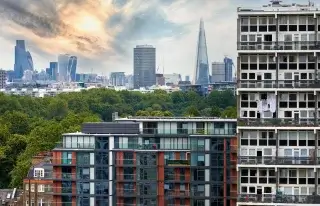 London Flats Lose Value Ahead of Leasehold Reform
 Construction of the Batumi–Sarpi Highway Begins in Georgia
 Baltic Property Investment Accelerates in 2026
 Hong Kong and Singapore Renew Their Expat Rivalry
French fuel rush leaves some stations dry
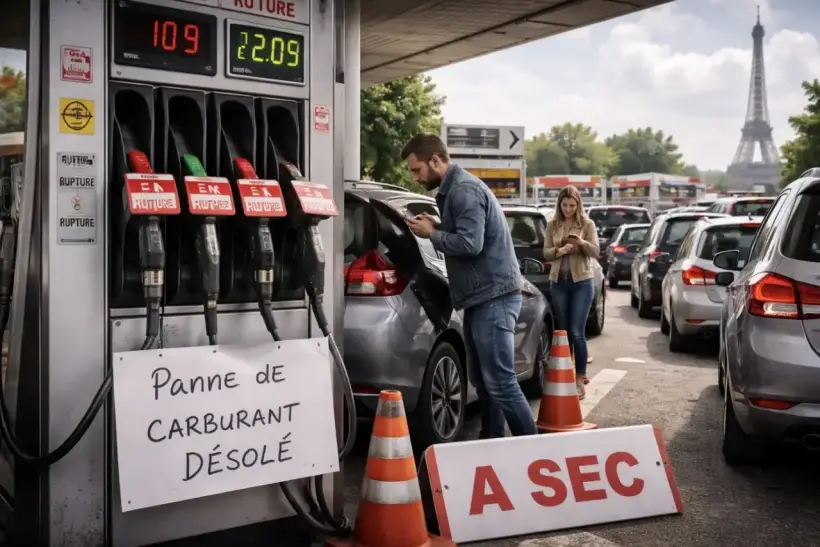
Fuel demand in France jumps as prices climb
Some service stations in France have faced local fuel shortages after drivers rushed to fill up amid rising prices and fears of further increases. Pressure on the market intensified as oil volatility surged following conflict in the Gulf, with diesel markets coming under particular strain. In a March 12 statement, TotalEnergies said it was responding to “exceptional volatility” in oil markets and to severe tension in global diesel markets.
According to The Connexion, the consumer reaction was swift. Intermarché said fuel sales at its stations rose 50% in less than a week, while Super U reported nearly twice the usual number of drivers filling up after the Middle East crisis escalated. That buying rush, rather than a formally declared nationwide shortage, appears to be the immediate reason some stations temporarily closed or ran out of certain fuel grades.
TotalEnergies capped pump prices across its French network
The clearest market intervention came from TotalEnergies, which said it would cap petrol prices at €1.99 per liter and diesel at €2.09 per liter in France from March 13 through March 31, 2026. The measure was presented as temporary protection for consumers against a global oil shock and was set to be reassessed in early April depending on market conditions.
The company said its French retail network includes around 3,300 stations, with the diesel cap having an immediate effect at 1,830 of them. That made many TotalEnergies sites comparatively more attractive than competing stations, channeling extra demand toward lower-priced pumps. In practice, the cap softened the price shock for motorists but also appears to have concentrated traffic at the cheapest outlets, increasing the risk of local stockouts.
Why some French stations ran out of fuel
Available evidence does not point to a nationwide collapse in supply, but it does confirm patchy shortages and rapid depletion at some sites. The Connexion, citing tracking platform penurie-carburant, reported shortages across multiple fuel categories as panic buying accelerated. The figures it cited showed 5% of stations with diesel shortages, 26% with E10 shortages, 68% with SP95 disruptions, and 21% with SP98 shortages. Those numbers come from unofficial monitoring, but they illustrate how sharply supply conditions deteriorated for some grades.
The French state, meanwhile, continues to operate an official portal that allows motorists to search for fuel stations by department and fuel type. That platform is important because it shows fuel availability has become part of active market management even when the disruption is fragmented and localized rather than a formally declared national emergency.
Global oil tensions exposed France’s diesel vulnerability
The underlying issue goes beyond consumer behavior. TotalEnergies said tensions in global diesel markets have been especially severe since the start of the Gulf conflict, and stressed that France remains heavily dependent on imported diesel. That means international price moves and shipping disruptions can quickly feed through into domestic retail conditions.
The Connexion also noted that disruptions around the Strait of Hormuz, which carries about one fifth of global oil and LNG shipments, had already become a factor shaping fuel-price expectations in France. If the crisis persists, analysts quoted there said pump prices could rise further, potentially by as much as 20 euro cents per liter if crude reaches $100 a barrel.
Paris has not imposed broad state price controls
Despite political pressure, France has not moved to a broad tax cut or a generalized administrative price freeze. Government messaging suggested that major VAT reductions would come at a high fiscal cost. As a result, the most immediate intervention in the market came from a private company rather than from the state, with TotalEnergies using its own network to absorb part of the shock temporarily.
That creates an uneven market effect. Some retailers attract extra traffic because of capped prices, others face margin pressure or a loss of customers, and stocks become distributed less evenly across the network. In that structure, even a short-lived price cap can trigger visible disruption if consumers treat it as a signal to refuel early. The episode looks less like a formal national fuel shortage than a stress test of expectations, logistics and network resilience under sudden price pressure. That reading is supported by the combination of company statements, retail sales data and the current shape of the French fuel market.
As International Investment experts report, the French episode shows that even a limited fuel price cap can quickly alter consumer behavior and redirect demand across retail fuel networks. For investors and market participants, the key takeaway is that during commodity shocks, resilience depends not only on wholesale prices but also on logistics, reserve capacity, network density and restocking speed.
FAQ on France fuel shortages and price caps
Why are some fuel stations in France running dry?
The main cause appears to be a sudden surge in demand as drivers rushed to fill up before prices rose further, rather than an officially declared nationwide shortage. International oil-market stress added to the pressure.
What prices did TotalEnergies cap in France?
TotalEnergies capped petrol at €1.99 per liter and diesel at €2.09 per liter from March 13 to March 31, 2026.
How many TotalEnergies stations were affected?
The company said its French network includes about 3,300 stations, with the diesel price cap immediately affecting 1,830 sites.
Is there an official French fuel availability website?
Yes. France operates the government portal prix-carburants.gouv.fr, where users can search stations by location and fuel type.
Why is diesel especially exposed in France?
Because France relies heavily on imported diesel, making domestic supply and prices sensitive to international market tensions.