







 Latvia’s Residence Permits for Real Estate to Be Abolished from September 15
 Egypt Prepares New Law for Property Developers
 Young Japanese Buyers Turn to 50-Year Mortgages
 Argentina Narrows Tourism Gap as Arrivals Rise
 Seattle Luxury Housing Loses Its Former Momentum
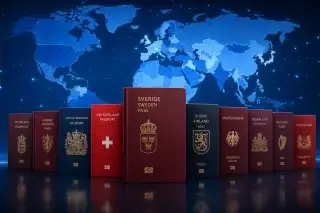 The World’s Strongest Passports for Travel, Living and Investment
French Consumers Lose Confidence

French consumer confidence fell to 82 in May 2026, its lowest level in roughly three years, showing that households are becoming more cautious as an energy shock, weak growth, rising unemployment and fears of new costs weigh on spending decisions.
French Consumer Confidence Falls Again
French households ended spring with a clear deterioration in sentiment. France’s national statistics institute reported that household confidence fell to 82 in May 2026 from 84 in April, remaining far below its long-term average of 100. The same dashboard showed gross domestic product stalled in the first quarter, unemployment rose to 8.1% and consumer prices increased 2.2% year on year in April, explaining why households are becoming more cautious.
The household confidence indicator captures how consumers assess their financial situation, willingness to make major purchases, unemployment expectations, inflation expectations and saving capacity. A decline to 82 does not signal an immediate recession, but it shows that households view the economic environment as weaker than normal and are more inclined to delay spending.
Energy Shock Deepens Household Anxiety
The main external pressure is the new energy shock linked to the Middle East conflict and risks to oil and gas flows through key maritime routes. The European Commission’s Spring 2026 forecast said the conflict had triggered weaker economic activity, renewed inflation and deteriorating economic sentiment.
For France, the effect is felt through energy bills, transport costs and price expectations. Even if actual inflation remains below the peaks of 2022–2023, households react to the risk of another increase in fuel, electricity, food and service prices. When consumers fear higher future costs, they delay purchases of cars, furniture, appliances, renovations and travel.
The French Economy Is Barely Growing
The drop in confidence coincides with stalled economic growth. In the first quarter of 2026, French gross domestic product was unchanged from the previous quarter after a 0.2% increase earlier. The economy avoided contraction, but it did not generate enough momentum to strengthen employment, incomes or consumption.
That is a problem for the government because France’s growth model relies heavily on domestic demand. If households cut purchases and increase caution, retail, services, small businesses, construction and housing all feel the impact. Goods consumption rebounded 0.7% in March after a 1.4% drop, but that monthly recovery does not reverse the broader weakness in sentiment.
The Labour Market Adds Pressure
Unemployment has become one of the clearest sources of concern. In the first quarter of 2026, the unemployment rate in France rose by 0.2 percentage points to 8.1%. For households, this matters more than many financial indicators: the risk of losing a job directly affects decisions on borrowing, buying property, making major purchases or changing cars.
Even stable employment does not necessarily create confidence. Private payroll employment was almost unchanged in the first quarter, and the labour market did not send a strong recovery signal. In that environment, workers tend to hold more money in reserve rather than spend, even when current income has not yet fallen.
Retail Is Already Feeling the Slowdown
Weak confidence quickly reaches the retail sector. The business climate in retail trade and motor-vehicle repair fell to 90 in May, down 4 points in a month. This is one of the most direct signs that household caution is moving from survey responses into business conditions.
Retailers face two pressures at once. Consumers are less willing to make large purchases, while companies themselves operate with uncertainty over energy prices, supply chains, wages and credit. As a result, stores limit inventories, hire cautiously and rely more heavily on discounts, putting pressure on margins.
Inflation Is Lower but Confidence Has Not Recovered
French inflation no longer looks as damaging as it did during the energy crisis after 2022. Consumer prices rose 2.2% year on year in April 2026. But for households, the current number is not the only issue: the accumulated rise in prices over recent years still shapes behaviour.
Many families have already adapted to more expensive food, services, rent, insurance and utilities. That is why even a moderate new rise in prices feels painful. If fuel, gas or electricity become more expensive because of an external conflict, consumers remember the previous crisis and start saving before the full shock arrives.
Saving Becomes a Defensive Reaction
French households traditionally have a high saving rate, but uncertainty strengthens that habit. When confidence falls, saving becomes less an investment decision and more a form of self-protection. People set aside money in case bills rise, jobs are lost, taxes increase or credit conditions worsen.
For the economy, this creates a paradox. Savings support household financial resilience, but they also weaken current demand. The more households save out of fear, the less they spend, leaving companies with weaker revenue and less reason to invest or hire.
Political Uncertainty Adds to Economic Doubt
Consumer sentiment in France depends on more than prices and wages. Fiscal policy, deficit debates, possible tax measures and fears of reduced public support also affect household behaviour. If consumers expect higher taxes or cuts in benefits, they reduce discretionary spending before decisions are formally made.
This matters especially in France, where the public sector plays a large role in income, employment, pensions, benefits and infrastructure. Any signal of stricter budget adjustment quickly becomes another reason for consumers to hold back.
The European Backdrop Has Weakened Too
France’s weakness is not isolated. Associated Press reported that the energy shock caused by the war involving Iran had worsened Europe’s outlook, prompting the European Commission to cut euro area growth expectations and raise its inflation forecast. For France, that means weaker external demand, more expensive energy and less room for a fast rebound.
A synchronized European slowdown is especially dangerous for exporters, industry and tourism. If neighbouring economies also slow, France cannot easily offset weak domestic demand with foreign orders. That increases the risk of prolonged stagnation, where the economy grows on paper but households do not feel improvement.
Central Bank Policy Faces a Difficult Signal
The fall in confidence creates a difficult backdrop for monetary policy. On one hand, weak demand normally reduces inflation pressure. On the other, an energy shock can lift prices independently of domestic activity. That raises the risk of a stagflationary mix, where growth is weak while prices stay above comfortable levels.
For the European Central Bank, this complicates rate cuts. If policy remains too tight to fight inflation, credit stays expensive and consumption weakens further. If policy becomes too loose, the energy shock could become embedded in expectations and hit purchasing power again.
Housing Remains Vulnerable
Lower consumer confidence is directly relevant to the housing market. Property purchases require confidence in income, available credit and stable employment. When households fear higher costs and unemployment, they delay home purchases or choose smaller properties.
For French real estate, this means the recovery after high interest rates and weak sales may be slow. Even if mortgage conditions improve gradually, psychology remains a major constraint. Families are reluctant to take on 20- or 25-year debt when they are unsure about jobs, taxes and energy costs.
Consumption Is the Main Test for 2026
The second half of 2026 will show whether the May decline in confidence is a temporary reaction to external news or the start of a longer cycle of caution. The key indicators will be major purchases, consumer credit, retail sales, unemployment and price expectations.
If energy markets stabilize, inflation stays moderate and employment does not deteriorate, confidence may recover. But if the conflict drags on, oil and gas stay expensive and fiscal debates intensify, French households may continue to save rather than spend.
As reported by International Investment experts, the fall in French confidence matters not because of the index level alone, but because it exposes the fragility of domestic demand. French consumers still have savings, but they are treating them as insurance rather than spending power. The main risk for the economy is that caution becomes entrenched: if households keep delaying major purchases because of energy, unemployment and fiscal uncertainty, France may face weak growth even with moderate inflation.
FAQ on French Consumer Confidence
What happened to French consumer confidence in May 2026?
The household confidence index fell to 82 from 84 in April. It remained well below its long-term average of 100, signalling weaker household sentiment.
Why are French consumers less confident?
The main factors are the energy shock, price risks, weak economic growth, rising unemployment and uncertainty over fiscal policy.
What does the consumer confidence index measure?
It measures household views on personal finances, major purchases, unemployment, inflation and saving capacity. A lower reading means consumers are more cautious.
How does weaker confidence affect France’s economy?
It can reduce consumption, retail sales, credit demand, car purchases and housing activity. This is important because domestic demand is a major part of French growth.
Why does the energy shock matter for consumers?
Expensive energy raises transport, heating, production and service costs. Even the expectation of higher prices can make households postpone major purchases.
Can confidence recover quickly?
Yes, if energy prices stabilize, inflation remains moderate and the labour market does not weaken. But if external conflict persists and unemployment rises, recovery may be slow.